
We invite you to embark on a journey through the majestic ecosystems of Mount Kilimanjaro, where the boundaries between nature and human experience blur. As we explore the diverse ecological zones, from the lush rainforests to the arctic summit, we uncover the secrets of this Tanzanian wonder.
Our safari experience promises to be transformative, revealing the intricate balance between conservation and cultural immersion. As we traverse the varied landscapes, we are met with Tanzania’s natural beauty in all its glory.
Key Takeaways
- Experience the diverse ecological zones of Kilimanjaro
- Discover the secrets of Tanzania’s natural beauty
- Enjoy a transformative safari experience
- Explore the balance between conservation and cultural immersion
- Traverse varied landscapes and witness the majestic ecosystems
The Majestic Mount Kilimanjaro: Africa’s Highest Peak
Rising majestically from the Tanzanian plains, Mount Kilimanjaro stands as a testament to nature’s grandeur and geological wonder. As we stand before this natural giant, we’re struck by its sheer scale and the rich history that has shaped it.
Geographical Location and Significance
Located in northern Tanzania, Kilimanjaro is not just a mountain – it’s a landmark of great geographical and cultural significance. Its proximity to the equator makes its snow-capped peak all the more remarkable. We recognize the importance of Kilimanjaro as a source of inspiration for local communities and visitors alike.
The mountain’s unique position has made it a focal point for various ecosystems, supporting a wide range of flora and fauna. As we explore Kilimanjaro, we appreciate its role in shaping the regional climate and supporting local agriculture.

Kilimanjaro’s Formation and Volcanic History
Kilimanjaro’s story began millions of years ago, shaped by volcanic activity that formed the three distinct cones: Kibo, Mawenzi, and Shira. We marvel at the geological processes that have continued to shape the mountain over time.
The mountain’s volcanic history has contributed to its unique ecosystems and biodiversity. As we explore Kilimanjaro, we gain insight into the complex interplay between geological forces and the natural environment.
Understanding the Ecosystems of Mount Kilimanjaro
As we ascend Mount Kilimanjaro, we traverse through a kaleidoscope of ecosystems, each with its unique characteristics and biodiversity. This majestic mountain is home to a diverse range of flora and fauna, supported by its varied ecological zones and climate conditions.

Five Distinct Ecological Zones
Kilimanjaro’s ecosystems are categorized into five distinct ecological zones: the Cultivated Zone, Rainforest Belt, Heath and Moorland, Alpine Desert, and Arctic Summit. Each zone is a testament to the mountain’s ecological diversity, supporting a wide range of plant and animal life.
- The Cultivated Zone: Where agriculture thrives
- The Rainforest Belt: Lush and biodiverse
- The Heath and Moorland: Transitional ecosystems
- The Alpine Desert: Life in extreme conditions
- The Arctic Summit: Glaciers and snow fields
These zones are not just geographical divisions; they represent different worlds, each with its unique characteristics and challenges.
Climate Variations Across Altitudes
The climate on Kilimanjaro varies significantly across different altitudes, influencing the types of ecosystems that can thrive. As we ascend, the temperature drops, and the atmosphere changes, creating a range of microclimates.
The climate variation is dramatic, from the tropical conditions at the base to the arctic conditions at the summit. This variation supports a wide range of biodiversity and makes Kilimanjaro a fascinating subject for ecological study.
“The climate on Kilimanjaro is as varied as the ecosystems it supports, creating a truly unique environment that is both challenging and awe-inspiring.”
Understanding these climate variations is crucial to appreciating the rich natural heritage of Kilimanjaro and the diverse ecosystems that call it home.
The Cultivated Zone: Where Human Activity Meets Nature
As we descend from the majestic heights of Mount Kilimanjaro, we enter the cultivated zone, where human activity and nature coexist in harmony. This fertile region, stretching from the mountain’s base to about 1,800 meters, is home to a diverse array of crops and agricultural practices that have been refined over generations.

Agricultural Practices Around Kilimanjaro
The agricultural practices in Kilimanjaro’s cultivated zone are characterized by a mix of traditional and modern farming techniques. Local farmers cultivate a variety of crops, including coffee, bananas, and maize, using methods that are both sustainable and productive. The rich volcanic soil and favorable climate make this region ideal for farming, supporting the livelihoods of local communities.
- Coffee plantations thrive in the shade of banana trees, creating a diverse and resilient agricultural ecosystem.
- Farmers use terracing to reduce soil erosion and maximize land use on the mountain’s slopes.
- Organic farming practices are prevalent, minimizing the use of chemical fertilizers and pesticides.
Local Communities and Their Relationship with the Mountain
The local communities around Kilimanjaro have a deep and spiritual connection with the mountain. The Chagga people, who have lived in this region for centuries, have developed a rich cultural heritage that is intricately linked with the mountain’s ecosystems. Their traditional knowledge and practices not only contribute to the preservation of the environment but also enhance the biodiversity of the cultivated zone.
Key aspects of their relationship include:
- Traditional irrigation systems that efficiently use water resources.
- Cultural rituals and ceremonies that honor the mountain and ensure its continued fertility.
- Agricultural practices that are adapted to the local climate and soil conditions.
Exploring the Lush Rainforest Belt
Within Kilimanjaro’s lush rainforest belt, we find ourselves immersed in a rich tapestry of sounds, scents, and sights. The air is alive with the songs of exotic birds and the rustling of leaves as unseen creatures scurry through the underbrush.
Flora Diversity in Kilimanjaro’s Rainforests
The rainforest is a botanical treasure trove, boasting an incredible array of plant life. Towering trees, their trunks wrapped in vines and epiphytes, stretch towards the canopy, filtering the sunlight and creating a misty, emerald world.
Endemic Plant Species
Among the dense foliage, we discover endemic species found nowhere else on Earth. The majestic Podocarpus and Anthostema trees stand alongside delicate orchids and ferns, creating a diverse and complex ecosystem.
Medicinal Plants and Their Uses
Local communities have long revered the rainforest for its medicinal properties. Plants like the Warburgia ugandensis and Zanthoxylum chalybeum are used to treat various ailments, their potency derived from the unique conditions of the rainforest environment.
Wildlife Encounters in the Forest Zone
As we journey deeper into the rainforest, we encounter a fascinating array of wildlife. The forest is home to a variety of primates, including the charismatic blue monkeys and colobus, their antics providing endless entertainment.
Primates and Small Mammals
The rainforest is a haven for primates and small mammals. We may catch glimpses of bushbabies, their large eyes shining in the dark, or the elusive genet, a sleek and mysterious creature.
Reptiles and Amphibians
The forest floor and lower canopy are inhabited by a diverse range of reptiles and amphibians. Colorful frogs and chameleons blend into their surroundings, while snakes like the black mamba and puff adder command respect with their potent venom.
| Species | Type | Notable Characteristics |
|---|---|---|
| Blue Monkey | Primate | Social, agile, distinctive blue-gray coat |
| Colobus Monkey | Primate | Black and white fur, graceful movements |
| Warburgia ugandensis | Medicinal Plant | Used to treat fever and stomach ailments |

The Heath and Moorland: Transitional Ecosystems
As we ascend Kilimanjaro, the heath and moorland zone emerges as a transitional landscape, bridging the lush rainforest below and the alpine desert above. This unique ecological niche is characterized by its rugged beauty and the remarkable adaptations of its flora and fauna.

Characteristic Vegetation of the Heath Zone
The heath zone is dominated by giant heathers and moorland grasses, which have adapted to the harsh, wet conditions. Helichrysum and Erica species are common, with their dense, woolly leaves helping to conserve moisture. The vegetation here is not as dense as in the rainforest, but it’s no less fascinating, with plants developing unique strategies to survive the challenging climate.
| Plant Species | Adaptation | Characteristics |
|---|---|---|
| Erica arborea | Thick, woody stems | Resistant to fire and drought |
| Helichrysum kilimanjari | Dense, woolly leaves | Conserves moisture, protects from cold |
| Moorland grasses | Deep roots | Accesses water deep in soil |
Adapting to Harsh Conditions: Plants and Animals
Life in the heath and moorland zone is challenging, with frequent mist, strong winds, and significant temperature fluctuations. Plants and animals have developed remarkable adaptations to survive these conditions. For example, the giant lobelias have a unique, rosette-shaped structure that helps protect their delicate growing points from frost and wind.
Adaptation strategies are not limited to plants; animals such as the Kilimanjaro tree hyrax have thick fur to insulate against the cold, while birds like the Anthus species have adapted their behavior to forage in the harsh conditions.
Alpine Desert: Life in Extreme Conditions
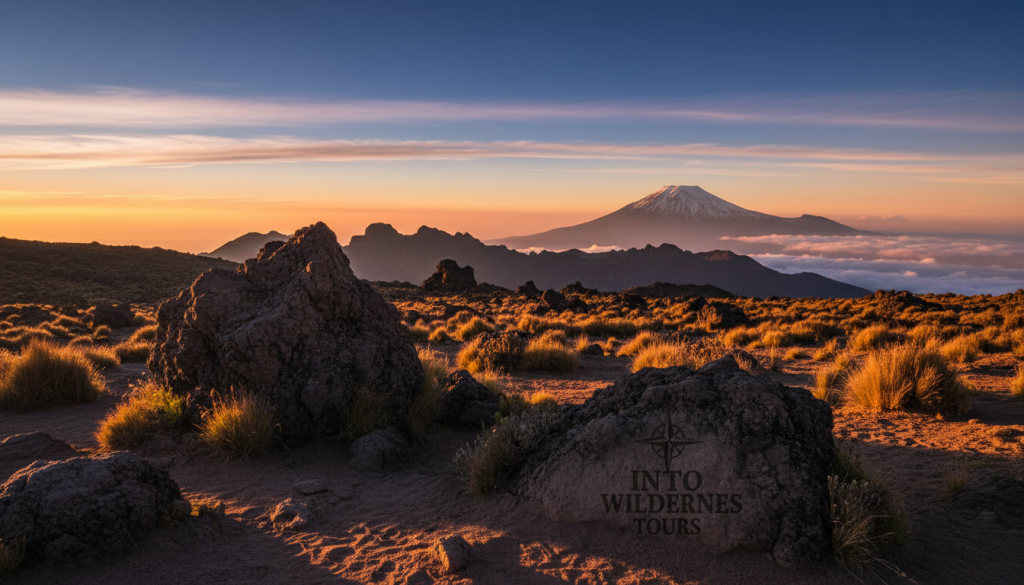
In the alpine desert of Kilimanjaro, we encounter a world both barren and beautiful, where survival is a daily triumph. This high-altitude realm, devoid of the lush vegetation found lower down, presents a unique ecosystem that thrives in harsh, seemingly inhospitable conditions.
Sparse Vegetation and Survival Strategies
The alpine desert zone is characterized by its sparse vegetation, with hardy plants like giant lobelias and senecios adapting to the extreme conditions. These plants have developed remarkable survival strategies, such as dense rosettes that protect them from freezing temperatures and strong winds. This adaptation enables them to thrive in an environment with limited moisture and intense solar radiation.
| Plant Species | Adaptation | Survival Benefit |
|---|---|---|
| Giant Lobelia | Dense Rosette | Protection from Freezing |
| Senecio | Thick, Fleshy Leaves | Moisture Retention |
| Mosses and Lichens | Poikilohydry | Ability to Revive with Moisture |
The Stark Beauty of Kilimanjaro’s Desert Zone
The alpine desert’s stark beauty is a testament to nature’s resilience and adaptability. The landscape, with its rolling dunes of volcanic ash and rocky outcrops, presents a surreal panorama under the intense African sun. As we traverse this unique ecosystem, we’re struck by the beauty of its desolation, a reminder of the awe-inspiring power of geological forces that have shaped this environment over millennia.
Our journey through Kilimanjaro’s alpine desert is not just a trek through a challenging environment; it’s an immersion into a world of stark beauty and life’s unyielding spirit.
The Arctic Summit: Glaciers and Snow Fields
The glaciers of Kilimanjaro’s summit, a fragile and fleeting wonder, are a poignant reminder of the mountain’s majesty. As we stand at the roof of Africa, the icy expanse stretches before us like a shimmering mirage, a testament to the awe-inspiring power of nature.

Kilimanjaro’s Retreating Glaciers
Kilimanjaro’s glaciers have been retreating at an alarming rate, a stark visual representation of climate change’s impact on our planet. Once covering a significant portion of the summit, these ice masses have dwindled dramatically over the decades. The consequences of this retreat are far-reaching, affecting not just the local ecosystem but also the global environment.
| Year | Glacier Coverage (km²) | Rate of Change |
|---|---|---|
| 1912 | 11.4 | – |
| 2000 | 2.6 | -77.2% |
| 2020 | 1.1 | -57.7% |
Climate Change Impact on the Summit Ecosystem
The impact of climate change on Kilimanjaro’s summit ecosystem is multifaceted. Rising temperatures alter the delicate balance of this high-altitude environment, affecting everything from microbial life in the soil to the majestic glaciers themselves. As the glaciers retreat, they leave behind a barren landscape that takes years to support new life, if at all.
The consequences are profound: loss of biodiversity, changes in water cycles, and a reduction in the mountain’s iconic appeal. It’s a stark reminder of our responsibility to protect these fragile ecosystems for future generations.
Wildlife Safari Experiences Around Kilimanjaro
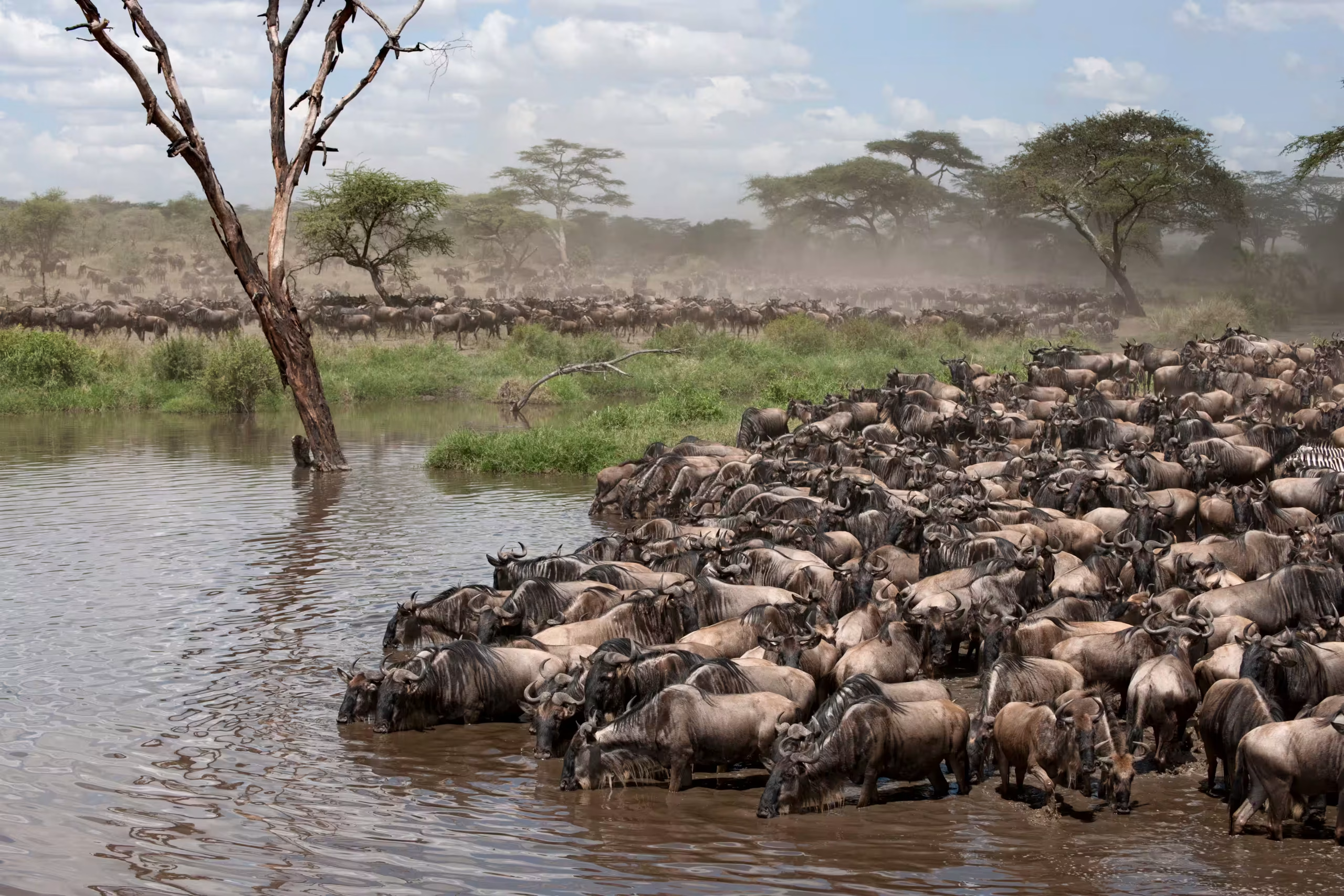
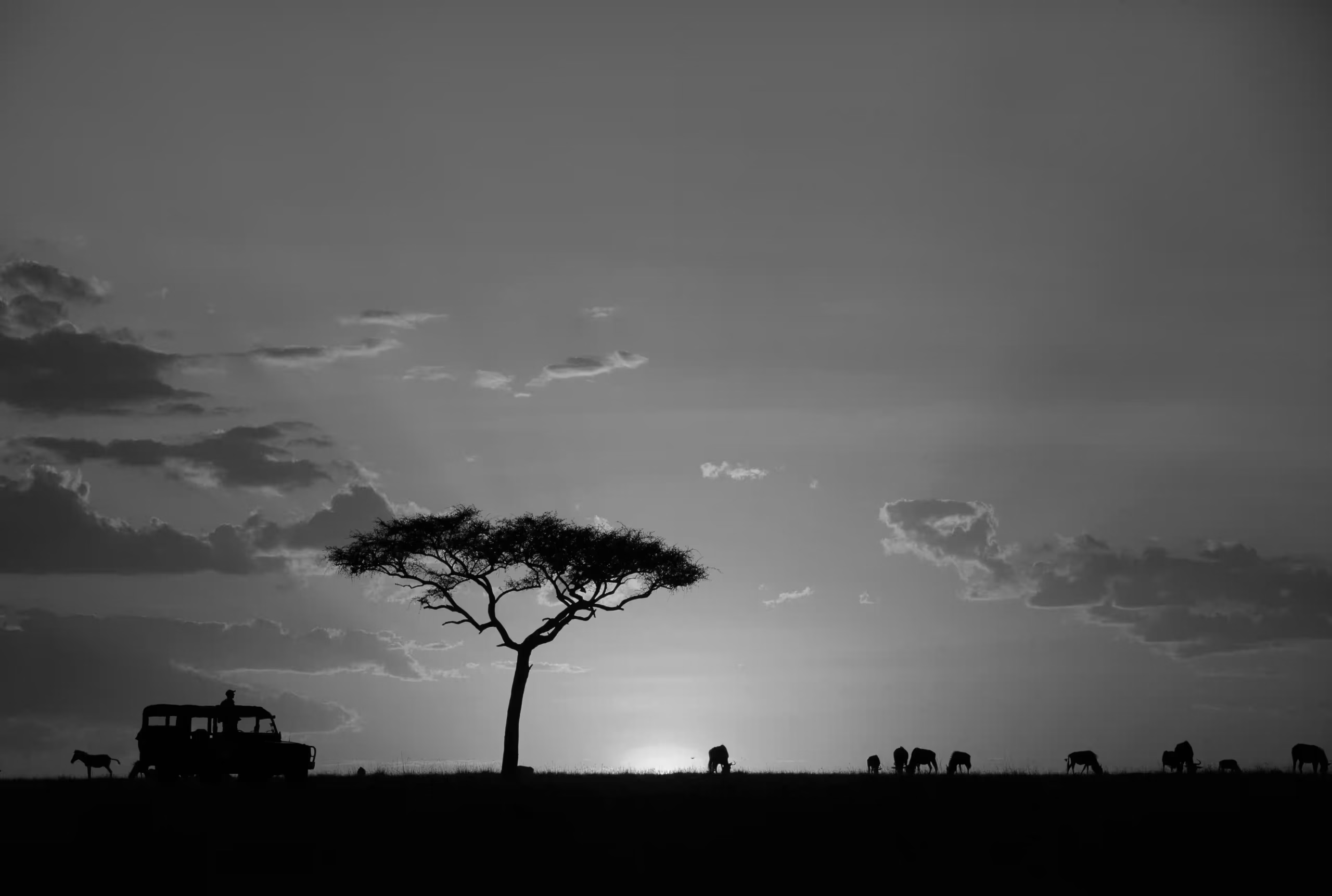
As we venture into the regions surrounding Mount Kilimanjaro, we discover a world teeming with wildlife. The diverse ecosystems around the mountain offer a unique blend of wildlife viewing opportunities, making it an ideal destination for safari enthusiasts.
Big Game Viewing Opportunities
The areas around Kilimanjaro are renowned for their rich big game populations. Visitors can expect to see a variety of large mammals and predators in their natural habitats.
Elephants and Other Large Mammals
Kilimanjaro’s surroundings are home to significant populations of elephants, buffalo, and other large herbivores. These majestic creatures roam the landscapes, offering unforgettable viewing experiences. Elephant sightings are particularly common in the forest zones, where they forage for food and socialize in their family groups.
Predators of the Kilimanjaro Region
The region is also inhabited by various predators, including leopards, lions, and hyenas. Leopards are often spotted in the forested areas, where their elusive nature makes them a thrilling sighting for safari-goers. The open plains surrounding the mountain are home to lions, who roam freely in prides.
Bird Watching in Kilimanjaro’s Ecosystems
Bird enthusiasts will find Kilimanjaro and its surroundings to be a paradise, with a wide variety of bird species inhabiting the different ecological zones.
Forest Species
The rainforests around Kilimanjaro are home to a rich array of birdlife, including turacos, barbets, and various species of hornbills. The dense canopy provides a perfect habitat for these and many other forest-dwelling birds.
Highland and Alpine Birds
As one ascends to higher altitudes, the birdlife changes, with species such as the Hartlaub’s starling and the alpine swift becoming more common. The highland and alpine zones offer unique bird watching opportunities, with species adapted to the harsh, high-altitude conditions.

The combination of big game viewing and bird watching opportunities makes a safari around Kilimanjaro a truly comprehensive wildlife experience. Whether you’re observing majestic elephants or spotting rare bird species, the regions around Kilimanjaro offer unforgettable encounters with nature.
Transformative Trekking: Journeying Through Multiple Ecosystems
Trekking through Kilimanjaro’s diverse ecosystems is a transformative experience that challenges us physically and spiritually. As we journey through multiple biomes, we’re immersed in the natural beauty and spiritual essence of the mountain.
Popular Routes and Their Ecological Highlights
Kilimanjaro offers several trekking routes, each with its unique ecological highlights. Two of the most popular routes are the Machame and Lemosho routes.
Machame Route: The Scenic Path
The Machame Route is known for its scenic beauty, winding through the rainforest and heath zones before reaching the alpine desert. Trekkers on this route are treated to diverse flora and fauna, including giant lobelias and colorful wildflowers.
Lemosho Route: The Wilderness Experience
The Lemosho Route offers a more remote and wilderness-like experience, with trekkers passing through the untouched rainforest and enjoying the solitude of the heath and moorland zones. This route is ideal for those seeking a more secluded adventure.
The Physical and Spiritual Experience of Crossing Biomes
As trekkers ascend Kilimanjaro, they’re not just changing altitude; they’re traversing through different worlds. Each ecosystem presents its own challenges and rewards, from the lush rainforest to the stark beauty of the alpine desert. This journey is as much about personal transformation as it is about reaching the summit.

Conservation Efforts Protecting Kilimanjaro’s Biodiversity
Protecting Kilimanjaro’s natural heritage requires a multifaceted approach that involves both national park management and community-based initiatives. The mountain’s unique ecosystems support a wide range of flora and fauna, many of which are found nowhere else on Earth.
National Park Management and Regulations
The Kilimanjaro National Park plays a crucial role in conservation efforts. Park management implements various regulations to minimize human impact on the environment. These include limiting the number of climbers, enforcing waste management practices, and controlling access to sensitive areas. Effective management ensures that the park’s natural resources are preserved for future generations.
The park’s management also collaborates with international organizations to monitor and mitigate the effects of climate change on Kilimanjaro’s ecosystems.
| Conservation Measure | Description | Impact |
|---|---|---|
| Climber Limitation | Restricting the number of climbers per day | Reduces erosion and habitat disturbance |
| Waste Management | Implementing strict waste disposal practices | Minimizes environmental pollution |
| Access Control | Regulating access to sensitive areas | Protects fragile ecosystems |
Community-Based Conservation Initiatives
Local communities are integral to Kilimanjaro’s conservation efforts. Community-based initiatives focus on educating residents about the importance of conservation and involving them in the protection of the mountain’s ecosystems. Community-led conservation projects have been successful in promoting sustainable land use practices and reducing human-wildlife conflict.
These initiatives not only benefit the environment but also contribute to the economic development of local communities, creating a positive feedback loop that supports both conservation and livelihoods.
Seasonal Variations: When to Experience Kilimanjaro’s Ecosystems
Kilimanjaro’s ecosystems are a dynamic tapestry, woven from the threads of seasonal variations that transform the mountain’s landscapes. The dry and wet seasons bring distinct experiences, each with its own charm and challenges.
Dry Season Safari Advantages
The dry season, typically from June to October, offers ideal conditions for safari adventures around Kilimanjaro. Clear skies and dry trails make it perfect for trekking and wildlife viewing. The dry season also brings animals out to water sources, increasing the chances of spotting big game.
- Optimal trekking conditions
- Enhanced wildlife viewing
- Clear skies for panoramic views
Wet Season Ecological Transformations
The wet season, from November to May, transforms Kilimanjaro’s ecosystems in remarkable ways. Lush vegetation and raging waterfalls create a breathtakingly beautiful landscape. This season also brings new life, with many plants and animals thriving in the moist conditions.
| Season | Ecological Highlights | Activity Advantages |
|---|---|---|
| Dry Season | Concentrated wildlife around water sources | Ideal trekking conditions |
| Wet Season | Lush landscapes, new life, waterfalls | Fewer tourists, unique photography opportunities |
Understanding these seasonal variations helps us appreciate the ever-changing beauty of Kilimanjaro’s ecosystems. Whether we visit during the dry or wet season, each moment on this majestic mountain is a unique experience.
Photography Tips for Capturing Kilimanjaro’s Ecological Zones
Photographing Kilimanjaro’s ecological zones is a challenge that requires both technical skill and creative vision. As we traverse the mountain’s diverse landscapes, from the lush rainforest to the stark alpine desert, our cameras become tools for capturing the essence of this natural wonder.
Equipment Recommendations for Different Environments
To capture the beauty of Kilimanjaro’s varied ecosystems, it’s essential to have the right equipment. For the lower slopes, a wide-angle lens can help encompass the lush vegetation, while a telephoto lens is ideal for capturing wildlife in the forest. As we ascend to higher altitudes, a polarizing filter can enhance the stark beauty of the alpine landscape by reducing glare and enhancing colors.
Key equipment to consider includes:
- A versatile zoom lens (e.g., 24-70mm) for landscapes and close-up shots
- A telephoto lens (e.g., 70-200mm) for wildlife photography
- A sturdy tripod for stabilizing the camera, especially in low light conditions
- A polarizing filter to reduce glare and enhance colors
Composition Techniques for Landscape and Wildlife
Composition is crucial when photographing Kilimanjaro’s diverse ecosystems. For landscapes, using the rule of thirds can create balanced and engaging images. When capturing wildlife, patience and a keen eye for detail are essential. Anticipating animal behavior and being ready to snap the shot can result in powerful and emotive photographs.
Some effective composition techniques include:
- Using leading lines to guide the viewer’s eye through the image
- Incorporating foreground elements to add depth to landscape shots
- Capturing the interaction between wildlife and their environment
Cultural Immersion: Indigenous Knowledge of Kilimanjaro’s Ecosystems
The slopes of Kilimanjaro are not just a natural wonder, but also a repository of cultural traditions and ecological wisdom. For centuries, indigenous communities such as the Chagga and Maasai have lived in harmony with the mountain, developing a deep understanding of its ecosystems.
Chagga Traditions and Ecological Wisdom
The Chagga people have a rich cultural heritage that is intricately linked with the ecological zones of Kilimanjaro. Their traditional practices, such as irrigation systems and agricultural methods, demonstrate a sophisticated understanding of the mountain’s ecosystems. For instance, the Chagga have developed a complex system of furrows and canals to bring water from the mountain’s rivers to their fields, showcasing their ecological wisdom.
| Traditional Practice | Ecological Benefit |
|---|---|
| Irrigation Systems | Conserves water and supports agriculture |
| Agroforestry | Maintains biodiversity and soil health |
Maasai Perspectives on the Mountain and Its Wildlife
The Maasai community, known for their pastoral traditions, has a unique perspective on Kilimanjaro’s wildlife. They have coexisted with the mountain’s diverse fauna for centuries, developing a deep respect for the natural world. The Maasai believe in living in harmony with nature, and their traditional practices reflect this philosophy.
“The mountain is our home, and we are its guardians,” is a sentiment that echoes the Maasai’s profound connection with Kilimanjaro. Their knowledge of the mountain’s ecosystems is invaluable, offering insights into the delicate balance between human activity and natural conservation.
Responsible Tourism: Minimizing Impact on Fragile Ecosystems
Kilimanjaro’s beauty is not just a sight to behold but also a responsibility to preserve for future generations. As we journey through its diverse ecosystems, we are not just travelers; we are guardians of the mountain’s integrity.
Leave No Trace Principles for Kilimanjaro Visitors
Embracing the Leave No Trace principles is crucial for minimizing our footprint on Kilimanjaro. This means staying on designated trails, avoiding litter, and not removing any natural souvenirs. As the saying goes, “We do not inherit the earth from our ancestors; we borrow it from our children.” Responsible trekking is not just about reaching the summit; it’s about preserving the journey for others.
- Plan ahead and prepare
- Travel and camp on durable surfaces
- Dispose of waste properly
- Leave what you find
- Minimize campfire impacts
- Respect wildlife
- Be considerate of other visitors
Choosing Eco-Friendly Tour Operators
The choice of tour operator can significantly impact our experience and the mountain’s well-being. Eco-friendly tour operators are committed to sustainable practices that minimize environmental impact. They often support local communities and conservation efforts, ensuring that our visit contributes positively to the area. As we choose our guides and tour operators, we are not just selecting a service; we are choosing partners in preserving Kilimanjaro’s majesty.
“The way we travel is a statement of our values. Let’s choose to travel in a way that respects and preserves the natural beauty we come to admire.”
Conclusion: The Lasting Impact of Kilimanjaro’s Ecological Journey
As we conclude our journey through the ecosystems of Mount Kilimanjaro, we reflect on the profound experience of traversing this majestic mountain. From the cultivated zones at its base to the arctic summit, Kilimanjaro’s diverse ecosystems have revealed the intricate beauty of nature and the importance of conservation.
Kilimanjaro’s ecological journey has a lasting impact on all who venture through its varied landscapes. The experience not only deepens our appreciation for the natural world but also underscores the need for continued conservation efforts to protect this unique environment for future generations.
As we move forward, we are reminded of the importance of responsible tourism and community-based conservation initiatives in preserving Kilimanjaro’s biodiversity. By supporting these efforts, we can ensure that the mountain’s ecosystems continue to thrive, maintaining their ecological integrity and beauty.
In embracing the spirit of Kilimanjaro’s ecological journey, we foster a deeper connection with nature and a commitment to its preservation. This journey leaves an indelible mark on our hearts, inspiring a lasting impact that resonates long after we leave the mountain’s slopes.
FAQ
What are the different ecosystems found on Mount Kilimanjaro?
Mount Kilimanjaro is home to five distinct ecological zones: the cultivated zone, rainforest, heath and moorland, alpine desert, and arctic summit. Each zone supports a unique array of flora and fauna, and together they create a rich and diverse natural heritage.
What is the best time to visit Kilimanjaro’s ecosystems?
The best time to visit Kilimanjaro’s ecosystems depends on your preferences. The dry season offers advantages for safari and trekking, while the wet season brings ecological transformations that can be fascinating to witness. We recommend considering the seasonal variations and planning your visit accordingly.
How can I minimize my impact on Kilimanjaro’s fragile ecosystems?
To minimize your impact, follow the Leave No Trace principles, choose eco-friendly tour operators, and respect local regulations and guidelines. By being a responsible tourist, you can help preserve the natural beauty and biodiversity of Kilimanjaro.
What conservation efforts are in place to protect Kilimanjaro’s biodiversity?
The conservation of Kilimanjaro’s biodiversity involves national park management, regulations, and community-based initiatives. Local communities, such as the Chagga and Maasai, play a vital role in conservation efforts, and we work closely with them to protect the mountain’s ecosystems.
Can I trek through multiple ecosystems on Kilimanjaro?
Yes, trekking through the ecosystems of Kilimanjaro is a transformative experience that offers the opportunity to journey through multiple biomes. Popular routes like the Machame and Lemosho routes take you through diverse ecological zones, providing a unique and enriching experience.
What wildlife can I expect to see in Kilimanjaro’s ecosystems?
The regions around Mount Kilimanjaro are home to a wide range of wildlife, including elephants, large mammals, predators, and a variety of bird species. The different ecological zones support a diverse array of fauna, and we offer guided safaris and trekking experiences to help you spot these amazing creatures.
How do the local communities interact with Kilimanjaro’s ecosystems?
The local communities around Kilimanjaro, such as the Chagga and Maasai, have a deep understanding of the mountain’s ecosystems and a rich cultural heritage. We work closely with these communities to promote cultural immersion and support conservation efforts that benefit both the environment and local people.
What are the benefits of visiting Kilimanjaro during the dry season?
Visiting Kilimanjaro during the dry season offers several advantages, including better trekking conditions and increased opportunities for wildlife viewing. The dry season also provides a unique perspective on the mountain’s ecosystems, with clearer skies and more accessible trails.
How can I capture the beauty of Kilimanjaro’s ecosystems through photography?
Capturing the beauty of Kilimanjaro’s ecosystems through photography requires a combination of technical skill and creative vision. We offer tips on equipment recommendations and composition techniques to help you capture the essence of the mountain’s diverse ecosystems.