
As we embark on a journey to Tanzania’s majestic Mt. Kilimanjaro, we are met with the allure of adventure and the reverence for nature’s grandeur. The snow-capped peak stands tall, a testament to the timeless beauty of the African wilderness.
We are drawn into a world where the modern and ancient converge, where the thrill of climbing mt kilimanjaro meets the serenity of the natural world. The experience is transformative, a journey that awakens the senses and nourishes the soul.
The kilimanjaro climb cost is a consideration, but for many, the experience is worth every penny. It’s a journey that connects us with nature, with ourselves, and with the local community.
Key Takeaways
- Experience the majesty of Mt. Kilimanjaro, Tanzania’s greatest mountain.
- Embark on a transformative journey that combines adventure and reverence for nature.
- Discover the unique cultural and natural heritage of the region.
- Understand the importance of responsible tourism in preserving Tanzania’s natural beauty.
- Learn about the various routes and costs associated with climbing Kilimanjaro.
The Call of Africa’s Rooftop
As we stand at the foot of Kilimanjaro, the roof of Africa beckons us to ascend into a realm of timeless grandeur. This majestic mountain has long been a source of inspiration and awe, drawing adventurers and artists alike to its snow-capped peak.
The Allure of Kilimanjaro’s Snowy Crown
Kilimanjaro’s snow-capped summit is a sight to behold, a glistening crown that has captivated the hearts of many. The mountain’s unique beauty lies not just in its height, but in its ability to evoke a sense of wonder and reverence in those who behold it.
A Mountain of Legends and Dreams
Kilimanjaro is more than just a mountain; it is a repository of legends and dreams. For centuries, it has been a source of fascination for local communities and international travelers alike.
Literary Inspirations from Hemingway to Modern Poets
The influence of Kilimanjaro extends into the literary world, inspiring writers such as Ernest Hemingway to craft stories that capture the mountain’s mystique. Modern poets continue this tradition, drawing upon the mountain’s beauty and symbolism to create works that resonate with readers worldwide.
| Literary Work | Author | Inspiration from Kilimanjaro |
|---|---|---|
| The Snows of Kilimanjaro | Ernest Hemingway | Mortality and the human condition |
| Kilimanjaro | Dan Simmons | Adventure and personal transformation |
| Various Poems | Modern Poets | Beauty, symbolism, and the sublime |

Kilimanjaro’s allure is not limited to its physical beauty; it is also a symbol of human resilience and the quest for transcendence. As we climb, we are drawn into a world of breathtaking landscapes and profound personal reflection.
Tanzania’s Crown Jewel: Understanding Kilimanjaro
As we gaze upon Kilimanjaro, we are not only witnessing Africa’s highest peak but also uncovering the layers of its volcanic past and ecological diversity. This majestic mountain is a testament to Tanzania’s rich natural heritage.
Geological Formation and Volcanic History
Kilimanjaro’s formation is a result of volcanic activity that began millions of years ago. The mountain is composed of three volcanic cones: Kibo, Mawenzi, and Shira, each with its unique characteristics and history.
The Three Volcanic Cones: Kibo, Mawenzi, and Shira
Kibo, the highest cone, is where you’ll find the summit, Uhuru Peak. Mawenzi and Shira, while not as tall, offer breathtaking views and insights into the mountain’s volcanic past. The diversity among these cones adds to the richness of the Kilimanjaro experience.
The Shrinking Glaciers: Witnessing Climate Change
The glaciers on Kilimanjaro’s summit are rapidly disappearing, a stark reminder of climate change’s impact on our planet. This phenomenon not only affects the local ecosystem but also serves as a global indicator of environmental shifts.

Understanding Kilimanjaro involves recognizing the challenges it faces, including the effects of climate change. As we explore this natural wonder, we are reminded of the importance of responsible tourism and conservation efforts. The cost of climbing Mt. Kilimanjaro can vary greatly depending on the route taken and the services included, making it essential to plan carefully.
The Poetry of Altitude: Kilimanjaro’s Five Ecosystems
The ascent of Kilimanjaro is a poetic journey through five unique worlds, each with its own rhythm and beauty. As we climb, the landscape transforms, revealing the mountain’s diverse facets.
Bushland: The Gateway to Ascension
Our journey begins in the bushland, where acacia trees stand tall, their thorny branches a testament to nature’s resilience. This zone is the gateway to our ascension, setting the tone for the adventure ahead.

Rainforest: A Symphony of Life
As we ascend, the bushland gives way to a lush rainforest, teeming with life. The air is thick with the scent of damp earth and greenery, and the canopy overhead filters the sunlight, creating a mystical atmosphere. Here, we’re enveloped in the sounds of the forest: the chirping of birds, the rustling of leaves, and the distant call of a monkey.
Heath and Moorland: The Transition Zone
Beyond the rainforest lies the heath and moorland, a transition zone where the landscape shifts dramatically. Giant heather and lobelia dominate this zone, their unusual shapes a testament to the harsh conditions. The air is cooler and thinner, and we can feel the change in altitude.
Alpine Desert: The Stark Beauty
The alpine desert is a stark and beautiful landscape, devoid of the lush vegetation of lower altitudes. The rocky terrain stretches out before us, with hardy plants like Senecio kilimanjari pushing through the soil. The silence here is almost palpable, a contrast to the vibrant life below.
Arctic Summit: The Roof of Africa
Finally, we reach the arctic summit, the roof of Africa. Here, the air is crisp and thin, and the wind can be biting. Yet, the beauty of this frozen landscape is undeniable, with snow-capped peaks glistening in the sunlight. As we stand at Uhuru Peak, we feel a deep sense of accomplishment and connection to the natural world.
Climbing Mt Kilimanjaro is more than just a hike; it’s a journey through these five distinct ecosystems, each offering a unique perspective on the natural world. As we ascend, we’re not just gaining altitude – we’re experiencing the poetry of the mountain.
“The mountain is a poem, written in stone, earth, and sky. Kilimanjaro is a masterpiece, a testament to nature’s artistry.”
Preparing Your Spirit and Body for the Climb
As we prepare to ascend Kilimanjaro, the tallest freestanding mountain in the world, we must attune our bodies and spirits to the challenge ahead. The climb is not just a physical feat but a journey of mental and emotional resilience.
Physical Training: Building Endurance for the Journey
Physical preparation is crucial for tackling Kilimanjaro’s demanding terrain. We recommend starting a training regimen at least 8 weeks prior to your climb, focusing on cardiovascular exercises such as hiking, running, and cycling. Incorporating strength training to build muscular endurance, particularly in your legs and core, will also be beneficial. The goal is to build your endurance to undertake 4-6 hours of hiking per day with a loaded backpack.
Mental Preparation: The Mindset of a Successful Climber
Mental preparation is equally important as physical training. Developing a positive mindset and learning stress management techniques can significantly impact your climbing experience. Visualization techniques, meditation, and mindfulness practices can help prepare your mind for the challenges ahead. Understanding that setbacks are part of the journey and maintaining a flexible mindset will also aid in overcoming obstacles.
Essential Gear for Your Poetic Expedition
Having the right gear is vital for a successful and enjoyable climb. Essential items include sturdy hiking boots, layered clothing for varying temperatures, a reliable backpack, and high-quality camping equipment. It’s also important to pack personal items that bring comfort and motivation, as they can play a significant role in your mental well-being during the climb.
Layering for Dramatic Climate Changes
Kilimanjaro’s climate varies dramatically from the base to the summit, with temperatures potentially dropping to -20°C at the peak. Layering your clothing is key to managing these changes. Start with a moisture-wicking base layer, add insulating layers such as fleece or down, and finish with a waterproof and windproof outer layer. This layering system allows you to adjust your clothing according to the temperature, ensuring comfort throughout your climb.

Understanding the kilimanjaro climb cost is also part of your preparation. The cost includes expedition fees, gear, clothing, and guides. Budgeting accordingly and understanding what is included in the cost can help in planning a successful and stress-free climb.
The Rhythms of Climbing Mt Kilimanjaro
The climb up Kilimanjaro is a transformative odyssey, where the mountain’s ancient stones whisper tales of endurance and perseverance. As we ascend, the rhythms of the climb begin to reveal themselves, teaching us the importance of harmony with nature.
Understanding Acclimatization and Its Importance
Acclimatization is the key to a successful climb. It’s the process by which our bodies adapt to the decreasing oxygen levels at higher altitudes. Proper acclimatization reduces the risk of altitude sickness, allowing us to enjoy the climb.
The Daily Ritual: Pole Pole (Slowly, Slowly)
The mantra “pole pole” echoes through the mountains, reminding us to pace ourselves. This slow and deliberate pace is not just a physical necessity but a mental one, allowing us to absorb the beauty around us.

Embracing the Mountain’s Pace
As we climb higher, the air thins, and our bodies begin to feel the strain. It’s here that we must embrace the mountain’s pace, listening to our bodies and the wisdom of our guides.
Finding Your Breath: Meditation at Altitude
Meditation becomes a crucial tool at high altitudes, helping us to find our breath and calm our minds. It’s a practice that connects us deeper with the natural world.
| Altitude (ft) | Acclimatization Tips | Meditation Benefits |
|---|---|---|
| 8,000-10,000 | Hydrate, rest, and ascend slowly | Reduces stress, improves focus |
| 10,000-12,000 | Monitor for AMS symptoms, adjust pace | Enhances mental clarity, conserves energy |
| 12,000+ | Prioritize rest, consider Diamox | Promotes inner peace, connects with nature |
By embracing the rhythms of climbing Mt. Kilimanjaro, we not only reach the summit but also discover a deeper connection with ourselves and the natural world.
Choosing Your Path: The Seven Routes to the Summit
Climbing Mt Kilimanjaro is a journey that begins with selecting one of seven unique routes, each with its own character and challenges. As we prepare to ascend Africa’s highest peak, we must consider not only our physical abilities and experience but also the kind of adventure we seek.

Marangu: The “Coca-Cola” Route
The Marangu route, often called the “Coca-Cola” route, is one of the most popular paths to the summit. It’s known for its relatively gentle slope and the presence of huts along the way, making it seem more like a comfortable hike than a challenging climb. However, its popularity comes with a trade-off: the crowds can detract from the wilderness experience.
Machame: The “Whiskey” Route
Machame, or the “Whiskey” route, is another favorite among climbers. It’s considered more difficult than Marangu due to its steeper incline, but the rewards are significant. The route offers stunning vistas and a higher success rate due to better acclimatization.
Lemosho: The Scenic Journey
Lemosho is often praised for its scenic beauty and high success rate. This route takes a longer path to the summit, allowing for better acclimatization. It’s ideal for those who have more time and are looking for a more remote experience.
Rongai: The Quiet Northern Approach
The Rongai route approaches Kilimanjaro from the north, offering a less crowded and more tranquil experience. It’s slightly longer than some other routes, providing good acclimatization, and is considered a good option for those looking for a quieter climb.
Northern Circuit: The Newest Path
The Northern Circuit is the newest and longest route to the summit, offering unparalleled views and a high success rate due to its gradual ascent. It’s ideal for those who want to experience the full majesty of Kilimanjaro without the crowds.
Umbwe: The Steepest Challenge
For the more adventurous, Umbwe offers a direct and challenging route to the summit. It’s known for its steep ascent, making it one of the more difficult paths, but the scenery is breathtaking, and it’s a good choice for those with prior climbing experience.
Shira: The Western Plateau
The Shira route starts from the western side of the mountain, offering a unique perspective on Kilimanjaro’s diverse landscapes. It’s a challenging route that requires a good level of fitness and acclimatization.
When choosing a route, we must consider not just the kilimanjaro climb cost but also our personal preferences, physical condition, and the kind of experience we desire. Each route has its unique charm and challenges, and understanding these differences is key to a successful and enjoyable climb.
Kilimanjaro Climb Cost: Investing in Your Mountain Dream
Embarking on a Kilimanjaro climb requires a thoughtful consideration of the expenses involved, from logistical arrangements to ethical practices. As we guide you through the financial aspects of this adventure, we aim to provide a transparent and comprehensive overview to help you plan your ascent.
Understanding the Price Components
The cost of climbing Kilimanjaro is influenced by several key factors, including the route taken, the duration of the climb, and the services provided by tour operators. These components can be broken down into several areas: permits, guides and porters, accommodation and meals, transportation, and additional services such as equipment rental and training.

Budget vs. Luxury Expeditions
The choice between budget and luxury expeditions significantly affects the overall cost. Budget options focus on the essentials, providing a more basic but still safe and guided experience. Luxury expeditions, on the other hand, offer a more comfortable and personalized experience, with higher-end accommodations and services. We recommend considering what aspects are most important to you when deciding.
Hidden Costs and How to Prepare
Beyond the initial cost, there are several potential hidden expenses to be aware of, including tips for guides and porters, additional gear purchases, and any pre-climb training or medical consultations. Preparing for these expenses in advance can help ensure a smoother and less stressful experience.
Ethical Considerations: Fair Pay for Porters and Guides
An essential aspect of responsible tourism is ensuring fair compensation for the local guides and porters who support your climb. We work closely with operators who prioritize ethical practices, including fair wages and good working conditions. By choosing an operator that adheres to these principles, you contribute to the well-being of the local community. For more information on our commitment to ethical tourism practices, please visit our about us page.
As you plan your Kilimanjaro climb, we encourage you to view your investment not just as a financial outlay, but as a contribution to a transformative experience that benefits both you and the local community.
The Unsung Heroes: Guides and Porters of Kilimanjaro
As we embark on the journey to climb Mt. Kilimanjaro, it’s essential to acknowledge the unsung heroes who make this adventure possible. The guides and porters are the backbone of any Kilimanjaro expedition, providing not just logistical support but also invaluable knowledge and companionship throughout our journey.
The Knowledge Keepers: Your Mountain Guides
Our guides are more than just experienced climbers; they are the keepers of the mountain’s secrets and stories. With their deep understanding of Kilimanjaro’s terrain, weather patterns, and potential hazards, they guide us safely through the challenging terrain.
The Strength Bearers: Porters and Their Incredible Work
Porters are the unsung heroes of the climb, carrying our gear and supplies up the mountain, often under challenging conditions. Their strength and endurance are crucial to the success of our expedition.
Building Relationships on the Mountain
As we climb, we have the opportunity to build meaningful relationships with our guides and porters. This connection enriches our experience, allowing us to learn about their culture and way of life.
Learning Swahili: Connecting Through Language
One way to deepen our connection with guides and porters is by learning a few basic Swahili phrases. Simple expressions like “Jambo” (hello) and “Asante” (thank you) can go a long way in building rapport and showing respect for their culture.
| Swahili Phrase | English Translation | Usage |
|---|---|---|
| Jambo | Hello | Greeting guides and porters |
| Asante | Thank you | Expressing gratitude |
| Pole pole | Slowly, slowly | Encouraging a steady pace |

Seasons of the Mountain: When to Embark on Your Journey
Embarking on a Kilimanjaro climb requires careful consideration of the mountain’s seasonal moods. The timing of your journey significantly impacts your experience, from the trail conditions to the cost of your expedition.
Dry Seasons: The Popular Windows
The dry seasons, from January to March and June to October, are the most popular times to climb Kilimanjaro. These periods offer clearer skies and more stable weather conditions, making the climb more accessible to a wider range of adventurers. However, this popularity comes at a price, as the kilimanjaro climb cost tends to be higher during these periods due to increased demand.
Rainy Seasons: The Road Less Traveled
In contrast, the rainy seasons bring a different kind of beauty to the mountain, with lush vegetation and fewer climbers on the trails. While the rain can make the climb more challenging, it also offers a more serene and intimate experience with nature.
Seasonal Variations in Experience and Cost
The choice of season affects not only the conditions on the mountain but also the overall cost of the climb. Here’s a breakdown of what you can expect:
| Season | Climbing Conditions | Cost Impact |
|---|---|---|
| Dry Season | Favorable | Higher |
| Rainy Season | Challenging | Lower |
| Shoulder Season | Moderate | Moderate |
Full Moon Climbs: Summiting Under Lunar Light
For many climbers, the experience of summiting under a full moon is unforgettable. The lunar light casts a magical glow on the mountain, making the final ascent particularly memorable.

The Language of Altitude: Understanding Mountain Sickness
Altitude sickness is a silent companion on the journey to Kilimanjaro’s summit, one that demands respect and understanding. As we ascend to higher elevations, the air pressure decreases, and with it, the oxygen available to our bodies. This can lead to a condition known as Acute Mountain Sickness (AMS), which can affect even the most physically prepared climbers.
Recognizing the Signs of AMS
The signs of AMS can be subtle at first, manifesting as headaches, nausea, and fatigue. It’s crucial to recognize these symptoms early to prevent more severe forms of AMS, such as High Altitude Pulmonary Edema (HAPE) or High Altitude Cerebral Edema (HACE).
Prevention Strategies and Medications
Prevention is key when it comes to AMS. Climbers can take medications such as acetazolamide to help their bodies acclimatize. Additionally, adopting a gradual ascent and staying hydrated are crucial strategies.
| Prevention Strategy | Description |
|---|---|
| Gradual Ascent | Ascending gradually to allow acclimatization |
| Hydration | Staying well-hydrated to help the body adapt |
| Medication | Using medications like acetazolamide to aid acclimatization |
When to Descend: Safety Above Summit
Safety should always be the top priority when climbing Mt Kilimanjaro. If symptoms of AMS persist or worsen, it’s crucial to descend to a lower altitude.
Listening to Your Body’s Whispers
Our bodies often send us subtle signals. Listening to these whispers can be the difference between a successful climb and a dangerous situation. It’s essential to be aware of our physical condition and to act accordingly.
Chagga Culture: The People of the Mountain
For centuries, the Chagga people have lived in harmony with Kilimanjaro, developing a rich cultural heritage deeply intertwined with the mountain’s majestic presence. Their traditions, beliefs, and way of life have been shaped by the mountain’s grandeur, creating a unique cultural landscape.
Traditional Beliefs About Kilimanjaro
The Chagga people have a profound spiritual connection with Kilimanjaro, believing the mountain to be a sacred entity that influences their daily lives and rituals. They have a deep respect for the natural world, which is reflected in their traditional practices and stories passed down through generations.
Local Customs and Hospitality
Visitors to the region are often struck by the warmth and hospitality of the Chagga people. Their customs are characterized by a strong sense of community and respect for elders, with traditional ceremonies and rituals playing a significant role in their cultural identity. When climbing Mt Kilimanjaro, travelers have the opportunity to experience this hospitality firsthand, gaining insight into the local way of life.
The Changing Relationship Between Mountain and Community
As modern influences reach the slopes of Kilimanjaro, the Chagga culture is evolving. While some traditional practices remain unchanged, others are adapting to the changing world. This dynamic relationship between the mountain, its people, and the outside world is complex, with both challenges and opportunities arising from the intersection of tradition and modernity.
The Chagga people’s story is a testament to the resilience and richness of human culture in the face of change, offering valuable lessons for those who venture to their lands in the shadow of Africa’s highest peak.
The Summit Night: A Dance with the Stars
As we embark on the final ascent of Mt. Kilimanjaro, the night sky transforms into a celestial canvas, setting the stage for an unforgettable dance with the stars. The air is crisp, and the world is bathed in an ethereal glow, as if the mountain itself is radiating an otherworldly light.
Preparing for the Final Push
The hours leading up to the midnight departure are a mix of excitement and nervous energy. Climbers rest, trying to conserve energy for the challenging ascent ahead. Our guides meticulously check the gear, ensuring every climber is equipped for the journey. The cost of climbing Mt. Kilimanjaro becomes a secondary consideration as we focus on the task at hand.
The Midnight Departure
As midnight approaches, the camp stirs to life. Headlamps flicker on, casting a constellation of lights across the darkness. The group sets off into the night, a procession of determined individuals, each with their own reasons for reaching the summit. The initial steepness of the ascent tests our resolve, but the promise of witnessing the sunrise from the roof of Africa propels us forward.
Stella Point to Uhuru Peak: The Final Steps
The journey from Stella Point to Uhuru Peak is a test of endurance, but the anticipation of standing at the highest point in Africa keeps us moving. The slope eases slightly, allowing us to catch our breath, and then the final push begins. Every step is a declaration of willpower, a statement that we are here, on this mountain, striving for the top.
Sunrise at the Roof of Africa
As the first light of dawn creeps over the horizon, the sky transforms into a kaleidoscope of colors. We stand at Uhuru Peak, bathed in the golden glow of sunrise, feeling an overwhelming sense of achievement.
The Emotional Summit: Tears, Joy, and Reflection
The moment we reach the summit is a mix of emotions: tears of joy, relief, and a deep sense of accomplishment. We reflect on the journey, the challenges overcome, and the bonds formed along the way. The experience is not just about conquering a mountain; it’s about discovering our inner strength and the beauty of the natural world.
In the end, the climb to Mt. Kilimanjaro is a journey that touches the heart and soul. The memories of the summit night and the sunrise at Uhuru Peak stay with us forever, a reminder of the magic that awaits those who dare to dream big.
Descent: The Forgotten Journey
The descent from Kilimanjaro’s summit is more than just a physical journey; it’s a path of reflection and introspection. As climbers, we’ve pushed our limits to reach the rooftop of Africa, and now we must navigate the emotional terrain of our achievement.
The Physical Challenges of Coming Down
Descending from Kilimanjaro can be just as challenging as the ascent. The steep terrain and high altitude can cause fatigue, muscle strain, and in some cases, altitude sickness. Climbers must be cautious and pace themselves to avoid injuries.
Processing Your Achievement
The descent is a time for reflection on the journey and the accomplishment. Climbers often experience a mix of emotions: pride, relief, and sometimes a touch of sadness. It’s a moment to acknowledge the personal growth and the bonds formed with fellow climbers and guides.
The Return to Earth
As we make our way down, the mountain’s grandeur slowly gives way to a sense of normalcy. The return to earth is a transition from the extraordinary to the ordinary, a process that can take time to adjust to.
Carrying Memories Down the Mountain
The memories of climbing Mt. Kilimanjaro stay with you long after you’ve descended. The experience leaves an indelible mark, shaping perspectives and inspiring future adventures. As we carry these memories down the mountain, we also carry the lessons learned and the strength gained.
| Aspect of Descent | Physical Challenges | Emotional Reflections |
|---|---|---|
| Terrain | Steep and rocky | Reflection on the journey |
| Altitude | High altitude sickness risk | A sense of accomplishment |
| Emotional State | Fatigue and strain | Pride and relief |
Beyond the Mountain: Tanzania’s Other Treasures
Beyond the snow-capped peaks of Kilimanjaro lies a land of diverse beauty, from savannas to spice islands. Tanzania’s true essence extends far beyond the mountain, embracing a rich cultural heritage and breathtaking natural landscapes.
As travelers descend from the mountain, they can explore the myriad wonders that Tanzania has to offer. One of the most compelling experiences is a safari extension to the Serengeti and Ngorongoro.
Safari Extensions: The Serengeti and Ngorongoro
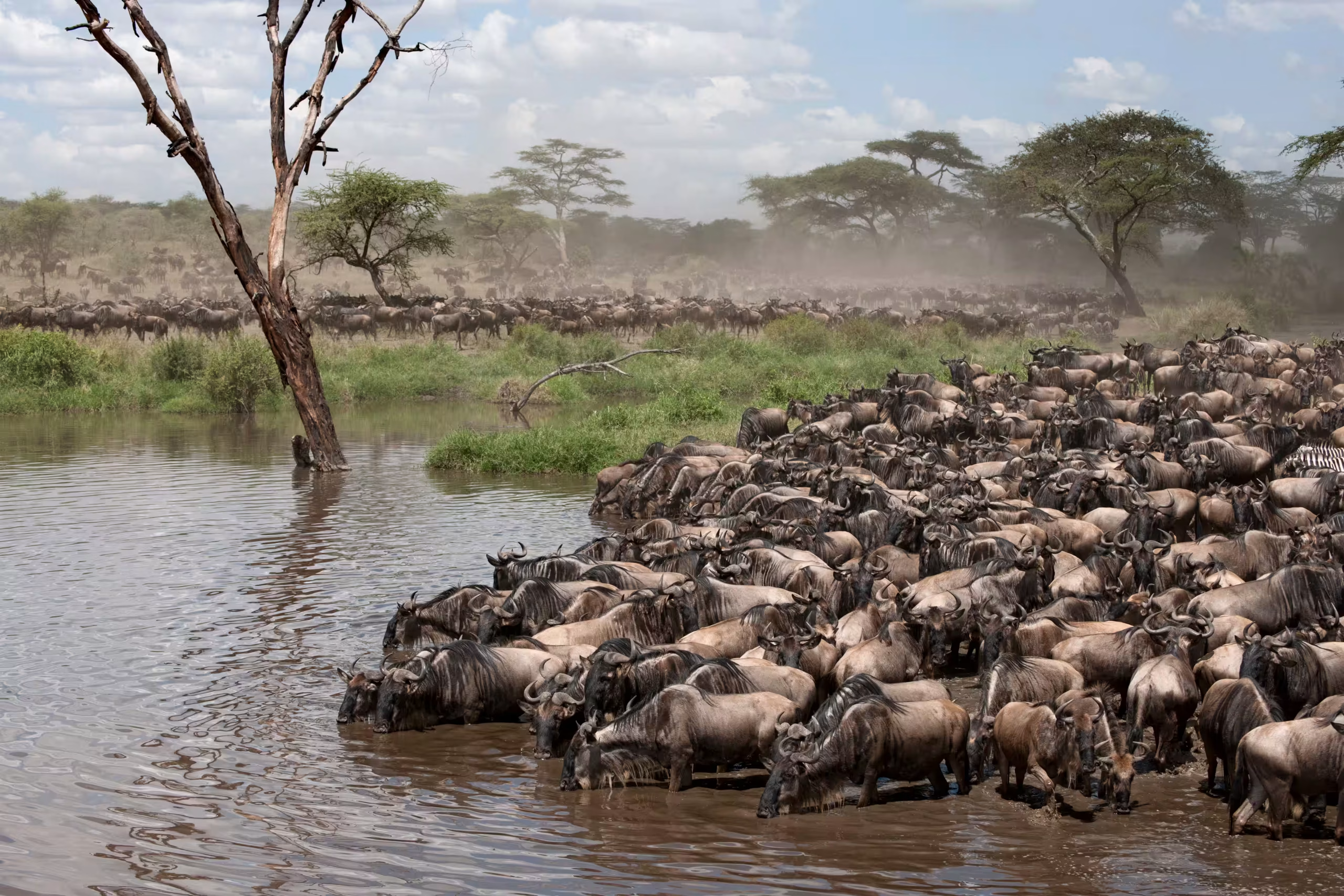
The Serengeti, with its endless plains, hosts the Great Migration, one of the most spectacular wildlife events on the planet. Ngorongoro Crater, a UNESCO World Heritage Site, is home to an incredible concentration of wildlife within its volcanic walls.
- Witness the Great Migration in the Serengeti
- Explore the Ngorongoro Crater’s unique ecosystem
- Enjoy guided safaris with expert guides
Zanzibar: The Spice Island Recovery
After the mountain, Zanzibar offers a tranquil retreat. This spice island is renowned for its crystal-clear waters, white sandy beaches, and historic Stone Town. Visitors can unwind with beach activities, explore local markets, or indulge in a rejuvenating spa treatment.
Cultural Immersion with Local Communities
Tanzania is not just about landscapes; it’s also about its people. Cultural immersion programs allow visitors to engage with local communities, learn traditional practices, and understand the rich heritage of the region.
Responsible Tourism in Tanzania
As we explore these treasures, it’s crucial to practice responsible tourism. This includes supporting local economies, respecting cultural norms, and minimizing our environmental footprint. By doing so, we ensure that Tanzania’s beauty and culture are preserved for generations to come.
The Transformation: How Kilimanjaro Changes You
The experience of climbing Kilimanjaro transcends mere adventure, evolving into a profound transformation that resonates deeply within us. As we embark on this journey, we are met with challenges that test our physical and mental limits, fostering growth and self-discovery.
Physical Accomplishment and Its Lasting Impact
Reaching the summit of Kilimanjaro is a testament to our physical endurance and determination. The sense of accomplishment that comes with it stays with us long after we’ve descended, inspiring us to tackle new challenges in life.
Mental Strength Discovered on the Mountain
The climb also reveals our inner mental strength. As we navigate the mountain’s rugged terrain and unpredictable weather, we develop resilience and a deeper understanding of our capabilities.
Carrying the Mountain Within You
The transformation experienced on Kilimanjaro doesn’t end when we leave the mountain. The lessons learned and the strength gained stay with us, influencing our daily lives and shaping our future endeavors.
| Aspect of Transformation | Impact on Climbers |
|---|---|
| Physical Accomplishment | Boosts confidence and endurance |
| Mental Strength | Fosters resilience and determination |
| Personal Growth | Influences daily life and future endeavors |
Conclusion: The Eternal Call of Kilimanjaro
As we reflect on the journey of climbing Mt Kilimanjaro, we are reminded of the mountain’s timeless grandeur and the transformative power it holds. The experience of ascending to the Roof of Africa is not just about reaching the summit; it’s about the journey, the people you meet, and the insights you gain along the way. Whether you’re drawn to the challenge of climbing mt kilimanjaro or considering the investment required for a successful expedition, understanding the kilimanjaro climb cost is crucial.
The allure of Kilimanjaro lies in its ability to inspire and transform. As you plan your journey, we invite you to consider not just the cost, but the value of the experience. The memories, the personal growth, and the connection with nature and local cultures are invaluable. We stand as guardians of this incredible resource, committed to preserving its beauty and sharing its soul with the world.
Kilimanjaro’s eternal call beckons you to embark on a journey of discovery and transformation. Will you answer?
FAQ
What is the cost of climbing Kilimanjaro?
The cost of climbing Kilimanjaro varies depending on the route, tour operator, and services included, ranging from budget-friendly options to luxury expeditions.
What are the different routes to the summit of Kilimanjaro?
There are seven established routes to the summit: Marangu, Machame, Lemosho, Rongai, Northern Circuit, Umbwe, and Shira, each with its unique characteristics and challenges.
How do I prepare for the climb physically?
Physical preparation involves building cardiovascular endurance, muscular strength, and mental toughness through a structured training program, ideally starting several months before the climb.
What is the best time to climb Kilimanjaro?
The best times to climb Kilimanjaro are during the dry seasons, from January to March and June to October, offering clearer skies and more stable weather conditions.
How do I prevent altitude sickness?
Prevention strategies include gradual acclimatization, staying hydrated, and considering medications like Diamox; it’s also crucial to recognize the signs of altitude sickness and know when to descend.
What is the significance of guides and porters in the climb?
Guides and porters are essential for a successful and safe climb, providing expertise, support, and local knowledge, and their fair compensation is a critical aspect of responsible tourism.
Can I climb Kilimanjaro solo?
Climbing Kilimanjaro solo is not recommended due to safety concerns and regulations requiring climbers to be accompanied by a certified guide or join a guided tour.
What are the essential items to pack for the climb?
Essential items include layered clothing, sturdy hiking boots, a first-aid kit, a headlamp, and personal hygiene items, among others, tailored to the specific needs of the climb and the climate.
How does the climb impact the local community?
The climb can positively impact the local community through responsible tourism practices, such as fair pay for guides and porters, and supporting local economies, promoting cultural exchange and understanding.