We invite you to embark on a transformative journey with the Hadzabe, one of the last remaining hunter-gatherer tribes in East Africa. Nestled in the heart of Tanzania, near the shores of Lake Eyasi, the Hadzabe have preserved their ancient way of life, offering a unique glimpse into a world that has remained largely unchanged for centuries.
As we explore their culture, traditions, and daily life, we weave a narrative that is both poetic and reverent, reflecting our deep passion for this land and its indigenous people. This journey is not just about observing a tribe; it’s about experiencing a way of life that is intricately connected to the natural world.
Key Takeaways
- Experience the ancient traditions of the Hadzabe tribe.
- Explore the untouched wilderness around Lake Eyasi.
- Discover a culture that remains largely unchanged.
- Join a journey that combines cultural depth with natural beauty.
- Be part of a transformative experience that goes beyond conventional tourism.
The Last Hunter-Gatherers of East Africa
The Hadzabe tribe remains one of the last remnants of a hunter-gatherer lifestyle in East Africa. With a history that spans thousands of years, their existence is a testament to the resilience of ancient traditions in a rapidly changing world.

Ancient Origins and Lineage
The Hadzabe people’s lineage is deeply rooted in history, with genetic studies indicating they are one of the oldest human populations on Earth. Their ancestral lineage dates back to a time when hunter-gatherer societies were prevalent across Africa. This ancient heritage has allowed them to maintain a unique cultural identity.
Demographic Profile in Modern Tanzania
In modern Tanzania, the Hadzabe community is small, numbering around 1,300 individuals. Despite their small size, they have managed to preserve their traditional way of life. The demographic profile of the Hadzabe reveals a community that is both resilient and vulnerable to external influences.
| Category | Details |
|---|---|
| Population Size | Around 1,300 |
| Location | Lake Eyasi Region, Tanzania |
| Lifestyle | Hunter-Gatherer |
Who Are the Hadzabe People of Tanzania?
Deep in Tanzania, a tribe has thrived for centuries, preserving a way of life that offers a unique window into humanity’s ancient past. The Hadzabe people, with their rich cultural heritage, continue to fascinate anthropologists and travelers alike.

Historical Background and Anthropological Significance
The Hadzabe are one of the last remaining hunter-gatherer tribes in East Africa, with a history that stretches back thousands of years. Their ancestral lands around Lake Eyasi have been home to these skilled hunters and gatherers, who have maintained a delicate balance with nature. Anthropologists have long been fascinated by the Hadzabe due to their unique cultural practices and the insights they provide into human evolution and societal development.
Some key aspects of their historical significance include:
- Continuous occupation of their ancestral lands for thousands of years
- Preservation of traditional hunting and gathering practices
- Unique social structure that has allowed them to thrive in harmony with their environment
Language and Communication Methods
The Hadzabe language is a remarkable aspect of their cultural identity, characterized by distinctive click sounds that are a hallmark of their communication. This unique linguistic feature is not only fascinating to linguists but also plays a crucial role in their daily interactions.
Unique Click Language Features
The Hadzabe click language is one of the most distinctive features of their culture. It includes a variety of clicks that are used to convey different meanings, making it a complex and expressive form of communication. Some of the unique characteristics of their language include:
- Use of dental clicks to distinguish between different words
- Complex system of lateral clicks that convey specific meanings
- Alveolar clicks used in various contexts
Non-Verbal Communication Traditions
In addition to their unique verbal language, the Hadzabe also employ various forms of non-verbal communication. These include:
- Body language and facial expressions
- Gesture-based communication during hunting
- Shared understanding of natural signs and environmental cues
These non-verbal cues play a vital role in their daily life, facilitating cooperation and understanding within the community.
Life Around Lake Eyasi: The Hadzabe Homeland
Nestled in the heart of Tanzania, Lake Eyasi serves as the ancestral home for the Hadzabe people, offering a glimpse into a traditional hunter-gatherer lifestyle. This region is characterized by its unique geographical features and a rich natural environment that has supported the Hadzabe way of life for centuries.
Geographical Setting and Natural Environment
The landscape around Lake Eyasi is a diverse mosaic of woodlands, grasslands, and wetlands, creating a rich tapestry of ecosystems. This diversity is crucial for the Hadzabe, providing them with a wide range of resources.
Lake Eyasi Ecosystem Characteristics
Lake Eyasi is a seasonal lake, with its water levels fluctuating significantly throughout the year. This fluctuation contributes to the lake’s unique ecosystem, supporting a variety of flora and fauna adapted to these conditions.
Flora and Fauna Diversity
The area surrounding Lake Eyasi is home to a diverse array of plant and animal species. The woodlands are dominated by trees such as Acacia and Commiphora, which provide the Hadzabe with essential resources, including food, medicine, and materials for tools.

Seasonal Movements and Territory
The Hadzabe are semi-nomadic, moving seasonally to exploit different resources. Their movements are dictated by the availability of food, water, and other essential resources, demonstrating a deep understanding of the natural environment and a harmonious relationship with the land.
During the dry season, the Hadzabe tend to congregate around Lake Eyasi and other water sources, while in the wet season, they disperse into the surrounding woodlands to forage for seasonal fruits and tubers. This mobility is a key aspect of their survival strategy, allowing them to thrive in this challenging yet beautiful environment.
Daily Life in a Hunter-Gatherer Society
The daily routines of the Hadzabe are a testament to their resilience and harmony with nature, offering a glimpse into a world untouched by modern civilization. As we delve into their daily life, we gain insight into the practices that have allowed them to thrive for centuries.
Morning Hunting Rituals
The day begins early for the Hadzabe, with men setting out on hunting expeditions at dawn. Armed with bows and arrows, they track and hunt a variety of game, from small birds to larger animals like impalas. The hunt is not just about providing food; it’s a ritual that strengthens their bond with nature and with each other.

Women’s Gathering Practices
While the men are out hunting, the women embark on their own vital task: gathering. They forage for berries, roots, and other edible plants, using knowledge passed down through generations to identify what’s safe to eat. This gathering is crucial, as it provides a significant portion of the tribe’s daily sustenance.
| Activity | Responsibility | Significance |
|---|---|---|
| Hunting | Men | Provides protein-rich food |
| Gathering | Women | Supplies essential nutrients and berries |
| Community Activities | Both Men and Women | Strengthens social bonds and cultural heritage |
Evening Community Activities
As the day comes to a close, the Hadzabe gather around the fire, sharing stories of the day’s adventures. The evening is filled with singing, dancing, and communal bonding, reinforcing their social structure and cultural identity. It’s a time for relaxation and connection, wrapping up the day’s activities.
Through their daily practices, the Hadzabe demonstrate a profound respect for nature and a deep understanding of their place within it. Their hunter-gatherer lifestyle is not just a means of survival; it’s a way of life that is rich in tradition and community.
Hunting Techniques and Tools
For the Hadzabe, hunting is not just a means of survival, but an art form that has been refined over generations. Their expertise is rooted in a deep understanding of the natural world, allowing them to thrive in the challenging environment around Lake Eyasi.
Traditional Bow and Arrow Craftsmanship
The Hadzabe are renowned for their skill in crafting bows and arrows, a tradition that is both intricate and precise. This craftsmanship is a cornerstone of their hunting prowess.
Materials Selection and Preparation
The process begins with the careful selection of materials. Strong, flexible woods are chosen for the bows, while arrows are crafted from straight, lightweight branches. The preparation of these materials involves meticulous shaping and smoothing to achieve the perfect balance and aerodynamics.
Arrow Poison Preparation
A critical component of Hadzabe hunting is the preparation of arrow poison, derived from the sap of the Commiphora africana tree. This potent mixture is carefully concocted and applied to the arrow tips, ensuring a swift and humane kill.
Tracking Skills and Knowledge of Wildlife
The Hadzabe possess an unparalleled ability to track and understand the behavior of the wildlife around them. Their knowledge, passed down through generations, allows them to read the subtleties of the natural world, from the tracks on the ground to the calls of the birds.

Gathering Practices: Nature’s Pantry
The Hadzabe people’s gathering practices are a testament to their deep connection with nature. Their ability to identify and harvest a variety of foods from the wild is a skill passed down through generations.
Seasonal Berries, Fruits, and Roots
The Hadzabe community relies heavily on seasonal berries, fruits, and roots as a primary source of nutrition. Women play a crucial role in gathering these foods, using their extensive knowledge of the land to identify edible plants. The variety of flora they gather not only provides sustenance but also contributes to the rich cultural heritage of the Hadzabe.

Honey Harvesting Traditions
Honey harvesting is another significant aspect of Hadzabe gathering practices. The tribe has developed a unique method of extracting honey from beehives, guided by the behavior of certain bird species.
Bird Guides to Beehives
The Hadzabe have observed that certain birds, known as honeyguides, lead them to beehives. This symbiotic relationship between the Hadzabe and the birds is a remarkable example of how traditional knowledge can be both practical and ecologically beneficial.
Smoke Techniques and Collection Methods
Once a beehive is located, the Hadzabe use smoke to calm the bees, allowing them to safely extract the honey. This technique, combined with their careful collection methods, ensures that honey harvesting is sustainable and minimally disruptive to the bees.
Social Structure and Family Dynamics
The social fabric of the Hadzabe is woven with threads of equality and mutual respect, creating a community that thrives on cooperation and shared decision-making. This egalitarian approach to society is fundamental to their way of life.
Egalitarian Society Organization
In Hadzabe society, leadership is not about power but about guidance. Decisions are made through consensus, ensuring that every voice is heard. This approach fosters a sense of belonging and equality among all members.
Marriage Customs and Relationships
Marriage within the Hadzabe community is a bond not just between two individuals but between families. Their customs are characterized by respect, cooperation, and a deep understanding of one another’s roles within the community.
Child-Rearing Practices
Children in Hadzabe society are taught from a young age the skills necessary for survival and the importance of cultural heritage. This education is passed down through generations, ensuring the continuation of their traditions.
The following table illustrates the key aspects of Hadzabe social structure:
| Aspect | Description |
|---|---|
| Egalitarian Organization | Decision-making is consensus-driven, ensuring equality among members. |
| Marriage Customs | Marriages are bonds between families, characterized by respect and cooperation. |
| Child-Rearing | Children are taught survival skills and cultural values from a young age. |

The Hadzabe people’s social structure is a testament to their resilience and adaptability. By maintaining their egalitarian society, they continue to thrive in harmony with their environment.
Spiritual Beliefs and Connection to Nature
As we journey with the Hadzabe, we uncover a spiritual fabric that is deeply intertwined with their natural surroundings. Their existence is a testament to a harmonious relationship between humanity and the wilderness, where every rock, tree, and animal holds a story and a spiritual significance.
Cosmology and Origin Stories
The Hadzabe’s cosmology is rich with narratives that explain the creation of the world and their place within it. These stories are not just mere myths; they are living, breathing accounts that have been passed down through generations, shaping their understanding of the universe and their connection to the land. The Hadzabe believe in a complex spiritual realm that interacts with the physical world, influencing their daily lives and rituals.
Healing Ceremonies and Medicinal Knowledge
The Hadzabe possess a sophisticated understanding of medicinal plants and healing practices, which are deeply rooted in their spiritual beliefs. Their healing ceremonies are a blend of spiritual invocation and the use of natural remedies, showcasing a profound respect for the healing properties of the natural world. This knowledge is passed down through generations, highlighting the importance of preserving their cultural heritage.
| Aspect | Description | Significance |
|---|---|---|
| Cosmology | Stories of creation and the universe | Shapes understanding of the world |
| Healing Ceremonies | Blend of spiritual invocation and natural remedies | Reflects respect for nature’s healing properties |
| Medicinal Knowledge | Sophisticated understanding of medicinal plants | Passed down through generations |
Art, Music, and Cultural Expression
As we journey with the Hadzabe, we discover the significance of their artistic expressions, which are deeply intertwined with their daily lives and spiritual beliefs. The Hadzabe people’s cultural identity is richly expressed through various forms of art, music, and dance, creating a vibrant tapestry that reflects their history and communal life.
Traditional Songs and Dances
The Hadzabe are known for their traditional music and captivating dances, which play a crucial role in their cultural and social gatherings. These performances are not merely entertaining; they are a means of storytelling, passing down historical events, and expressing communal bonds. The rhythmic beats and melodic tunes are deeply rooted in their cultural heritage, echoing the sounds of the African wilderness that surrounds them.
Their dances are characterized by energetic movements, often mimicking the animals they hunt or the natural elements they depend on. These performances are a testament to their deep connection with nature and their ancestors, showcasing a cultural richness that is both unique and captivating.
Rock Art and Historical Records
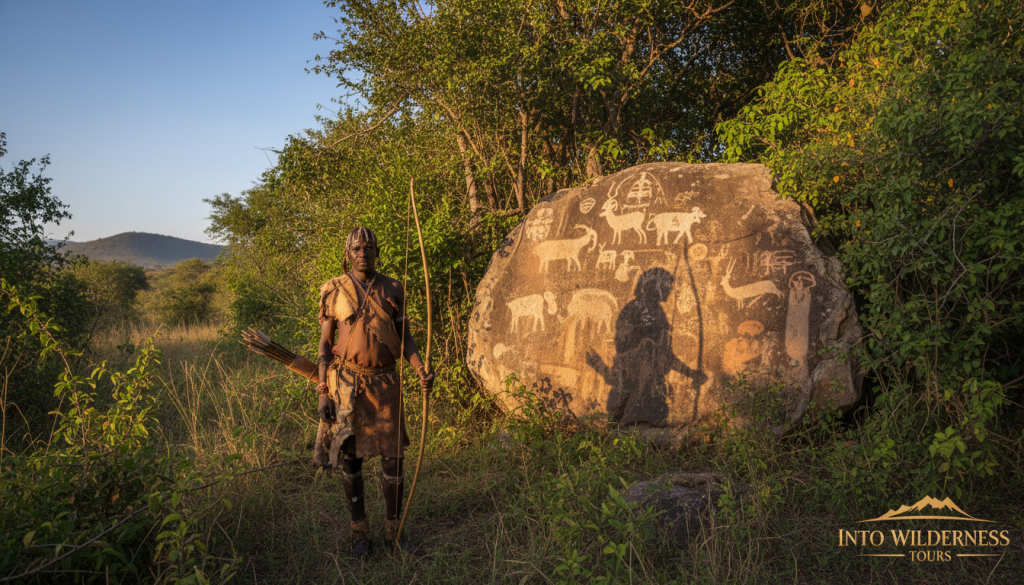
The Hadzabe region is dotted with ancient rock art, providing a window into their past and offering insights into their historical and cultural evolution. These rock paintings depict various scenes, including hunting expeditions, communal gatherings, and symbolic representations that hold significant cultural meaning.
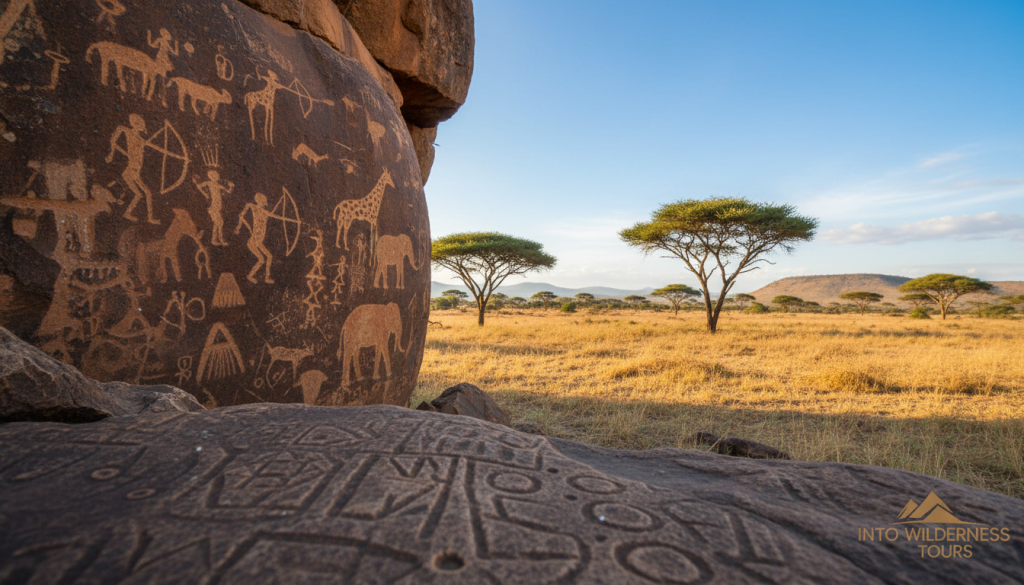
One of the significant challenges associated with the Hadzabe rock art is dating and preserving these historical records. The harsh environmental conditions and the passage of time have taken a toll on these artifacts, making conservation efforts a pressing concern.
Symbolic Meanings and Interpretations
The rock art is replete with symbolic meanings, offering insights into the Hadzabe’s spiritual beliefs and cultural practices. Interpreting these symbols requires a deep understanding of their cultural context, highlighting the importance of preserving their cultural heritage.
Challenges Facing the Hadzabe People Today
The serene landscape around Lake Eyasi belies the turmoil faced by the Hadzabe community. As Tanzania’s last hunter-gatherers, they are confronted with numerous challenges that threaten their traditional way of life.
Land Encroachment and Resource Conflicts
The Hadzabe are facing significant challenges due to land encroachment. As agricultural expansion and tourism development increase around Lake Eyasi, their ancestral lands are being fragmented. This not only reduces their hunting grounds but also leads to conflicts over resources.
Climate Change Impacts on Hunter-Gatherer Lifestyle
Climate change poses another significant threat to the Hadzabe way of life. Changes in rainfall patterns and temperature affect the availability of food resources they depend on. Droughts reduce the yield of berries and roots, while altered seasonal patterns disrupt their traditional hunting practices.
| Impact | Effect on Hadzabe |
|---|---|
| Reduced Rainfall | Decreased availability of berries and roots |
| Temperature Changes | Disruption in wildlife migration patterns |
| Increased Droughts | Reduced water sources |
Cultural Preservation Efforts
Despite these challenges, efforts are being made to preserve Hadzabe culture. Local NGOs and community-based initiatives are working to document their language, traditions, and knowledge. These efforts are crucial in ensuring the Hadzabe cultural heritage endures for future generations.
Conservation and community support are vital in addressing the challenges faced by the Hadzabe. By promoting sustainable practices and respecting indigenous rights, we can help safeguard their future.
Conservation Partnerships and Indigenous Rights
The delicate balance between conservation and indigenous rights is exemplified through the lens of the Hadzabe community. As we explore the intricate relationships between conservation efforts and the rights of indigenous peoples, it becomes evident that partnerships between NGOs, governments, and local communities are crucial.
We recognize that the Hadzabe’s way of life is deeply intertwined with the natural environment. Thus, conservation partnerships play a vital role in preserving their cultural heritage and ancestral lands.
NGO Collaborations and Support Programs
Several NGOs have established collaborations with the Hadzabe community, providing essential support and resources. These programs focus on:
- Enhancing food security through sustainable hunting practices
- Promoting health initiatives and medical care
- Supporting education and cultural preservation efforts
These collaborations not only benefit the Hadzabe but also contribute to the overall conservation of the region’s biodiversity.
Legal Protections and Land Rights Initiatives
Legal protections and land rights initiatives are critical in securing the Hadzabe’s ancestral lands and protecting their way of life. Efforts to demarcate and protect their territory from encroachment are underway, involving:
| Initiative | Description | Impact |
|---|---|---|
| Land Demarcation | Defining and mapping Hadzabe ancestral lands | Prevents encroachment and resource conflicts |
| Legal Recognition | Official recognition of Hadzabe land rights | Empowers community to manage their territory |
| Community Engagement | Involvement of Hadzabe in conservation decisions | Ensures cultural preservation and sustainable practices |
These initiatives underscore the importance of respecting indigenous rights and promoting sustainable conservation practices. By supporting conservation partnerships and recognizing indigenous rights, we can work towards a more inclusive and effective conservation strategy.
Responsible Tourism and Cultural Exchange
As we journey to the shores of Lake Eyasi, we are not just visitors; we become part of a delicate ecosystem that has been home to the Hadzabe for centuries. This realization underscores the importance of responsible tourism and cultural exchange, ensuring that our presence benefits both the Hadzabe community and ourselves.
Ethical Guidelines for Visitors
Visiting the Hadzabe requires a deep respect for their way of life. Ethical guidelines are essential to ensure that our presence is not disruptive. Visitors are encouraged to learn about Hadzabe customs and traditions, dress modestly, and participate in activities that are offered by the community. By doing so, we foster a meaningful cultural exchange that enriches both parties.
Community-Based Tourism Initiatives
The Hadzabe community has embraced community-based tourism as a sustainable way to share their culture while preserving their traditional way of life. This approach not only generates income but also promotes cross-cultural understanding.
Revenue Sharing Models
A key aspect of community-based tourism is the revenue sharing model, which ensures that the financial benefits of tourism are distributed fairly among the community members. This model encourages the community to continue their traditional practices, knowing that their efforts are valued and compensated.
Cultural Education Programs
Cultural education programs are another vital component, offering visitors the opportunity to learn about Hadzabe traditions, hunting practices, and their deep connection with nature. These programs are designed to be informative and engaging, providing a unique insight into the Hadzabe way of life.
| Tourism Aspect | Community Benefit | Visitor Experience |
|---|---|---|
| Revenue Sharing | Fair distribution of income | Supports local economy |
| Cultural Education | Preservation of traditions | Deeper understanding of Hadzabe culture |
| Community Engagement | Empowers community members | Meaningful interactions with locals |
By embracing responsible tourism and engaging in cultural exchange, we not only enrich our own lives but also contribute to the preservation of the Hadzabe culture and the ecosystem of Lake Eyasi. It’s a mutually beneficial relationship that underscores the potential for tourism to be a positive force for conservation and cultural preservation.
My Personal Experience with the Hadzabe Tribe
Our time with the Hadzabe tribe was a journey of discovery, immersing us in a culture that was both rich and resilient. As we lived among these hunter-gatherers, we were struck by their profound connection to the natural world and to each other.
First Encounters and Cultural Immersion
From our first encounters, we were drawn into the Hadzabe way of life. We participated in their daily activities, from hunting with traditional bows and arrows to gathering with the women in the forest. The Hadzabe welcomed us with open arms, sharing their knowledge and traditions without reserve. We were amazed by their skill in tracking animals and their deep understanding of the medicinal properties of plants. As we immersed ourselves in their culture, we began to see the world through their eyes, appreciating the simplicity and beauty of their ancient way of life.
As we joined in their evening gatherings, we were captivated by their stories and songs, passed down through generations. The Hadzabe’s connection to their land and their ancestors was palpable, and we felt honored to be a part of their community, if only for a short time.
Lessons Learned from Hunter-Gatherers
Living among the Hadzabe taught us invaluable lessons about community, resilience, and living in harmony with nature. We learned that their egalitarian society, where everyone contributes and shares, is a powerful model for modern living. The Hadzabe showed us that true wealth lies not in material possessions but in the relationships we build and the stories we share. Their way of life is a testament to the human spirit’s capacity for adaptability and cooperation.
As we reflect on our personal experience with the Hadzabe tribe, we are reminded of the importance of preserving cultural heritage and the natural environments that sustain it. Our time with the Hadzabe was a powerful reminder of what we can learn from those who have lived in harmony with the earth for millennia.
How to Visit the Hadzabe: Practical Information
Embarking on a journey to visit the Hadzabe is stepping into a world where tradition and nature entwine seamlessly. For those eager to experience the authentic traditions of Tanzania, visiting the Hadzabe is a unique opportunity to connect with one of the last hunter-gatherer tribes in East Africa.
Best Times to Visit Lake Eyasi Region
The Lake Eyasi region, home to the Hadzabe, is best visited during the dry seasons, which typically span from June to October and January to March. During these periods, the weather is more favorable for trekking and observing the Hadzabe’s traditional hunting practices.
Tour Operators and Guides
Engaging with reputable tour operators and guides is crucial for a meaningful and respectful visit. They provide valuable insights into the Hadzabe culture and ensure that interactions are conducted ethically. Some recommended tour operators specialize in cultural safaris and have established relationships with the Hadzabe community.
| Tour Operator | Specialization | Contact Information |
|---|---|---|
| Tanzania Cultural Safaris | Hadzabe Cultural Tours | info@tanzaniaculturalsafaris.com |
| East Africa Explorers | Hunter-Gatherer Expeditions | info@eastafricaexplorers.com |
Accommodation Options Near Hadzabe Territories
Visitors have a range of accommodation options near the Hadzabe territories, catering to different preferences and budgets.
Luxury Safari Lodges
For those seeking comfort and luxury, safari lodges such as the Lake Eyasi Safari Lodge offer high-end amenities while still providing access to the Hadzabe community.
Budget-Friendly Camping Alternatives
For the more adventurous, budget-friendly camping options are available, allowing for a more immersive experience in the natural surroundings.
Cultural Sensitivity and Respectful Engagement
The Hadzabe’s rich cultural heritage demands our respect and sensitivity as we interact with them. Engaging with this ancient hunter-gatherer community is a privilege, and it’s crucial that we do so with mindfulness and consideration. As we journey with the Hadzabe, we must be aware of the cultural nuances that guide our interactions.
“Respect is a two-way street,” as the saying goes, and it’s particularly true when engaging with indigenous communities like the Hadzabe. By being thoughtful in our approach, we not only enhance our experience but also contribute to the well-being of the community.
Gift-Giving Etiquette
Gift-giving is an important aspect of building relationships with the Hadzabe. However, it’s essential to understand what gifts are appropriate and how they should be given. The Hadzabe value items that are practical and useful, such as food, clothing, and tools. When giving gifts, it’s crucial to do so with respect and without expectation of reciprocation in a specific form. Avoid giving gifts that could be perceived as charity; instead, focus on gestures that promote mutual respect and understanding.
Photography Guidelines and Privacy Considerations
Photography is a sensitive topic when interacting with the Hadzabe. While capturing memories is a natural desire, it’s vital to respect the privacy and dignity of the individuals we photograph. Always ask permission before taking someone’s picture, and be prepared to accept “no” as an answer. Some members of the community may not wish to be photographed, and their wishes should be respected. When photographing cultural practices or ceremonies, be discreet and avoid disrupting the activities. The goal is to observe and learn, not to intrude or exploit.
By being mindful of these guidelines, we can foster a positive and respectful interaction with the Hadzabe community, ensuring a meaningful experience for both visitors and the community alike.
Conclusion: The Enduring Legacy of Tanzania’s Hunter-Gatherers
As we conclude our journey with the Hadzabe, we are reminded of the profound impact their legacy has on our understanding of humanity’s place within the natural world. The Hadzabe legacy is a testament to the resilience of hunter-gatherers, whose cultural richness and deep connection to the land offer invaluable lessons for modern society.
Their traditions, though challenged by the encroaching forces of modernization and environmental degradation, continue to thrive, inspiring a new generation to cherish and preserve the ancient ways. As guardians of the wilderness, the Hadzabe embody a harmonious coexistence with nature, demonstrating that the path to sustainability lies in respecting and preserving the delicate balance of ecosystems.
As we reflect on the Hadzabe way of life, we are encouraged to reevaluate our own relationship with the natural world. Their story is a powerful reminder of the importance of cultural preservation and the need to support indigenous communities in their efforts to maintain their traditional practices. The Hadzabe legacy serves as a beacon, illuminating the path towards a more sustainable and culturally rich future for all.