
As we embark on the journey to conquer Kilimanjaro, the right gear can make all the difference between a successful summit and a challenging experience. We must first understand the importance of proper packing for this adventure.
With the rugged terrain and unpredictable climate, it’s crucial to be prepared. Our essential packing guide will walk you through the must-have items for a safe and enjoyable trek. From the base to the summit, we’ll help you navigate the essentials for a Kilimanjaro adventure.
Key Takeaways
- Understand the importance of proper packing for Kilimanjaro
- Learn the essential items to include in your packing list
- Discover how to prepare for the rugged terrain and climate
- Navigate the must-have gear for a safe and enjoyable trek
- Ensure a successful summit with the right equipment
Understanding Kilimanjaro’s Unique Challenges
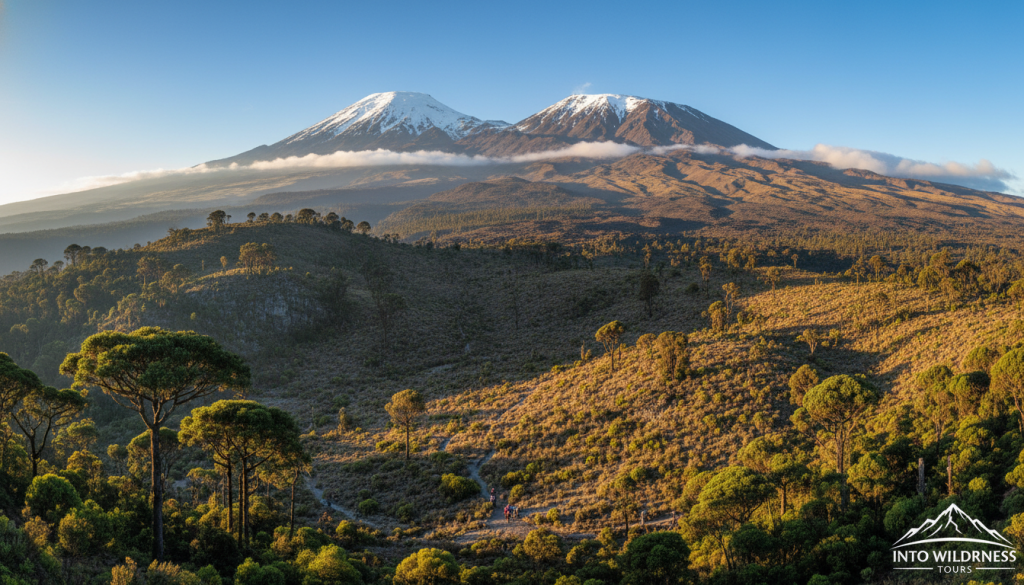
Standing tall at 19,341 feet, Kilimanjaro is more than just a mountain – it’s a test of endurance against nature’s extremes. As we prepare for our climb, understanding the mountain’s unique challenges is crucial for a successful summit attempt. The journey is not just about reaching the top; it’s about navigating through diverse and unpredictable climate zones.
The Five Climate Zones You’ll Experience
As we ascend Kilimanjaro, we’ll traverse through five distinct climate zones: the rainforest, moorland, alpine desert, highland desert, and arctic. Each zone presents its own set of challenges, from the dense humidity of the rainforest to the freezing temperatures of the arctic zone. Understanding these climate zones is essential for packing the right gear for our Kilimanjaro adventure.
| Climate Zone | Characteristics | Packing Essentials |
|---|---|---|
| Rainforest | High humidity, dense vegetation | Waterproof jacket, insect repellent |
| Moorland | Cool temperatures, heather, and moss | Insulating layers, waterproof pants |
| Arctic | Freezing temperatures, snow, and ice | Insulated, waterproof boots, warm hat, gloves |
Why Proper Packing Can Make or Break Your Summit Attempt
Proper packing is crucial for navigating Kilimanjaro’s diverse climate zones successfully. Without the right gear, climbers may face hypothermia, dehydration, or other serious health issues that can jeopardize their summit attempt. By understanding the climate zones and packing accordingly, we can ensure a safer and more enjoyable journey to the summit.
Key packing considerations include: layers for temperature control, waterproof gear for rain and snow, and sturdy footwear for rugged terrain. By being prepared, we can focus on the adventure rather than worrying about our gear.
When to Climb: Choosing the Right Season for Your Trek
With Kilimanjaro’s varied climate zones, selecting the right time for our climb is essential for a successful trek. The mountain’s weather patterns significantly influence our packing strategy and overall experience.
Dry Season vs. Rainy Season Considerations
Kilimanjaro has two distinct climbing seasons: the dry season (June to October) and the rainy season (November to May). The dry season offers clear skies and cooler temperatures, making it ideal for trekking. In contrast, the rainy season brings heavy rainfall and increased humidity, making the trails more challenging. However, the rainy season also means fewer climbers and a more serene mountain environment.
As stated by experienced climbers,
“The dry season is generally preferred for its favorable weather conditions, but the rainy season has its own unique beauty and advantages.”
How Weather Patterns Affect Your Packing Strategy
Understanding Kilimanjaro’s weather patterns is crucial for determining what gear to pack. During the dry season, we prioritize layers for cold temperatures and sun protection. In the rainy season, waterproof gear and trekking poles become essential for navigating slippery trails. By considering these factors, we can ensure a safe and successful climb.
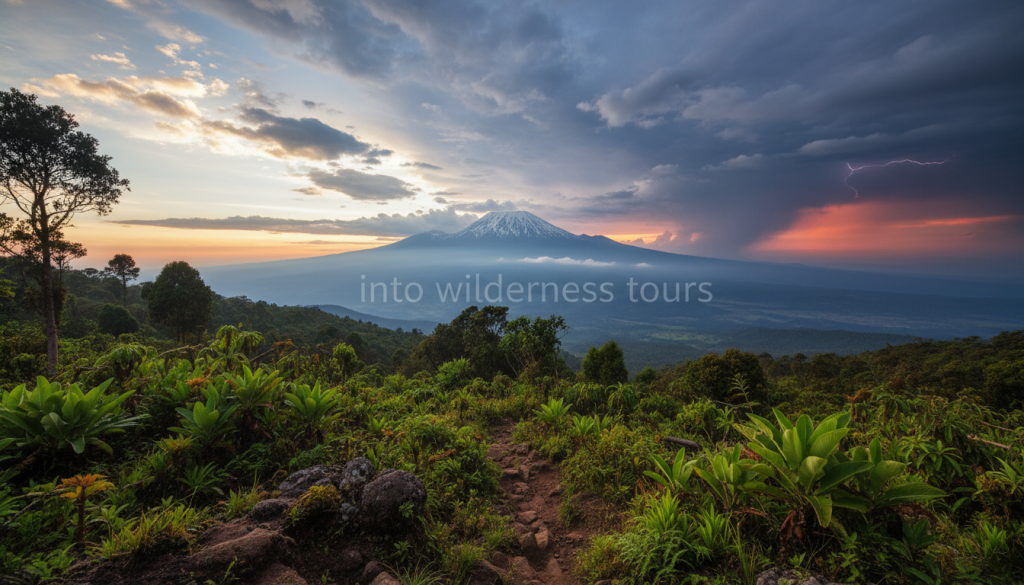
Ultimately, our packing strategy is directly influenced by the season we choose to climb. By understanding and preparing for the prevailing weather conditions, we can optimize our chances of reaching the summit successfully.
The Ultimate Kilimanjaro Packing List: Overview
A successful Kilimanjaro trek hinges on being prepared, and it all starts with a thoughtful and comprehensive packing list. As we delve into the specifics of what to bring, it’s essential to understand the various factors that influence our packing decisions.
Essential Categories to Consider
When assembling your Kilimanjaro packing list, several key categories demand attention. These include clothing for varying climates, footwear suitable for trekking, sleeping gear for comfort, personal hygiene items, and first aid and emergency supplies. Each category plays a crucial role in ensuring a safe and successful climb.
Weight Restrictions and Porter Regulations
Understanding weight restrictions and porter regulations is vital. The maximum weight a porter can carry is typically 20 kg (44 lbs), including the weight of their own gear. This limitation necessitates a careful selection of essentials, prioritizing items that serve multiple purposes or are absolutely necessary.
Renting vs. Buying: What Makes Sense for Your Budget
Deciding whether to rent or buy gear can significantly impact your budget. Renting can be a cost-effective option for items like trekking poles or high-quality sleeping bags, especially for those who don’t plan on using them frequently. Conversely, buying personal items like hiking boots or certain clothing can be more economical in the long run.
| Category | Essential Items | Considerations |
|---|---|---|
| Clothing | Base layers, insulating layers, waterproof jacket | Layering for temperature control |
| Footwear | Hiking boots, camp shoes | Waterproofing, ankle support |
| Sleeping Gear | Sleeping bag, sleeping pad | Temperature rating, comfort |
| Personal Hygiene | Toothbrush, biodegradable soap | Water conservation, eco-friendliness |
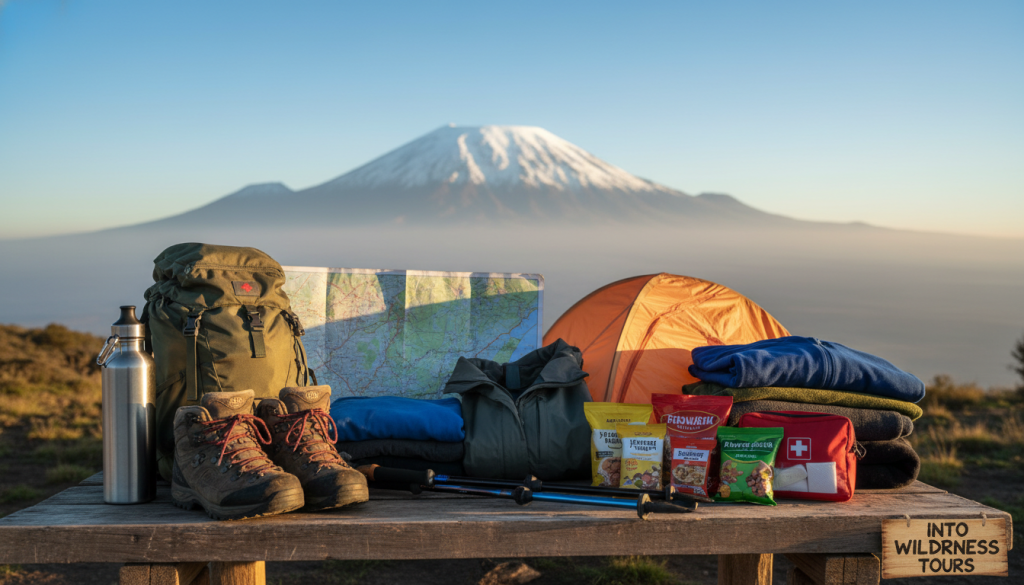
By considering these factors and categories, climbers can create a tailored packing list that meets their specific needs, enhancing their chances of a successful summit.
Technical Clothing: Layering for Extreme Temperature Variations
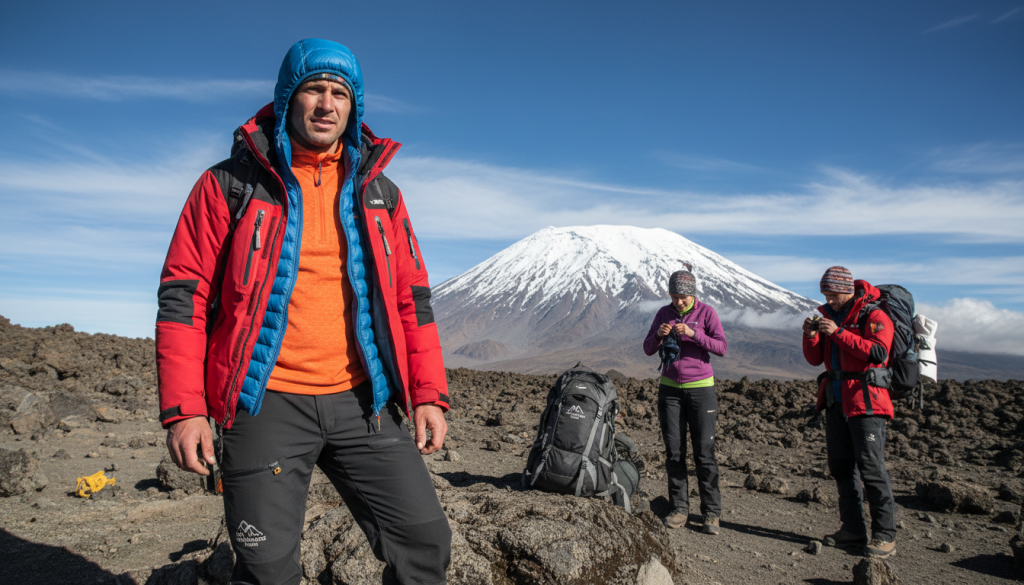
The key to braving Kilimanjaro’s extreme temperatures lies in mastering the art of layering with technical clothing. As we ascend to higher altitudes, the temperature can drop dramatically, and our clothing must adapt to these changes. Layering allows us to adjust our clothing to suit the conditions, ensuring we remain comfortable throughout our journey.
Base Layers: Moisture Management Essentials
Our base layers are the foundation of our clothing system, providing moisture management and comfort against our skin. We look for materials that wick moisture away from the body, such as merino wool or synthetic fabrics. These materials help regulate our body temperature and prevent chilling.
Mid Layers: Insulation for Changing Conditions
Mid layers provide insulation, trapping warmth close to our body. Fleece jackets and sweaters are excellent choices for mid layers, offering lightweight warmth. We can add or remove these layers as needed to adjust to changing conditions.
Outer Layers: Weather Protection Systems
Our outer layers protect us from the elements, including wind, rain, and snow. A waterproof and breathable jacket is essential, along with waterproof pants for added protection. These outer layers help shield us from extreme weather conditions on Kilimanjaro.
Headwear and Handwear for Summit Day
On summit day, our headwear and handwear become crucial. Insulated, waterproof gloves and a warm hat can make a significant difference in our comfort and ability to perform. We choose materials that provide warmth without compromising dexterity.
Footwear Requirements for Different Trail Conditions
Kilimanjaro’s diverse terrain demands footwear that’s both resilient and adaptable. As we ascend through the mountain’s five climate zones, the trail conditions change dramatically, requiring a thoughtful approach to our footwear choices.
Hiking Boots: Finding the Perfect Balance of Support and Comfort
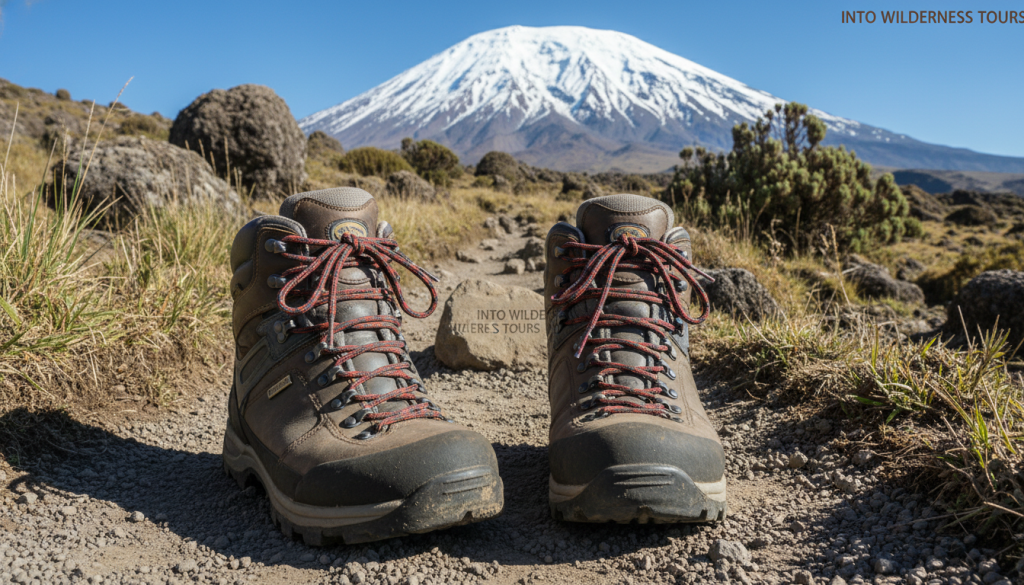
The right hiking boots are crucial for a successful Kilimanjaro trek. They must provide stability and support on uneven terrain while being comfortable enough for long days on the trail. Look for boots with a waterproof membrane, such as Gore-Tex or eVent, to keep feet dry in wet conditions. A good pair should also have a breathable lining to prevent overheating.
When selecting hiking boots, consider the ankle support they offer. High-cut boots can provide additional stability, especially on rocky or steep sections of the trail. However, they should not be so stiff that they cause discomfort. Breaking in your boots before the trek is essential to prevent blisters and ensure a comfortable fit.
Camp Shoes and Gaiters: Protecting Your Feet Throughout the Journey
In addition to hiking boots, camp shoes are a valuable addition to your packing list. These lightweight shoes provide a comfortable alternative for resting your feet in camp. Gaiters, which are fabric or plastic coverings that go over your boots and lower pant legs, can protect your feet and lower legs from mud, water, and debris.
Using gaiters can be particularly beneficial on Kilimanjaro’s lower slopes, where the trail can be muddy and wet. They help keep your boots clean and dry, reducing the risk of blisters and discomfort.
Sock Systems for Blister Prevention
A well-designed sock system is key to preventing blisters on Kilimanjaro. Consider using a liner sock under a thicker hiking sock. The liner sock helps reduce friction, while the outer sock provides cushioning and warmth. Look for socks made from moisture-wicking materials to keep your feet dry.
Changing your socks regularly, especially after crossing streams or in wet conditions, can also help prevent blisters. Some climbers prefer to bring multiple pairs of socks to change into throughout the day, ensuring their feet remain comfortable and blister-free.
Selecting the Right Backpack for Kilimanjaro
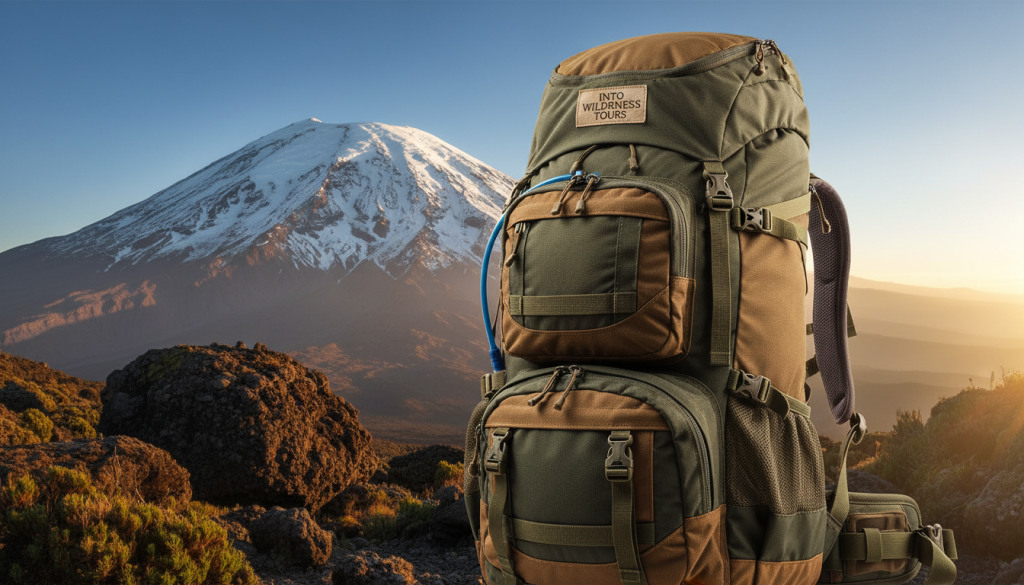
The journey to Kilimanjaro’s summit begins with the right gear, starting with a suitable backpack. As we prepare for this incredible adventure, we need a backpack that can keep up with our demands, providing comfort, durability, and functionality throughout the trek.
Day Pack Features and Capacity Requirements
A day pack is essential for carrying essentials during the day’s trek. We recommend a pack with a capacity of 20-30 liters, allowing us to bring necessary items like water, snacks, and extra layers without being too bulky. Key features to look for include multiple compartments for organization, padded shoulder straps for comfort, and a hydration system sleeve for convenience.
| Feature | Importance | Recommended Specification |
|---|---|---|
| Capacity | High | 20-30 liters |
| Padded Shoulder Straps | High | Yes |
| Multiple Compartments | Medium | At least 2 |
| Hydration System Sleeve | Medium | Yes |
Duffel Bags for Porters to Carry
For Kilimanjaro, we’ll also need a duffel bag for our porters to carry. This bag should be sturdy, water-resistant, and have a capacity of at least 60 liters to accommodate our main gear. A simple, functional design is best, as it will be handled by porters and needs to withstand the rigors of the trek.
Waterproofing Solutions for Your Gear
Given Kilimanjaro’s unpredictable weather, waterproofing our gear is crucial. We can use waterproof bags or dry sacks within our backpack to keep essentials dry. Additionally, applying a waterproofing treatment to our backpack can provide an extra layer of protection against the elements.
Organization Tips for Quick Access to Essentials
To ensure we can quickly access what we need, we should organize our backpack with care. Using packing cubes or small bags for different categories of items (like clothing, electronics, and first aid) can help. We should also keep frequently used items in easy-to-reach locations, and consider using a backpack with multiple access points.
Essential Trekking Equipment and Accessories
As we prepare to conquer Kilimanjaro, the right trekking equipment and accessories become our trusted companions on this extraordinary journey. The rugged terrain and unpredictable weather conditions demand gear that is not only durable but also versatile.
The right equipment can make a significant difference in our experience, enhancing our safety, comfort, and overall enjoyment of the trek. Let’s explore some of the essential items that will accompany us on this adventure.
Trekking Poles: Benefits and Selection Tips
Trekking poles are invaluable for navigating Kilimanjaro’s challenging terrain. They provide stability, reduce strain on our knees, and help with balance on uneven ground. When selecting trekking poles, consider those with adjustable lengths and comfortable grips. Some models come with built-in shock absorbers, which can be particularly beneficial on steep descents.
For Kilimanjaro, lightweight and durable trekking poles are recommended. Brands that offer high-quality trekking poles include Black Diamond and Leki. A good pair can be a significant investment, but it’s worth it for the added stability and comfort they provide.
| Feature | Importance | Recommendation |
|---|---|---|
| Adjustable Length | High | Leki Makalu |
| Shock Absorption | Medium | Black Diamond Trail |
| Weight | High | Carbon Fiber Poles |
Headlamps and Lighting for Pre-Dawn Summit Attempts
For pre-dawn summit attempts, reliable headlamps are crucial. They provide hands-free lighting, allowing us to navigate through the dark while keeping our hands free for other tasks. Look for headlamps with red light modes to preserve our night vision and adjustable brightness settings.
Some top recommendations for headlamps include the Petzl Actik and Black Diamond Icon. These models offer a good balance of brightness, battery life, and comfort.
Navigation and Safety Tools
In addition to trekking poles and headlamps, other essential navigation and safety tools include GPS devices, compasses, and first aid kits. These items help us stay on track and respond to any medical emergencies that may arise.
By choosing the right trekking equipment and accessories, we can ensure a safer and more enjoyable journey to Kilimanjaro’s summit. Each piece of gear plays a vital role in our overall experience, from the initial ascent to the final triumphant moment at the top.
Sleep System Components for High-Altitude Comfort
A restful night’s sleep is the unsung hero of a successful Kilimanjaro climb, and it all starts with the right sleep system. As we ascend to higher altitudes, the temperature drops significantly, and the air grows thinner, making a comfortable night’s rest not just a luxury, but a necessity for a successful summit attempt.
Our sleep system is composed of several critical components, each playing a vital role in ensuring we get the restful sleep needed to tackle the challenges of the mountain. Let’s delve into the specifics of these components.
Sleeping Bags: Temperature Ratings and Materials
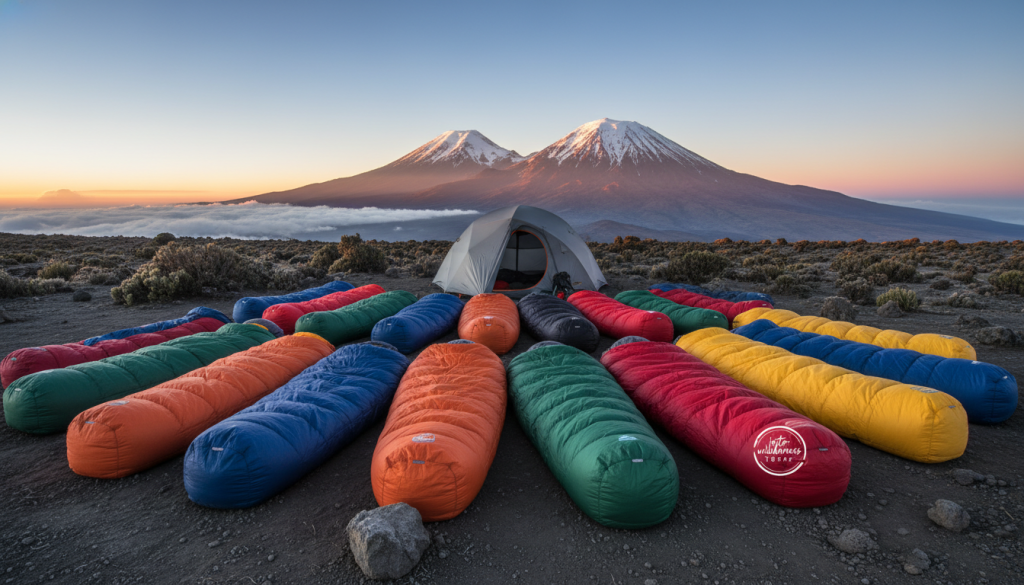
When it comes to sleeping bags for Kilimanjaro, the key is to look for bags with appropriate temperature ratings. We recommend bags rated to -20°C or lower to ensure warmth on the coldest nights. The material is also crucial; we prefer bags filled with synthetic insulation for their moisture resistance, although down-filled bags offer a better warmth-to-weight ratio, they require more care in damp conditions.
- Look for bags with a comfortable fit, allowing for layering underneath.
- Consider a bag with a waterproof and breathable outer shell.
- The shape and size of the bag should allow for easy movement inside the tent.
Sleeping Pads: Insulation from the Cold Ground
A sleeping pad is more than just a comfort item; it’s a critical layer of insulation between us and the cold ground. For Kilimanjaro, we recommend inflatable sleeping pads for their excellent insulation properties and comfort. Look for pads with an R-value of 3 or higher to ensure they can handle the cold conditions on the mountain.
Key Features to Consider:
- High R-value for better insulation.
- Comfortable thickness without being too bulky.
- Lightweight and compact for easy carrying.
Sleeping Accessories for Better Rest at Altitude
Beyond the sleeping bag and pad, there are several accessories that can enhance our sleep on Kilimanjaro. A sleeping bag liner can add extra warmth and comfort, while also keeping our sleeping bag clean. Earplugs and an eye mask can help mitigate the effects of sleeping in a noisy and lit environment, ensuring a more restful sleep.
By carefully selecting the right sleep system components, we can significantly improve the quality of our rest on Kilimanjaro, thereby enhancing our overall trekking experience and increasing our chances of a successful summit.
Women’s Packing List for Kilimanjaro: Special Considerations
For women, tackling Kilimanjaro’s challenging terrain involves more than just physical preparation; it requires a carefully curated packing list. As we guide you through the essential items to include, we’ll explore the unique needs of women climbers and how to address them effectively.
Female-Specific Clothing and Gear Adaptations
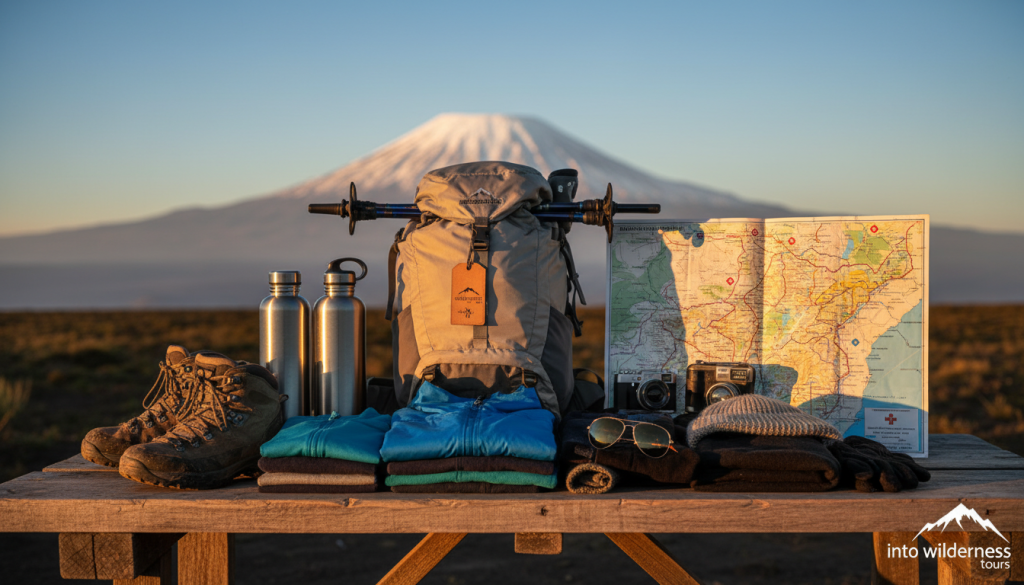
Women climbers benefit from clothing designed with their physiology in mind. Moisture-wicking base layers and insulating mid-layers tailored to women’s body shapes can significantly enhance comfort. Consider packing clothing that offers flexibility and support, such as stretchy pants and sports bras designed for high-intensity activities.
Hygiene Solutions for Limited Facilities
Maintaining personal hygiene on Kilimanjaro can be challenging due to limited facilities. Pack biodegradable soap, hand sanitizer, and moist towelettes to stay clean. Consider a portable bidet or feminine hygiene products designed for outdoor activities.
Safety and Comfort Items for Women Climbers
In addition to standard trekking gear, women may want to include items that enhance safety and comfort. A personal locator beacon (PLB) or satellite phone can provide peace of mind, while a comfort food stash and warm hat can boost morale during challenging sections of the climb.
| Item | Description | Importance Level |
|---|---|---|
| Moisture-wicking base layers | Clothing that wicks moisture away from the skin | High |
| Biodegradable soap | Soap that breaks down naturally in the environment | Medium |
| Personal Locator Beacon (PLB) | Device that sends a distress signal to emergency responders | High |
Personal Hygiene and Toiletries for Extended Trekking
Kilimanjaro’s rugged terrain demands not only physical stamina but also a well-planned hygiene strategy. As we ascend through its diverse climate zones, maintaining personal hygiene becomes crucial for a healthy and enjoyable trek.
To stay clean on the mountain, we adopt a minimalist approach, focusing on essential toiletries that serve multiple purposes without weighing us down. Biodegradable soap, hand sanitizer, and moist towelettes are among the must-haves for maintaining hygiene. We also consider the importance of water purification to ensure that our water sources are safe for drinking and personal hygiene.
Minimalist Approach to Staying Clean on the Mountain
A minimalist approach to hygiene involves selecting products that are not only effective but also lightweight and compact. We prioritize items like baby wipes, which can be used for both personal hygiene and cleaning gear, and quick-dry towels that save space and dry fast. This strategy helps us maintain cleanliness without the burden of excessive luggage.
Eco-Friendly Options for Leave No Trace Principles
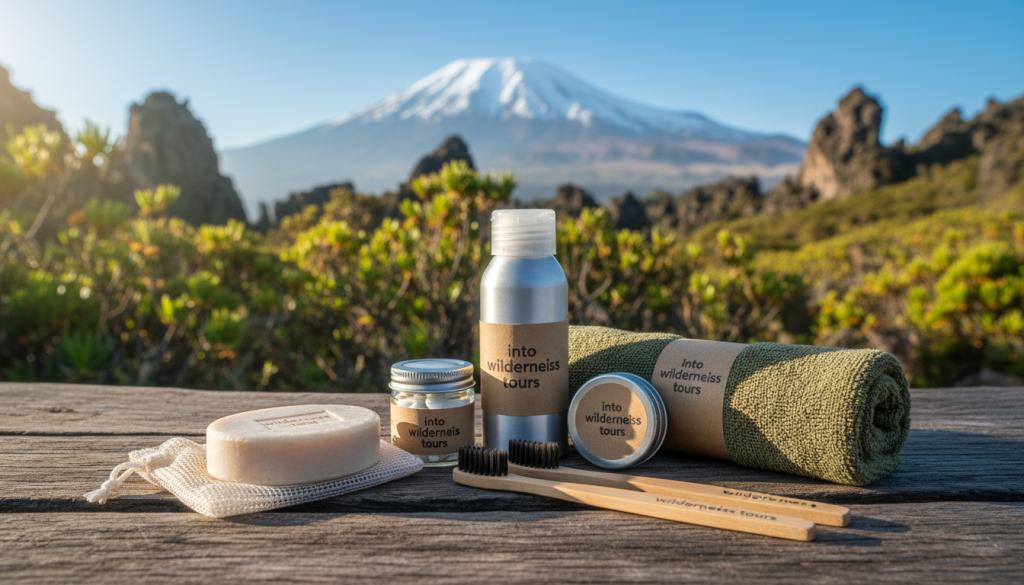
Embracing Leave No Trace principles, we opt for eco-friendly toiletries that minimize our environmental footprint. This includes choosing products with minimal packaging, biodegradable ingredients, and those that are free from harmful chemicals. By doing so, we not only preserve the natural beauty of Kilimanjaro but also set an example for responsible trekking practices.
By carefully selecting our toiletries and adopting a minimalist hygiene strategy, we can enjoy a cleaner, healthier trek while preserving the integrity of Kilimanjaro’s ecosystem.
First Aid and Medications: Preparing for Common Altitude Issues
As we ascend Kilimanjaro, the risk of altitude sickness becomes a pressing concern that requires careful preparation. Altitude sickness, or Acute Mountain Sickness (AMS), can affect anyone, regardless of physical condition or prior experience. It’s crucial that we’re prepared with the right medications and first aid supplies to mitigate these risks.
Essential Medications for Altitude Sickness Prevention and Treatment
Preventing and treating altitude sickness involves a combination of gradual ascent, hydration, and medication. Acetazolamide (Diamox) is a commonly prescribed medication for AMS prevention. It’s essential to consult with a healthcare professional to determine the best medication regimen for your needs.
“The key to managing altitude sickness is being proactive,” says Dr. John Doe, a renowned expert in high-altitude medicine. “With the right medication and a well-planned ascent, many climbers can mitigate the risks associated with AMS.”
Personal First Aid Kit Components
A well-stocked first aid kit is vital for addressing minor injuries and preventing more serious conditions from developing. Essential components include:
- Bandages and band-aids
- Antiseptic wipes
- Pain relievers
- Antihistamines
- Blister care
When to Use Medications on the Mountain
Understanding when to use medications is as important as having them. Acetazolamide should be started a day before ascending to high altitudes and continued for at least 48 hours after reaching the highest point. It’s also crucial to monitor your body’s response to altitude and be prepared to descend if symptoms persist or worsen.
By being prepared with the right first aid supplies and medications, we can significantly reduce the risks associated with climbing Kilimanjaro. Remember, safety should always be our top priority on any mountain adventure.
Nutrition and Hydration: Fueling Your Summit Bid
Proper nutrition and hydration are the unsung heroes of a successful Kilimanjaro summit bid, providing the energy and resilience needed to overcome the mountain’s challenges. As we ascend through Kilimanjaro’s diverse climate zones, our bodies demand a strategic approach to fueling our adventure.
Water Purification Methods and Containers
Access to clean drinking water is crucial on Kilimanjaro. We recommend using water purification methods such as filtering, boiling, or chemical treatment to ensure safe hydration. When it comes to containers, durable, BPA-free water bottles or hydration bladders are ideal for withstanding the rigors of the trek.
- Filtering: Using a high-quality water filter can remove bacteria, viruses, and parasites.
- Boiling: Boiling water is a reliable method to kill pathogens, though it requires fuel.
- Chemical Treatment: Using chlorine or iodine tablets is another effective method, though taste may vary.
Energy-Dense Snacks for Trail Days
Energy-dense snacks are vital for maintaining energy levels during the long trail days on Kilimanjaro. We suggest packing nut bars, dried fruits, jerky, and trail mix that are not only calorie-rich but also palatable and easy to consume on the go.
- Nut Bars: Look for bars high in calories and protein.
- Dried Fruits: Rich in carbohydrates and fiber.
- Jerky: High in protein to support muscle repair.
- Trail Mix: A mix of nuts, seeds, and dried fruits for sustained energy.
Electrolyte Replacement Strategies
Electrolytes play a crucial role in maintaining hydration and nerve function, especially in high-altitude environments. We can use electrolyte tablets or powders to replenish lost salts. Including electrolyte-rich foods like bananas (potassium) and avocados in our diet can also help.
- Electrolyte Tablets/Powders: Easy to carry and use.
- Electrolyte-rich Foods: Include these in your meals and snacks.
Conclusion: Final Preparation Tips for Your Kilimanjaro Adventure
As we stand at the threshold of this incredible journey, we reflect on the wisdom gathered from the mountain’s rugged terrain and unpredictable climate. Our Kilimanjaro adventure demands respect, preparation, and a deep understanding of the challenges that lie ahead.
With the essentials in our packing list, we must not forget the importance of flexibility and adaptability. The mountain will test our resolve, and being prepared for the unexpected is crucial. We revisit our final preparation tips, ensuring that we are well-equipped to tackle the mountain’s demands.
As we embark on this transformative journey, we carry with us the knowledge that Kilimanjaro is not just a mountain, but a gateway to a profound experience. Our final preparation tips serve as a reminder to stay grounded, be mindful of our surroundings, and cherish every moment of this incredible adventure.
With these insights, we are ready to embark on our Kilimanjaro adventure, armed with the knowledge and preparation necessary to make this journey a truly unforgettable experience.
FAQ
What is the best backpack for Kilimanjaro?
The best backpack for Kilimanjaro is one that is sturdy, comfortable, and has multiple compartments for organization. Look for a pack with a capacity of at least 30 liters and consider features such as rain covers and trekking pole holders.
What are the essential items to include in a women’s packing list for Kilimanjaro?
A women’s packing list for Kilimanjaro should include female-specific clothing and gear adaptations, such as a supportive sports bra and warm layers for cold temperatures. Additionally, consider packing hygiene solutions, such as hand sanitizer and biodegradable soap, and safety and comfort items, such as a personal locator beacon (PLB) or satellite phone.
How do I choose the right hiking boots for Kilimanjaro?
When choosing hiking boots for Kilimanjaro, consider factors such as waterproofing, ankle support, and tread durability. Look for boots with a waterproof and breathable membrane, such as Gore-Tex or eVent, and a sturdy sole that can withstand rough terrain.
What are the weight restrictions for porters on Kilimanjaro?
The weight restrictions for porters on Kilimanjaro vary depending on the tour operator and the route taken. Generally, porters are not allowed to carry more than 15-20 kilograms (33-44 pounds) of gear per person.
How do I stay hydrated on Kilimanjaro?
Staying hydrated on Kilimanjaro is crucial, and there are several ways to do so. Consider using a water purification system, such as a filter or treatment tablets, and drink at least 3-4 liters of water per day. Additionally, eat hydrating foods, such as fruits and electrolyte-rich snacks.
What are the most common altitude-related illnesses on Kilimanjaro?
The most common altitude-related illnesses on Kilimanjaro are Acute Mountain Sickness (AMS), High Altitude Pulmonary Edema (HAPE), and High Altitude Cerebral Edema (HACE). Be aware of the symptoms, such as headaches, nausea, and fatigue, and take preventative measures, such as ascending gradually and staying hydrated.
Can I rent gear for Kilimanjaro, or should I buy it?
Both renting and buying gear for Kilimanjaro have their advantages. Renting can be a cost-effective option, especially for items like trekking poles and crampons, while buying gear can provide a better fit and quality. Consider your budget and needs, and research reputable rental companies or outdoor gear retailers.
How do I pack for the varying climate zones on Kilimanjaro?
To pack for the varying climate zones on Kilimanjaro, consider layering clothing and gear to adapt to changing temperatures and weather conditions. Bring a mix of lightweight, breathable clothing for warmer temperatures and insulating layers for colder temperatures.