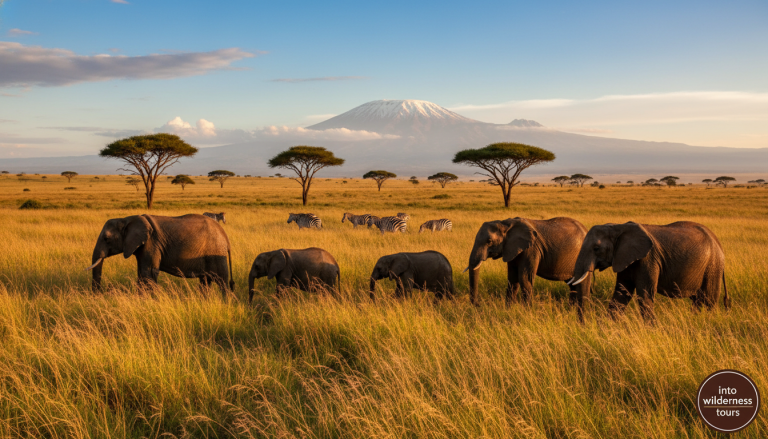
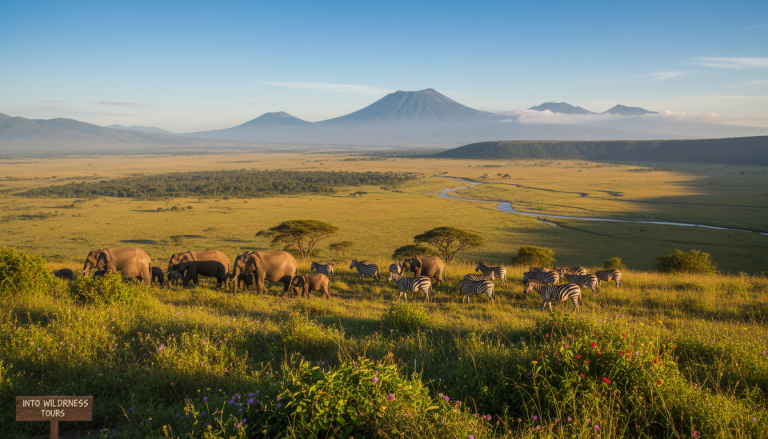
We stand at the foot of Africa’s highest peak, a majestic giant that has captivated the hearts of many. Kilimanjaro, a symbol of Tanzania’s rich heritage, beckons us to explore its storied past and breathtaking beauty. As local hosts and guardians, we invite you to embark on a transformative journey with us, delving into the history of Mount Kilimanjaro and uncovering the secrets that make this mountain so revered.
With reverence and passion, we share the wonders of our homeland, bridging the modern world with the ancient wilderness. Our narrative is woven with poetic imagery and sensory descriptions, inviting you to experience the magic of Kilimanjaro.
Key Takeaways
- Discover the rich cultural significance of Kilimanjaro
- Explore the natural beauty and majesty of Africa’s highest peak
- Learn about the history and legends surrounding the mountain
- Understand the importance of conservation and responsible tourism
- Experience the transformative power of Kilimanjaro
The Majestic Giant of Africa: An Overview
Kilimanjaro’s majestic presence dominates the African landscape, its sheer scale and beauty leaving an indelible mark on all who encounter it. As we explore this natural wonder, we uncover the intricate details that make Kilimanjaro a unique and fascinating subject.
Geographic Location and Physical Characteristics
Kilimanjaro is located in Tanzania, a country in East Africa. The mountain’s physical characteristics are a testament to its geological history, with features that have been shaped over millions of years.
Tanzania’s Natural Wonder
As Tanzania’s natural wonder, Kilimanjaro stands tall, a symbol of national pride and a source of inspiration for the local communities. The mountain’s presence is felt throughout the region, influencing the climate, culture, and economy.
Height and Prominence in African Geography
Kilimanjaro is the highest peak in Africa, standing at 5,895 meters above sea level. Its prominence in African geography is unmatched, making it a significant landmark on the continent.
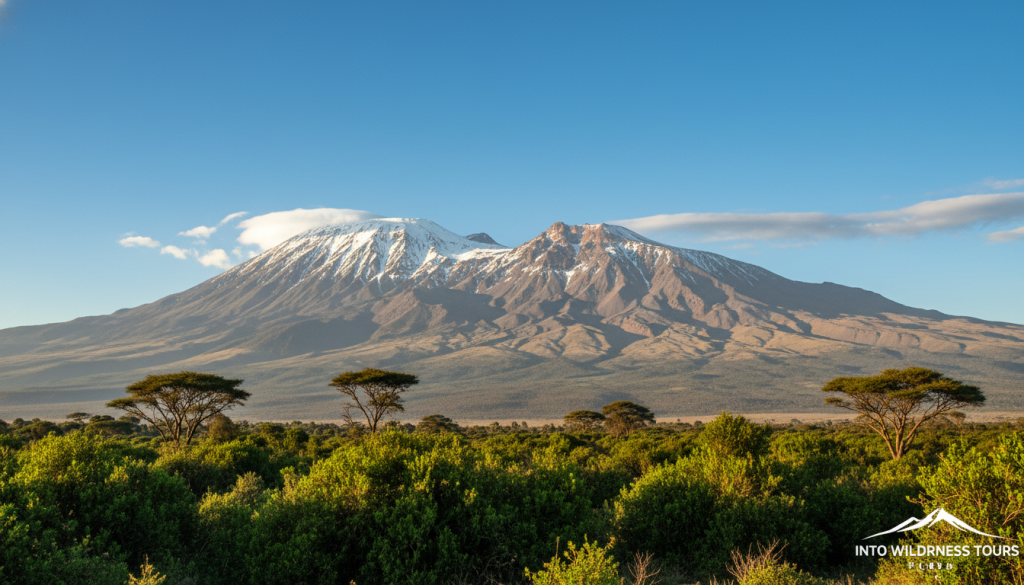
Kilimanjaro’s Three Volcanic Cones
Kilimanjaro is composed of three distinct volcanic cones: Kibo, Mawenzi, and Shira. Each cone has its unique characteristics, contributing to the mountain’s diverse landscape.
Kibo: The Highest Peak
Kibo is the highest peak of Kilimanjaro, and the highest summit in Africa. It is a dormant volcano, with its last eruption occurring approximately 360,000 years ago.
Mawenzi: The Jagged Sister
Mawenzi is known for its jagged peaks, a result of intense weathering over millions of years. It stands as a testament to the geological forces that have shaped Kilimanjaro.
Shira: The Ancient Caldera
Shira, the westernmost cone, is an ancient caldera that has been eroded over time. It represents the earliest stages of Kilimanjaro’s volcanic history.
The combination of these three cones creates a unique landscape, with diverse ecosystems and geological features that make Kilimanjaro a fascinating subject for study and exploration.
The Complete History of Mount Kilimanjaro
The story of Kilimanjaro begins over 750,000 years ago, with the birth of a mountain that would become Africa’s highest peak. This majestic giant has a rich and complex history that spans millions of years, shaped by geological events, volcanic activity, and environmental changes.
Geological Formation Through the Ages
Kilimanjaro’s formation is a testament to the powerful forces that have shaped our planet. The mountain’s history began with intense volcanic activity, a process that would continue to shape its landscape over time.
Birth of a Mountain: 750,000 Years Ago
The initial stages of Kilimanjaro’s formation were marked by massive volcanic eruptions that created the foundation of the mountain. These early eruptions were characterized by the ejection of large amounts of lava, ash, and other volcanic materials.
Volcanic Evolution and Dormancy
As the volcanic activity progressed, Kilimanjaro evolved through various stages, including periods of intense eruption followed by dormancy. This evolution ultimately led to the formation of the mountain’s three distinct volcanic cones: Kibo, Mawenzi, and Shira.
Volcanic Activity Timeline
Understanding Kilimanjaro’s volcanic history is crucial to appreciating its current state. The mountain’s volcanic activity has been characterized by periods of significant eruptions, followed by extended periods of dormancy.
Major Eruptions and Their Impact
While Kilimanjaro is currently dormant, its past eruptions have had a profound impact on the surrounding landscape. These eruptions have shaped not only the mountain itself but also the local ecosystem and human settlements.
Current Dormant Status and Monitoring
Today, Kilimanjaro remains dormant, with no current eruptions. However, scientists continue to monitor the mountain’s activity, recognizing that understanding its volcanic history is key to predicting its future behavior.
| Event | Timeline | Description |
|---|---|---|
| Initial Eruptions | 750,000 years ago | Massive volcanic eruptions creating the foundation of Kilimanjaro |
| Volcanic Evolution | Continued over 700,000 years | Formation of three volcanic cones: Kibo, Mawenzi, and Shira |
| Major Eruptions | Various times in the past | Significant eruptions shaping the mountain and surrounding landscape |
| Current Status | Present day | Dormant, with ongoing scientific monitoring |
Indigenous Peoples and Their Sacred Mountain
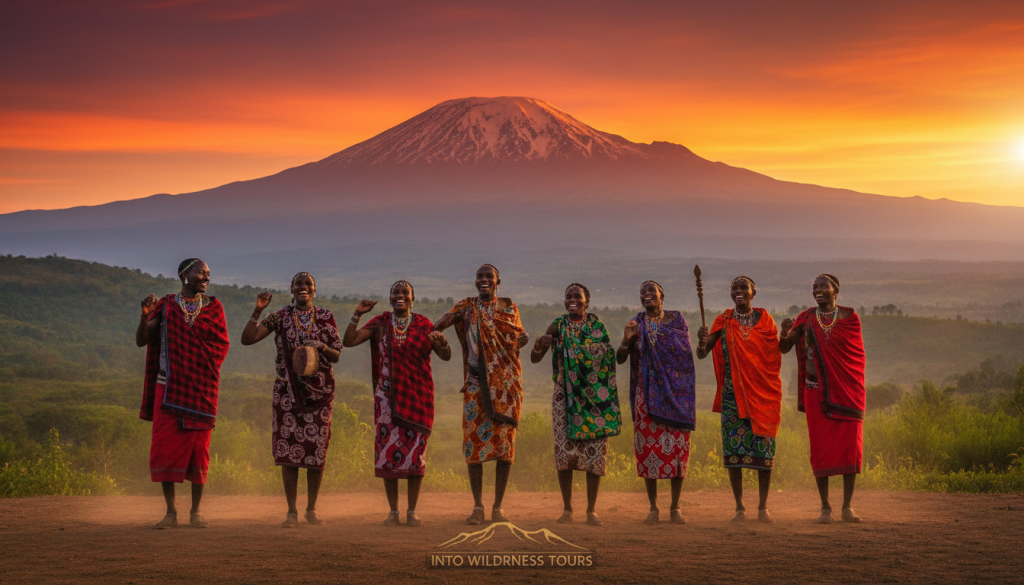
For centuries, the Chagga people have lived in the shadow of Kilimanjaro, their lives deeply intertwined with the mountain’s majestic presence. This ancient connection has fostered a rich cultural heritage, with traditions and beliefs that are inextricably linked to the mountain.
The Chagga People’s Relationship with Kilimanjaro
The Chagga people have developed a unique relationship with Kilimanjaro, one that is characterized by reverence and stewardship. Their traditional farming practices and settlement patterns are closely tied to the mountain’s ecology.
Traditional Farming and Settlement Patterns
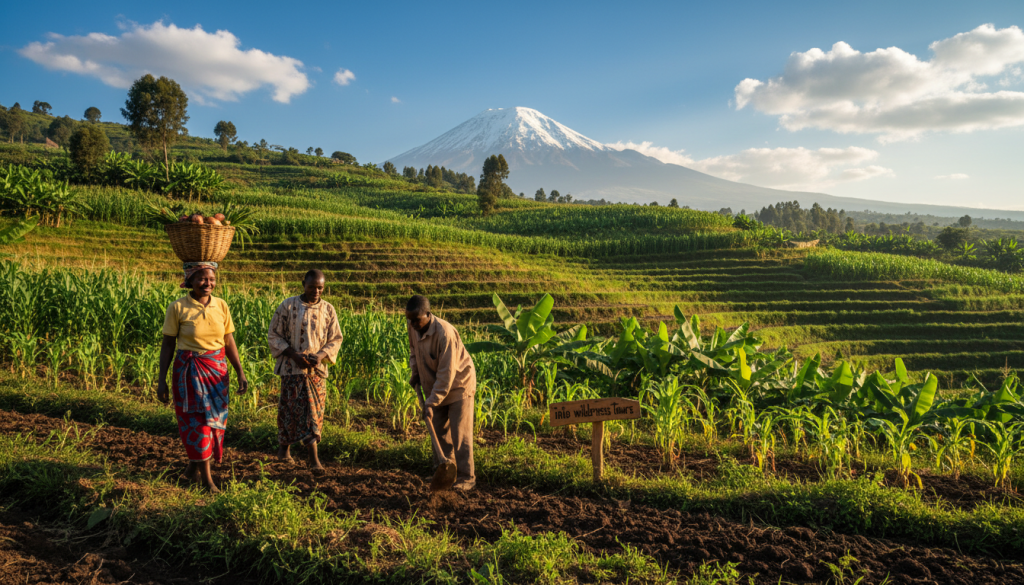
The Chagga people have traditionally practiced intensive agriculture on the slopes of Kilimanjaro, cultivating crops such as bananas, coffee, and vegetables. Their settlement patterns are often organized around the availability of water and fertile soil, with homes and villages typically located in areas with favorable microclimates.
Spiritual Significance in Chagga Culture
In Chagga culture, Kilimanjaro is considered a sacred entity, imbued with spiritual power and significance. The mountain is believed to be inhabited by ancestral spirits, who are revered and honored through various rituals and ceremonies.
Local Myths and Legends
The Chagga people have a rich tradition of storytelling, with numerous myths and legends surrounding Kilimanjaro. These stories often revolve around the mountain’s creation and the role it plays in the spiritual lives of the people.
Creation Stories Involving the Mountain
According to Chagga mythology, Kilimanjaro was created by a divine being, who shaped the mountain and its surrounding landscape. These stories serve to explain the natural features of the mountain and the cultural practices of the Chagga people.
Folklore About the Summit and Snow
The summit of Kilimanjaro is shrouded in mystery and reverence, with stories and legends surrounding its snow-capped peaks. The Chagga people believe that the snow and ice at the summit hold spiritual significance, representing a connection to the divine.
| Aspect | Significance |
|---|---|
| Traditional Farming | Cultivating crops like bananas and coffee, tied to the mountain’s ecology |
| Spiritual Significance | Kilimanjaro is considered sacred, inhabited by ancestral spirits |
| Creation Stories | Myths explaining the mountain’s creation and cultural practices |
First European Contact: Johann Rebmann’s Discovery
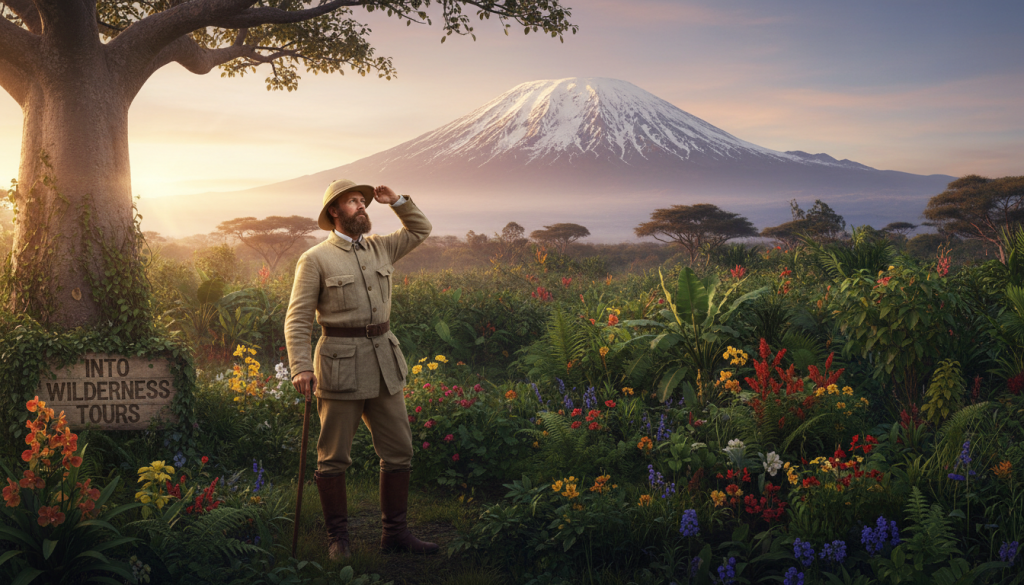
As the first European to see Kilimanjaro, Johann Rebmann’s 1848 journey was a pivotal moment in the history of African exploration. We stand in awe of Rebmann’s courage and determination as he ventured into the unknown, unveiling the majestic Kilimanjaro to the world.
The 1848 Expedition
Rebmann’s 1848 expedition was a landmark event that marked the beginning of European awareness of Kilimanjaro. Let’s explore the key aspects of this journey:
Rebmann’s Journey from the Coast
Rebmann’s journey began on the coast of East Africa, where he embarked on a challenging trek into the interior. The path was arduous, but Rebmann’s resolve remained unwavering as he pressed on towards the fabled mountain.
First Written Account of Kilimanjaro
Upon reaching Kilimanjaro, Rebmann became the first European to document the mountain in writing. His account provided a detailed description of the mountain’s grandeur, including its snow-capped peaks and surrounding landscape.
European Disbelief of Snow in Africa
Initially, Rebmann’s claims of snow on Kilimanjaro were met with skepticism by the European community. The notion of snow in Africa, particularly near the equator, was considered implausible by many.
Scientific Controversy in Europe
The scientific community in Europe was divided over Rebmann’s claims, with some questioning the existence of snow on an African mountain. This controversy highlighted the limited understanding of Africa’s geography at the time.
Validation of Rebmann’s Claims
Eventually, subsequent explorations and observations validated Rebmann’s accounts, confirming the presence of snow on Kilimanjaro. This validation not only vindicated Rebmann but also opened up new avenues for African exploration.
Rebmann’s discovery of Kilimanjaro stands as a testament to the power of exploration and the importance of challenging prevailing wisdom. As we reflect on this pivotal moment, we are reminded of the enduring allure of Africa’s highest peak.
Early Exploration Attempts: 1860-1889
As European explorers gained interest in Africa’s highest peak, the years between 1860 and 1889 saw numerous attempts to explore and climb Kilimanjaro. This period was marked by courage, curiosity, and a pioneering spirit that would lay the groundwork for future adventures on the mountain.
Baron von der Decken’s Expeditions
One of the earliest and most notable explorers of Kilimanjaro was Baron Reinhard von der Decken. His expeditions in the early 1860s were significant milestones in the mountain’s exploration history.
The 1861 First Attempt
In 1861, Baron von der Decken made his first attempt to climb Kilimanjaro. Although he didn’t reach the summit, his expedition provided valuable insights into the mountain’s geography and laid the groundwork for future explorers. As von der Decken noted, “The ascent was more challenging than anticipated, but the scenery was breathtaking.”
The 1862 Second Attempt and Achievements
Undeterred by his initial failure, von der Decken returned in 1862 with a larger team and better equipment. This time, he was able to ascend to a higher altitude, although still not reaching the summit. His observations on the mountain’s glaciers and vegetation were groundbreaking, contributing significantly to the scientific understanding of Kilimanjaro.
Other Notable Early Explorers
While Baron von der Decken’s efforts were pioneering, he was not alone in his quest to explore Kilimanjaro. Other explorers soon followed, each contributing their own discoveries to the growing body of knowledge about the mountain.
Charles New’s Contributions
Charles New, a British missionary, made significant contributions to the exploration of Kilimanjaro in the late 1860s and early 1870s. His observations on the mountain’s ecosystems and the local Chagga people were invaluable, providing a more holistic understanding of the region.
Joseph Thomson and Harry Johnston’s Expeditions
Joseph Thomson and Harry Johnston were among other notable explorers who ventured into Kilimanjaro during this period. Their expeditions in the late 1880s further expanded the knowledge of the mountain’s geography, geology, and potential for climbing. As Thomson remarked, “Kilimanjaro is a world unto itself, with its own climates and landscapes.”
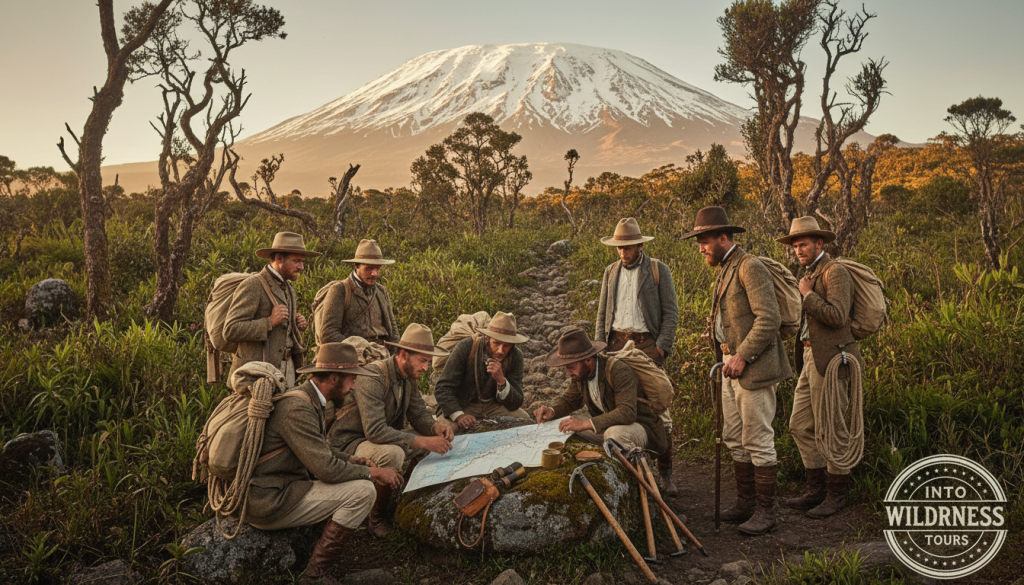
The early exploration attempts on Kilimanjaro between 1860 and 1889 were crucial in paving the way for future climbers and researchers. These pioneers faced numerous challenges, from harsh weather conditions to logistical difficulties, yet their perseverance and curiosity drove the discovery of one of Africa’s most iconic landmarks.
Hans Meyer and Ludwig Purtscheller: First to Summit
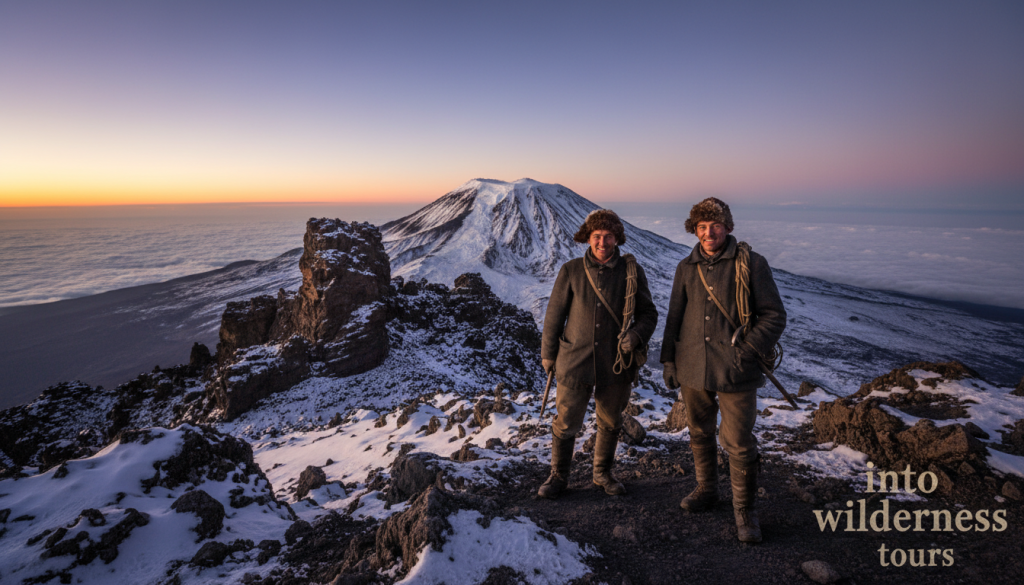
In the annals of exploration history, few feats rival the achievement of Hans Meyer and Ludwig Purtscheller as they stood atop Kilimanjaro. Their successful ascent in 1889 marked the culmination of years of preparation and perseverance.
Failed Attempts and Lessons Learned
Meyer and Purtscheller’s journey to the summit was not without its challenges. Their earlier attempts taught them valuable lessons that ultimately contributed to their success.
Meyer’s 1887 Expedition
The 1887 expedition was Meyer’s first serious attempt to climb Kilimanjaro. Although he reached an altitude of nearly 5,500 meters, the lack of adequate local support and harsh weather conditions forced him to turn back.
Meyer’s 1888 Attempt and Challenges
In 1888, Meyer faced new challenges, including logistical issues and local resistance. Despite these obstacles, he persevered, gathering crucial information that would aid in his next attempt.
The Successful 1889 Expedition
The 1889 expedition was a turning point. With the expertise of Ludwig Purtscheller, a seasoned mountaineer, and strategic planning, Meyer was able to overcome the challenges that had previously thwarted him.
Strategic Planning and Local Support
A key factor in their success was the support of local guides and porters, who played a crucial role in the expedition. Their knowledge of the terrain and logistical support were invaluable.
The Historic Summit Achievement
On October 6, 1889, Hans Meyer and Ludwig Purtscheller made history by reaching the summit of Kilimanjaro. Their achievement was not just a personal triumph but a milestone in the exploration of Africa.
| Expedition Year | Leader | Maximum Altitude | Outcome |
|---|---|---|---|
| 1887 | Hans Meyer | 5,500 meters | Turned back due to weather |
| 1888 | Hans Meyer | N/A | Aborted due to logistical issues |
| 1889 | Hans Meyer & Ludwig Purtscheller | 5,895 meters | Successful summit |
Kilimanjaro During the Colonial Era
The story of Kilimanjaro during the colonial era is one of cultural clashes, scientific discoveries, and the beginnings of modern tourism. As European powers extended their reach into Africa, Kilimanjaro became a focal point for both German and British colonial ambitions.
German East Africa Period
Under German rule, Kilimanjaro was part of German East Africa, a period marked by significant scientific exploration. German scientific expeditions played a crucial role in mapping the mountain and understanding its unique ecosystems.
German Scientific Expeditions
These expeditions not only charted the mountain’s geography but also contributed to the global understanding of its flora and fauna. The scientific community’s interest in Kilimanjaro during this period laid the groundwork for future research and conservation efforts.
Impact of Colonial Rule on the Mountain Region
Colonial rule had a profound impact on the local Chagga people and the mountain’s environment. The introduction of new agricultural practices and the establishment of colonial infrastructure altered the traditional ways of life and began to shape the region’s future.
British Mandate and Influence
Following World War I, Kilimanjaro transitioned from German to British control, becoming part of the British mandate territory of Tanganyika. This period saw the development of early tourism infrastructure, paving the way for modern-day adventurers.
Transfer to British Control After WWI
The shift from German to British rule marked a new era for Kilimanjaro, with the British mandate administration overseeing the territory. This transition had significant implications for the local population and the mountain’s management.
Development of Early Tourism Infrastructure
The British developed basic infrastructure for tourism, including trails, lodges, and guides. This infrastructure not only facilitated access to the mountain but also helped in promoting Kilimanjaro as a destination for international travelers.
| Period | Colonial Power | Key Developments |
|---|---|---|
| 1885-1918 | Germany | Scientific expeditions, mapping, and initial infrastructure development |
| 1918-1964 | Britain | Development of tourism infrastructure, transfer to British control post-WWI |
Post-Independence Era and National Pride
With independence, Kilimanjaro’s significance transcended its physical presence to represent the nation’s soul. As Tanzania gained its freedom, the mountain became a unifying symbol, embodying the hopes and aspirations of its people. This shift in perception was not merely symbolic; it reflected a deeper connection between the Tanzanian identity and their majestic mountain.
Kilimanjaro as a Symbol of Tanzanian Identity
Julius Nyerere, Tanzania’s first president, played a pivotal role in shaping the nation’s identity, with Kilimanjaro at its core. His vision for the mountain was not just as a national icon but as a symbol of the country’s unity and strength.
Julius Nyerere’s Vision for the Mountain
Nyerere’s leadership emphasized the importance of Kilimanjaro in fostering a sense of national pride and unity. He saw the mountain as a bridge between the nation’s past and its future, a constant reminder of the country’s rich cultural heritage and natural beauty.
Cultural Significance in Modern Tanzania
Today, Kilimanjaro continues to be a source of inspiration for Tanzanians. It is often invoked in cultural narratives, symbolizing resilience, hope, and the indomitable spirit of the Tanzanian people. “The roof of Africa” is not just a geographical reference; it’s a metaphor for the aspirations of a nation.
The Mountain on Tanzania’s Flag and Currency
Kilimanjaro’s image is proudly displayed on Tanzania’s flag and currency, signifying its importance to the nation’s identity. This representation is a testament to the mountain’s enduring presence in the national consciousness.
Symbolic Representations in National Imagery
The depiction of Kilimanjaro on national symbols is a powerful statement of its significance. It serves as a constant reminder of the nation’s natural treasures and the pride it takes in its heritage.
Kilimanjaro in Tanzanian Arts and Media
Kilimanjaro has inspired countless works of art, literature, and music, reflecting its deep-rooted presence in Tanzanian culture. It is celebrated as a muse that inspires creativity and a symbol that unites the nation.
Establishment and Evolution of Kilimanjaro National Park
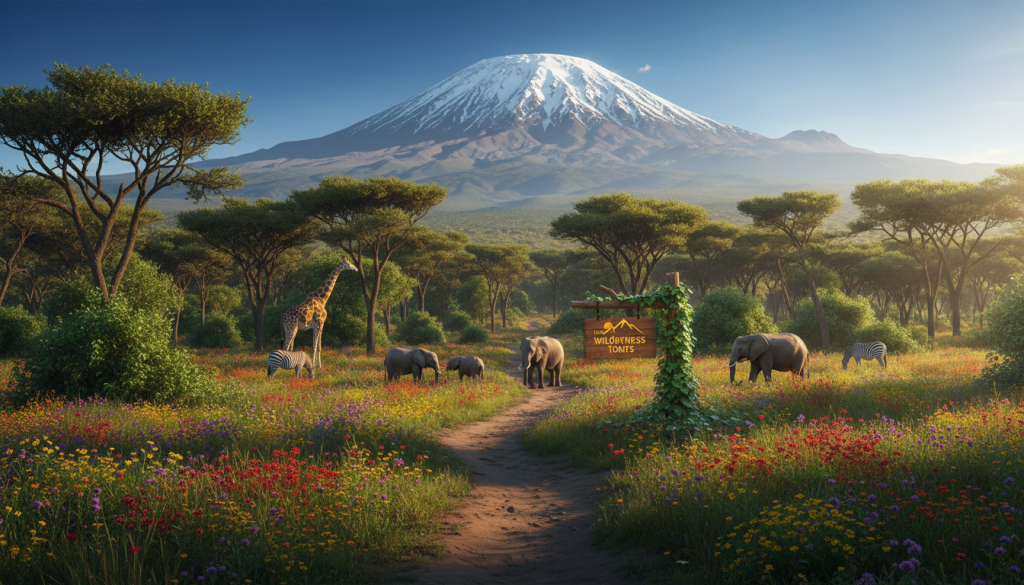
As we explore the history of Kilimanjaro National Park, we uncover a story of dedication to preserving a natural wonder. The park’s establishment was a crucial step in protecting the mountain’s unique ecosystem and cultural significance.
UNESCO World Heritage Site Designation
In 1987, Kilimanjaro National Park was designated a UNESCO World Heritage Site, recognizing its outstanding universal value. This designation was the culmination of a rigorous process that highlighted the park’s natural and cultural importance.
The 1987 Recognition Process
The recognition process involved a thorough evaluation of the park’s ecosystems, biodiversity, and cultural heritage. This process underscored the park’s significance as a natural wonder and a sacred site for local communities.
Significance of World Heritage Status
Achieving World Heritage status not only honors the park’s natural beauty but also acknowledges its cultural and ecological significance. This status has brought international attention to the importance of preserving Kilimanjaro’s delicate ecosystem.
Conservation Efforts Through the Decades
Over the years, Kilimanjaro National Park has implemented various conservation efforts to protect its natural resources. These initiatives have been crucial in maintaining the park’s ecological balance and promoting sustainable tourism practices.
Management Challenges and Solutions
Managing a national park of such magnitude comes with its challenges, including balancing tourism with conservation. The park authorities have implemented innovative solutions to address these challenges, ensuring the long-term sustainability of the park.
Balancing Tourism and Preservation
The park’s management has worked tirelessly to strike a balance between allowing visitors to experience the mountain’s majesty and preserving its natural environment. This delicate balance is crucial for the continued health of the ecosystem and the local communities that depend on it.
Environmental Challenges Facing Kilimanjaro
The environmental challenges facing Kilimanjaro are multifaceted, ranging from the rapid retreat of its glaciers to widespread deforestation. As we explore these issues, it becomes clear that addressing them is crucial for preserving the mountain’s unique ecosystem.
Climate Change and Glacial Retreat
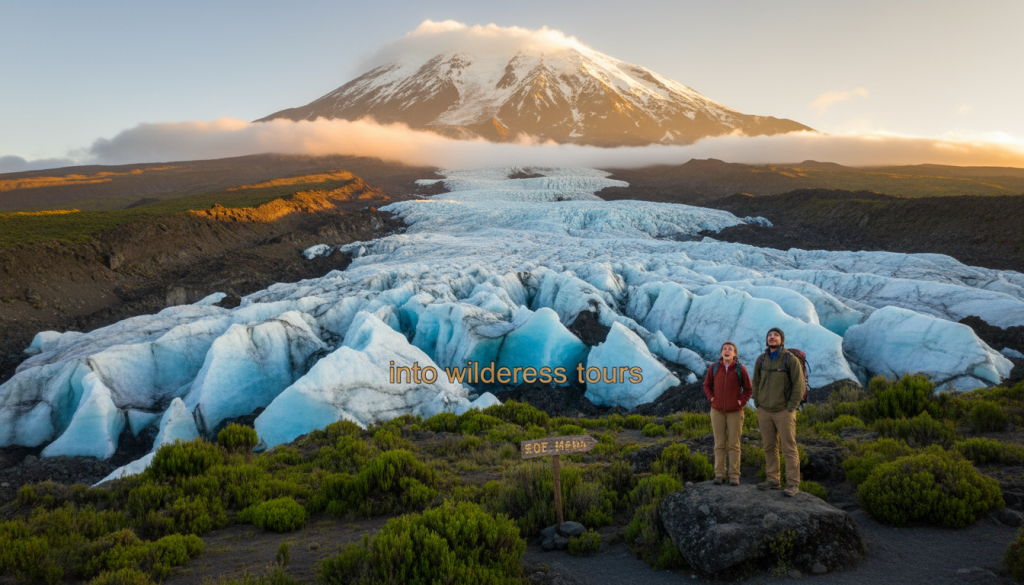
Climate change is perhaps the most visible threat to Kilimanjaro’s environment, particularly in the rapid retreat of its glaciers. The ice that has capped the mountain for thousands of years is melting at an alarming rate.
Historical Glacier Extent
Historically, Kilimanjaro’s glaciers covered a significant area, but they have been shrinking since the early 20th century. This glacial retreat is not just a natural phenomenon but is significantly accelerated by global warming.
Current Rate of Ice Loss
The current rate of ice loss on Kilimanjaro is staggering. Studies have shown that the mountain has lost over 85% of its glacial ice since 1912. This rapid melting not only affects the local ecosystem but also has broader implications for global climate patterns.
Projections for the Future
Projections suggest that Kilimanjaro’s glaciers could disappear entirely within the next few decades. This would not only be a loss for the local environment but also a significant change in the global landscape.
Deforestation and Habitat Loss
Alongside climate change, deforestation and habitat loss pose significant threats to Kilimanjaro’s ecosystem. The expansion of human settlements and agricultural land has led to widespread deforestation.
| Cause | Effect | Mitigation Strategy |
|---|---|---|
| Human Settlement Pressure | Habitat Loss | Sustainable Urban Planning |
| Agricultural Expansion | Deforestation | Reforestation Initiatives |
Human Settlement Pressure
The growing population around Kilimanjaro has led to increased pressure on the land, resulting in habitat loss for many species. Efforts to manage this growth sustainably are crucial.
Agricultural Expansion Impact
Agricultural expansion has been a significant driver of deforestation around Kilimanjaro. Implementing sustainable agricultural practices can help mitigate this impact.
Reforestation Initiatives
Reforestation efforts are underway to restore some of the lost forest cover. These initiatives not only help in carbon sequestration but also in preserving biodiversity.
Modern Tourism and Climbing Routes
As we explore the modern landscape of Kilimanjaro, we find that tourism has become a significant aspect of the mountain’s presence in the world today. The mountain’s allure has not diminished; instead, it has grown stronger, drawing in climbers and tourists alike. This influx of visitors has led to the development of various climbing routes, each offering a unique experience.
The Six Official Routes to the Summit
Kilimanjaro offers six official routes to the summit, catering to different climber preferences and abilities. These routes are:
Marangu: The “Coca-Cola” Route
The Marangu route is considered one of the easier paths to the summit, making it a popular choice among climbers.
Machame: The “Whiskey” Route
The Machame route is known for its challenging terrain and is often preferred by experienced climbers seeking a more demanding ascent.
Lemosho and Shira Routes
The Lemosho and Shira routes offer a more scenic approach to the mountain, with longer acclimatization periods, increasing the chances of a successful summit.
Rongai and Northern Circuit Routes
The Rongai route approaches from the north, providing a less crowded experience, while the Northern Circuit route is the longest, offering comprehensive acclimatization.
Umbwe: The Steepest Challenge
The Umbwe route is known for its steep ascent, making it a challenging choice for climbers.
Economic Impact on Local Communities
The influx of tourists has a significant economic impact on local communities around Kilimanjaro. This impact is felt through various channels:
Porter and Guide Employment
Tourism provides employment opportunities for local porters and guides, contributing to the livelihoods of many families.
Tourism Revenue Distribution
Revenue generated from tourism is distributed among local stakeholders, supporting community development projects.
Sustainable Tourism Initiatives
Efforts to promote sustainable tourism practices are underway, aiming to minimize the environmental footprint of tourism on Kilimanjaro.
| Climbing Route | Duration | Difficulty Level |
|---|---|---|
| Marangu | 5-6 days | Moderate |
| Machame | 6-7 days | Challenging |
| Lemosho | 7-8 days | Moderate to Challenging |
| Rongai | 6-7 days | Moderate |
| Umbwe | 6 days | Very Challenging |
As we reflect on the impact of tourism on Kilimanjaro, it’s clear that while there are challenges, there are also significant opportunities for local communities and conservation efforts. By embracing sustainable tourism practices, we can ensure that Kilimanjaro remains a vibrant and thriving destination for generations to come.
Notable Climbs and Record-Breaking Expeditions
As we explore the notable climbs and record-breaking expeditions on Kilimanjaro, we uncover stories of human endurance and determination that inspire adventurers worldwide. The mountain’s majestic presence has drawn climbers from all walks of life, each with their own unique story to tell.
Youngest and Oldest Climbers
Kilimanjaro has been climbed by individuals of all ages, from the very young to the elderly, each pushing the boundaries of what is thought possible.
Remarkable Youth Achievements
The youngest person to summit Kilimanjaro was seven-year-old Keats Boyd, who achieved this remarkable feat in 2008. Such youthful achievements highlight the mountain’s accessibility to determined climbers of all ages.
Senior Climbers Defying Age
On the other end of the spectrum, Anne Lorimor summited Kilimanjaro at the age of 86, setting a record for the oldest person to reach the summit. Such achievements demonstrate that age is merely a number when it comes to tackling this iconic mountain.
Speed Records and Unique Ascents
Kilimanjaro has also been the stage for numerous speed records and unique ascents, showcasing the diversity and creativity of climbers’ approaches to the mountain.
Fastest Known Times
The fastest ascent of Kilimanjaro was achieved by Karl Egloff in 2014, who completed the climb in a remarkable 4 hours and 56 minutes via the Umbwe route. Such records push the limits of human endurance and inspire others to strive for excellence.
Unusual and Charitable Climbs
Kilimanjaro has also been climbed for charitable causes, with many using the mountain as a platform to raise funds and awareness for various causes. These climbs not only challenge the participants physically but also contribute to the greater good.
Conclusion: Kilimanjaro’s Enduring Legacy
As we conclude our journey through the captivating story of Kilimanjaro, we reflect on the mountain’s profound impact as a symbol of Tanzania’s natural heritage. Kilimanjaro’s legacy is deeply intertwined with the cultural identity and environmental richness of the region.
We have explored the rich history, cultural significance, and environmental challenges facing this majestic giant. As guardians of this heritage, we are committed to preserving Kilimanjaro’s beauty and promoting responsible tourism practices that support local communities and conserve the environment.
The preservation of Kilimanjaro’s natural beauty is not just a conservation effort, but a commitment to safeguarding the future of Tanzania’s natural heritage. By embracing sustainable tourism, we can ensure that Kilimanjaro’s legacy continues to inspire generations to come.
As we cherish the memory of this incredible mountain, we are reminded of the importance of protecting our planet’s precious resources. Kilimanjaro’s enduring legacy serves as a powerful reminder of the beauty and wonder that nature has to offer.