Mara River crossings peak August – September · limited northern camps remain
Tanzania · Choose Your Star
Enter to open first result · Esc to close

3,245 square kilometres of dry acacia country against the Pare and Usambara mountains — and almost nobody goes.
Mkomazi is a conservation story before it is a destination, and that is the honest way to sell it. By the late 1980s the park had been grazed and poached close to empty. Black rhino were locally extinct, African wild dog had disappeared from the ecosystem, and elephant had largely retreated across the border into Kenya.
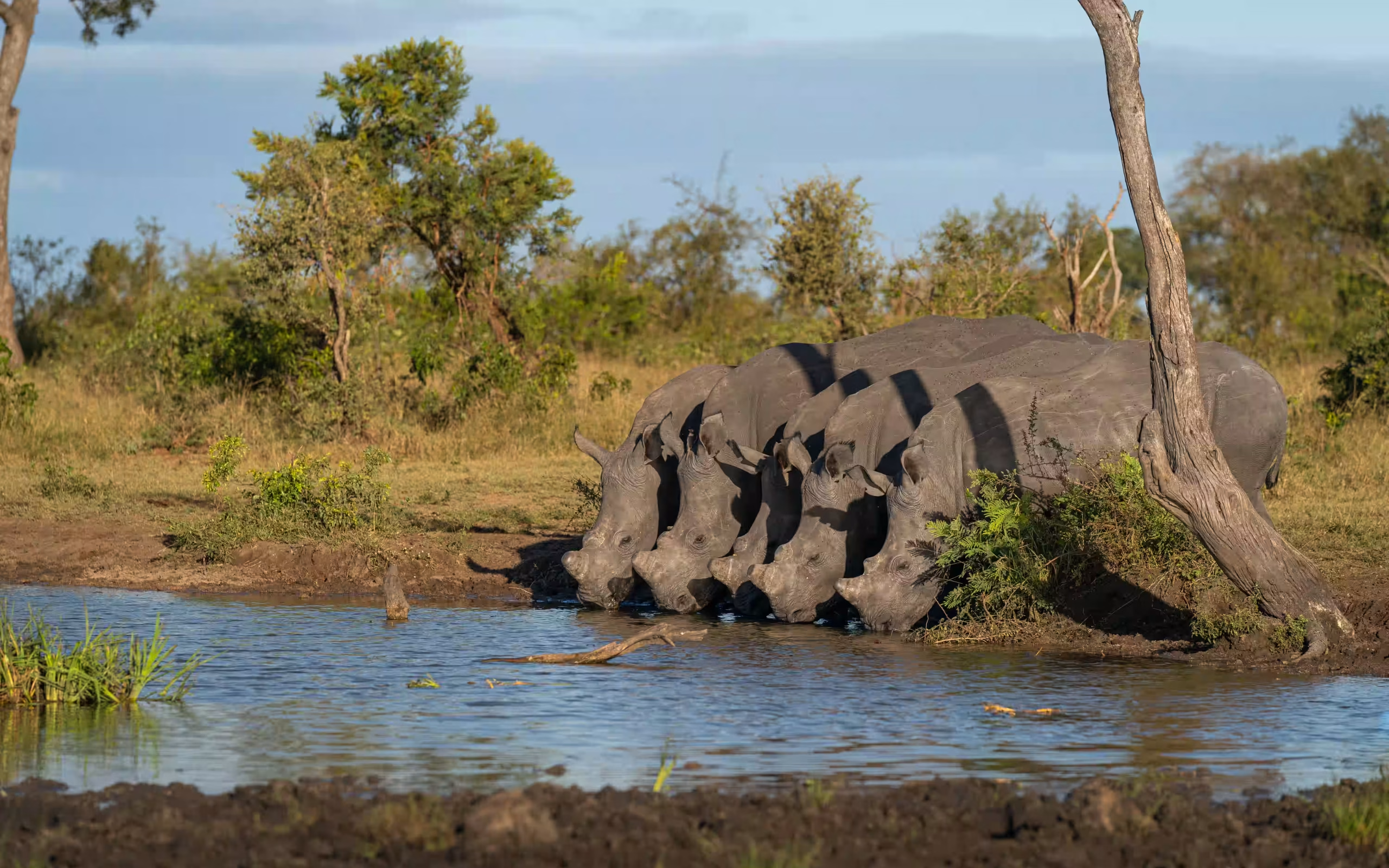
What happened next is unusual. A fenced and heavily guarded rhino sanctuary was established in 1997, and black rhino were brought back. A wild dog breeding and release programme followed in 2001. In 2008 the reserve was upgraded to full national park status. Today rhino numbers are climbing, wild dog packs are breeding in the wild, and elephant have returned from Tsavo.
Geographically it forms the southern end of the vast Tsavo–Mkomazi ecosystem, one of the largest protected areas in Africa. The landscape is dry acacia-commiphora bush beneath the Pare and Usambara ranges, with the Kilimanjaro massif sometimes visible to the north-west on clear mornings.
Be clear about expectations: game densities are far lower than Tarangire or the Serengeti, and you will work for your sightings. What you get in exchange is dry-country species you won't easily see elsewhere — gerenuk, lesser kudu, fringe-eared oryx, Grevy's zebra — and the near-certainty of having the park to yourself.
Mkomazi rewards a particular kind of traveller — one who has already seen the famous parks, or who cares about conservation as much as photography.

A fenced, heavily protected area holding Tanzania's most closely guarded black rhino population. Access is restricted and must be arranged in advance through park authorities.

One of very few places in Tanzania with a genuine chance of African wild dog. Packs range widely, so sightings are unpredictable — but this is where they exist.

Gerenuk browsing on hind legs, lesser kudu slipping through the commiphora, fringe-eared oryx and Grevy's zebra. Species largely absent from the classic circuit.

The mountains rise sharply along the park's southern boundary, and on clear mornings Kilimanjaro floats on the north-western horizon. Superb light and empty roads.
You will see fewer animals here than anywhere else on the circuit — and some of them you will see nowhere else.
Set expectations honestly before you go. Mkomazi's game densities are low and the bush is thick, so drives can be quiet. This is a park for a second or third Tanzania trip, for conservation-minded travellers, and for anyone who values an empty road over a guaranteed sighting. If it's your only safari, go to Tarangire instead.
A park where the conservation work is the attraction — and where you can usually meet the people doing it.
Access to the protected sanctuary must be arranged ahead through park authorities and is not always granted. When it is, it's a rare look at hands-on rhino conservation.
Working with rangers to locate packs across a large range. Success is genuinely uncertain, which is precisely what makes finding them memorable.
Slow driving through acacia-commiphora bush looking for gerenuk, lesser kudu and oryx. Patient, quiet work with the park largely to yourself.
The ancient rainforest of the Usambaras sits just south — endemic birds, cool air, and a completely different Tanzania an hour from the gate.
Dry-country nocturnals: genet, civet, aardwolf and occasionally striped hyena, which is far more likely here than in the northern parks.
Sessions with sanctuary staff on the rhino and wild dog programmes. Genuinely interesting, and particularly good for older children and students.
Mkomazi is semi-arid and thickly vegetated. Outside the dry months, spotting anything becomes very hard indeed.
Mkomazi has very few beds. That scarcity is exactly why the park stays empty.

A small number of lodges sit inside the park with views toward the Pare mountains. Comfortable rather than luxurious, and quiet in a way the northern parks never are.

Simple canvas camps near the main gates. Bucket showers, good food and complete silence after dark — the right way to experience a park this empty.

Staying in Same town or Moshi and driving in works if you're only doing a day visit. Considerably cheaper, at the cost of an early start.
Mkomazi works best combined with Kilimanjaro, the Usambaras, or as a stop toward the coast.

Two nights in the park with a sanctuary visit and wild dog tracking, arranged directly with park conservation staff.
Enquire →
Dry-country game viewing followed by the ancient rainforest and endemic birds of the Usambara range.
Enquire →
Eight days on the mountain followed by a quiet recovery safari in a park with no crowds whatsoever.
Enquire →
The standard circuit, with Mkomazi available as an extension for travellers who want somewhere genuinely quiet.
Enquire →Most journeys combine two or three. Tell us which pull at you and we will build the route.

Mkomazi needs arranging ahead, particularly for sanctuary access. Tell us your dates and we'll make the requests early. No cost, no commitment.
 ✓Live specialist
✓Replies within 1 hr
Tell us a little about the trip you have in mind. A planner in Arusha will write back within one working day.
Speak with us directly on WhatsAppinto wilderness toursPlanner