Mara River crossings peak August – September · limited northern camps remain
Tanzania · Choose Your Star

Enter to open first result · Esc to close



Zanzibar's coasts are genuinely different from one another, and the tide decides more than the brochures admit.
Zanzibar is the main island of an archipelago, properly called Unguja, and it is where most safaris in Tanzania end. The mistake people make is treating it as one destination — booking a beach because the photograph looked right, then discovering the sea has retreated a kilometre and won't return until four in the afternoon.
The east coast — Paje, Jambiani, Bwejuu — has the postcard sand and the best value, but the tidal range is extreme. At low tide you walk out across seagrass flats among seaweed farmers rather than swimming. It is beautiful and it is the kitesurfing capital of the island, but it is not a swimming beach on demand.
The north — Nungwi and Kendwa — is the only stretch where you can swim at any state of the tide. It is also the busiest and least traditional. The south-east around Michamvi is quieter with reasonable swimming, and where most honeymoon resorts sit. The west is not for beaches at all; it is where Stone Town is.
And Stone Town deserves more than the single night people give it. A UNESCO World Heritage Site of coral-rag alleys, carved doors, Omani and Indian and Swahili architecture layered over each other — plus the Old Fort, the former slave market, and the best street food on the coast at Forodhani Gardens.
This is the most consequential choice on the island, and the one most people get wrong.

The only coast with deep water at every tide. Lively, developed, superb sunsets and plenty of boats and bars. Least traditional feel on the island.
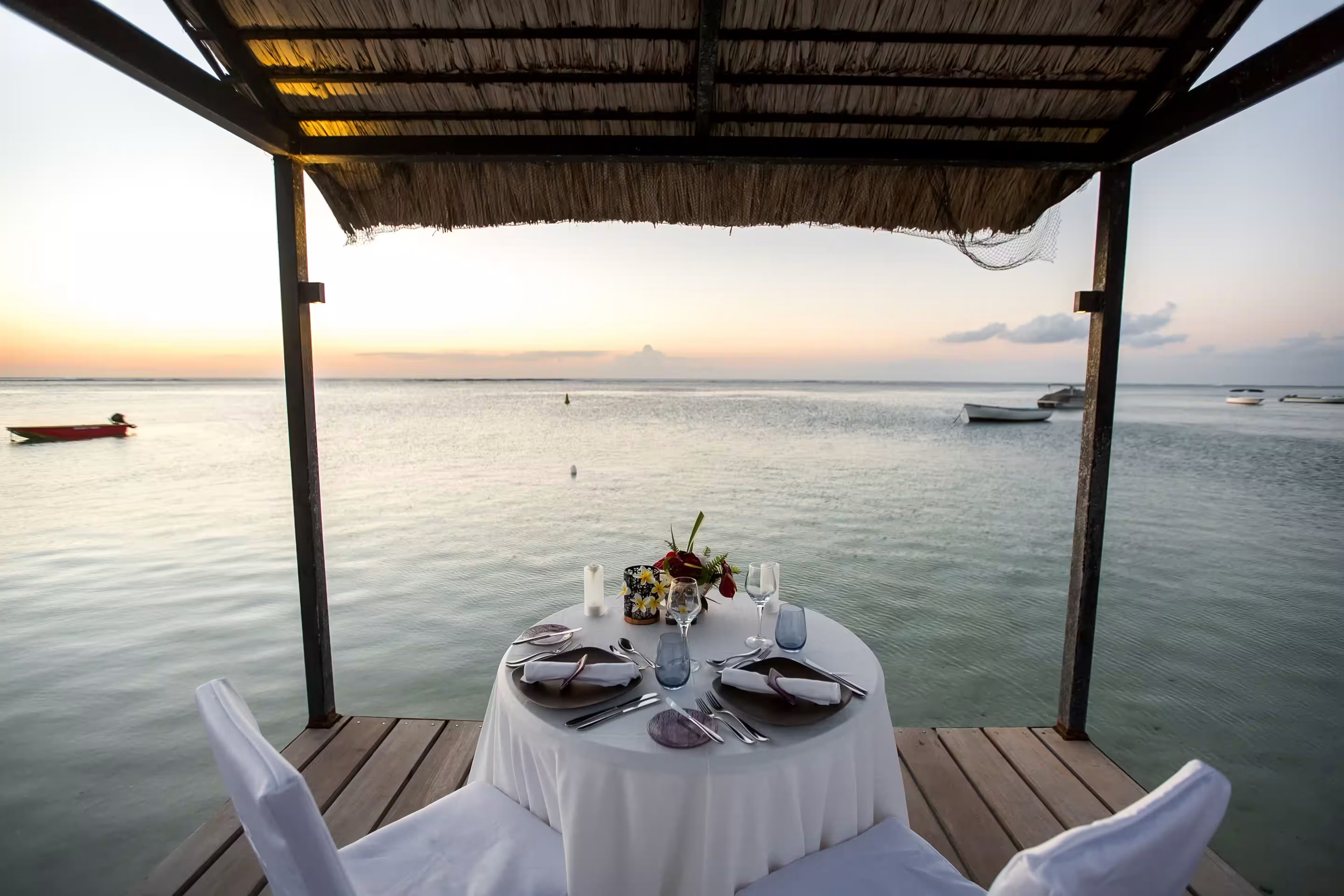
Long white sand, turquoise shallows and the best value rooms. The tide retreats far twice a day — brilliant for kitesurfing, frustrating for swimmers.
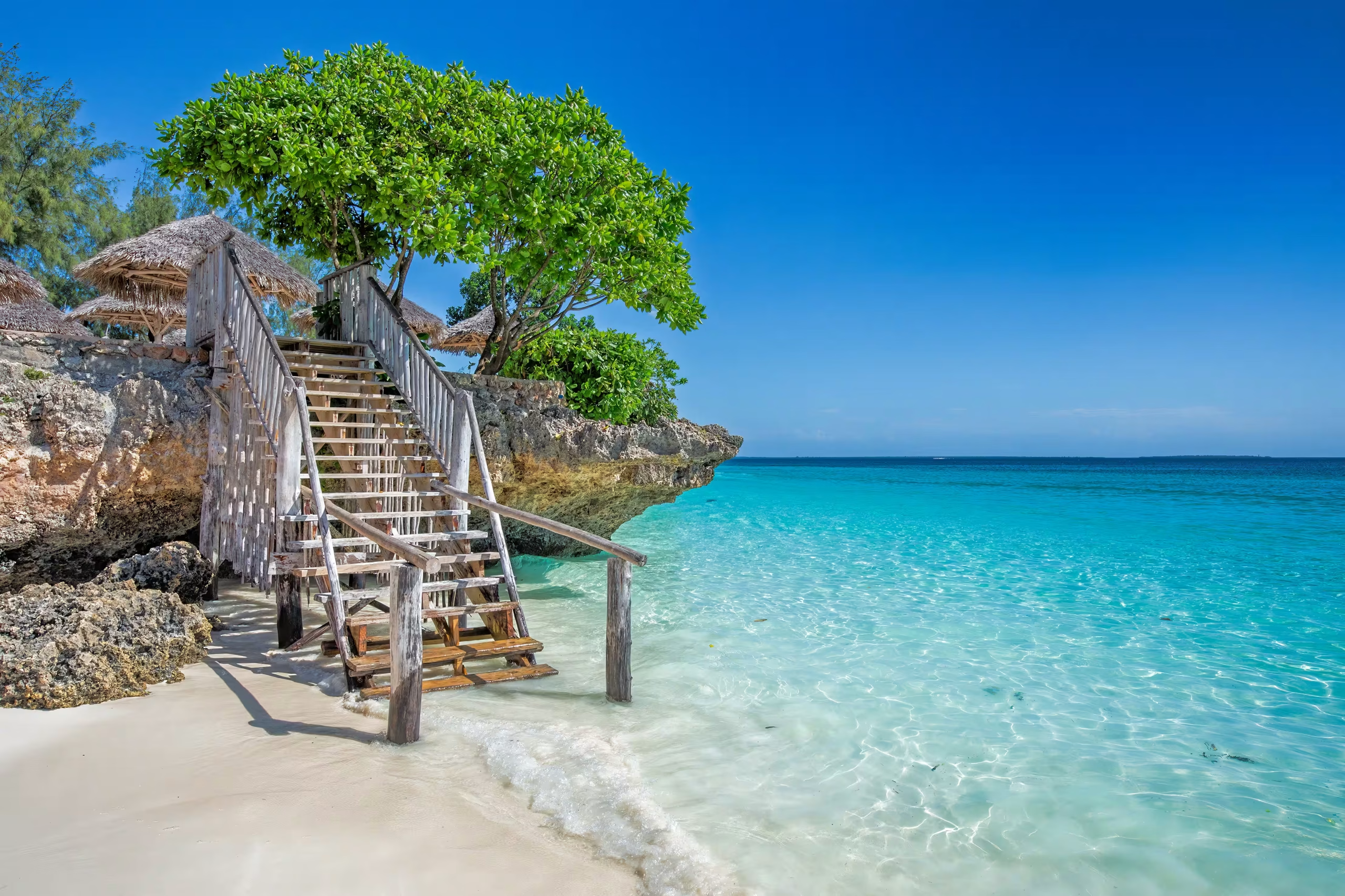
Headland beaches with better swimming than the east coast proper and far fewer people. Where the seclusion-focused resorts cluster.

Not a swimming coast. This is the history — carved doors, the Old Fort, the slave market memorial, spice farms inland and Forodhani street food at dusk.
An endemic primate, some of the best diving in East Africa, and a spice trade that shaped the Indian Ocean.
The Zanzibar red colobus lives nowhere else on Earth and is easily seen at Jozani-Chwaka Bay National Park, about forty minutes from Stone Town. Numbers are low but stable. Please don't let guides encourage you closer than the marked distance — habituation and disease transmission are real pressures on a population this small.
Two or three of these turn a beach week into an actual trip.
The alleys, carved doors, Old Fort, Anglican cathedral built on the former slave market site, and the Darajani market. Best done early before the heat.
Clove, nutmeg, cinnamon and vanilla on working farms — the trade that made Zanzibar wealthy and drew the Omani sultans here in the first place.
The Zanzibar red colobus exists nowhere else on Earth. Jozani also has a mangrove boardwalk and is easily combined with a drive to the east coast.
The best diving and snorkelling on the island. Turtles, reef sharks and dolphins, with visibility that is genuinely world-class in the right months.
Traditional sail out of Stone Town or Nungwi as the sun drops. The oldest and still the best way to see the island from the water.
The restaurant on a rock in the sea off Michamvi. Touristy and entirely worth it — go at low tide and walk out, or high tide and take the boat.
Zanzibar has a clear rainy season and it is genuinely worth planning around.
Our standard recommendation: two nights in Stone Town, then three or four on whichever coast suits you.

Full-service resorts with pools, spas and dive centres, concentrated on the north and south-east coasts. The reliable choice for honeymoons.

Small owner-run hotels of ten to twenty rooms, often better food and far more character than the resorts, at half the price.

Converted merchant houses in the old town with rooftop terraces over the harbour. Two nights here is worth more than a week on the sand.
Zanzibar is the natural end to almost any Tanzanian safari — an hour and a half from Arusha.
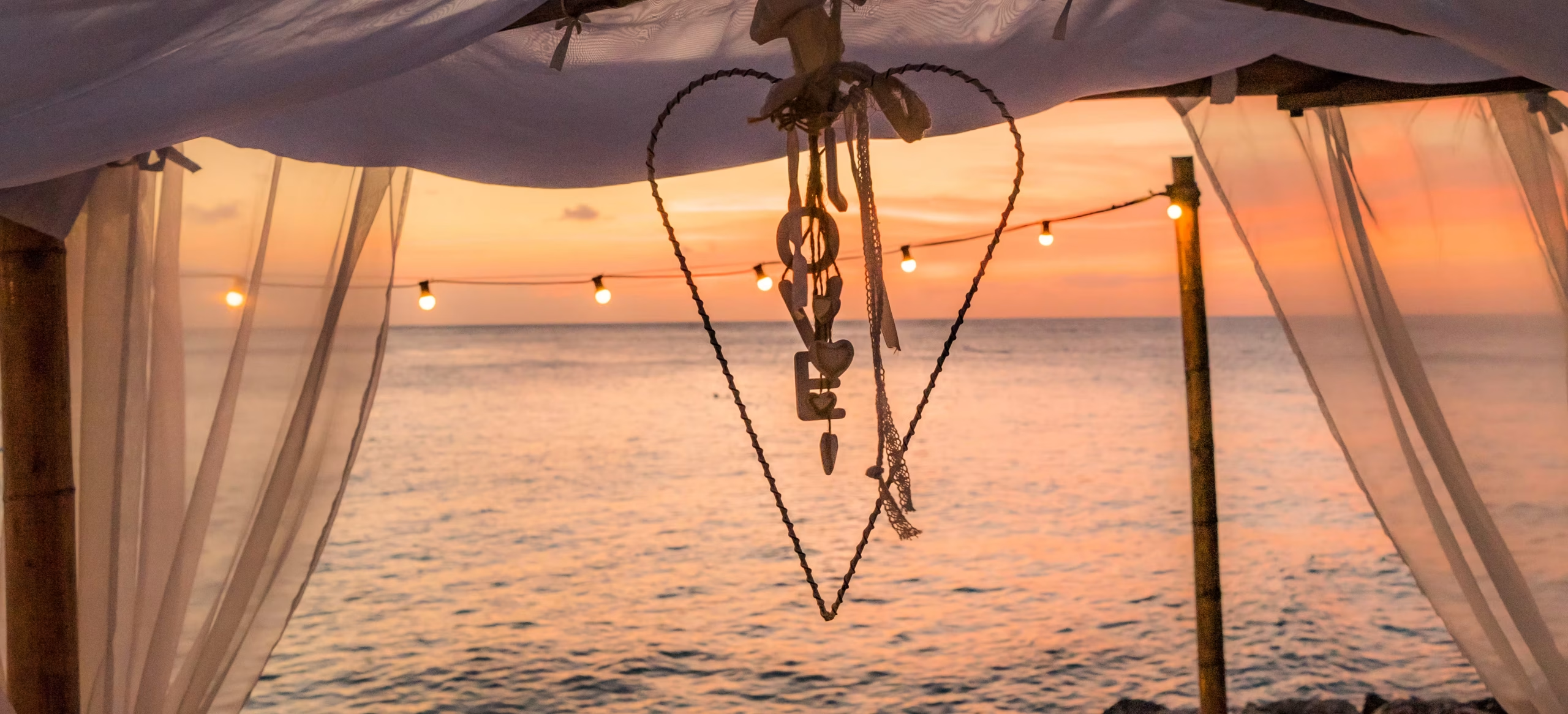
A honeymoon combination blending Stone Town's culture with beach relaxation. The classic short Zanzibar break.
View Itinerary →
Mara, Serengeti and Ngorongoro followed by a Zanzibar finale. Wildlife, culture and beach in one journey.
View Itinerary →
Ruaha and Nyerere followed by four nights on the Indian Ocean. The uncrowded alternative to the northern circuit.
Enquire →
Stone Town and Unguja's beaches, then the far quieter diving and forest of Pemba to the north.
Enquire →Most journeys combine two or three. Tell us which pull at you and we will build the route.
Tell us how you want to spend the days — swimming, diving, kitesurfing or wandering old streets — and we'll put you on the right coast. No cost, no commitment.
 ✓Live specialist
✓Replies within 1 hr
✓Live specialist
✓Replies within 1 hr
Tell us a little about the trip you have in mind. A planner in Arusha will write back within one working day.
Speak with us directly on WhatsAppinto wilderness toursPlanner