Mara River crossings peak August – September · limited northern camps remain
Tanzania · Choose Your Star
Enter to open first result · Esc to close

20,226 square kilometres — larger than Wales — holding roughly a tenth of the world's remaining lions.
Ruaha is the biggest national park in Tanzania and one of the largest in Africa. It receives a small fraction of the Serengeti's visitors. Those two facts together explain most of what makes it worth the flight.
The park sits at a genuine ecological crossroads, where the southern miombo woodland meets the East African acacia savanna. That transition means you get species from both zones overlapping — greater and lesser kudu in the same park, sable and roan antelope alongside Grant's gazelle, and baobabs standing over miombo scrub.
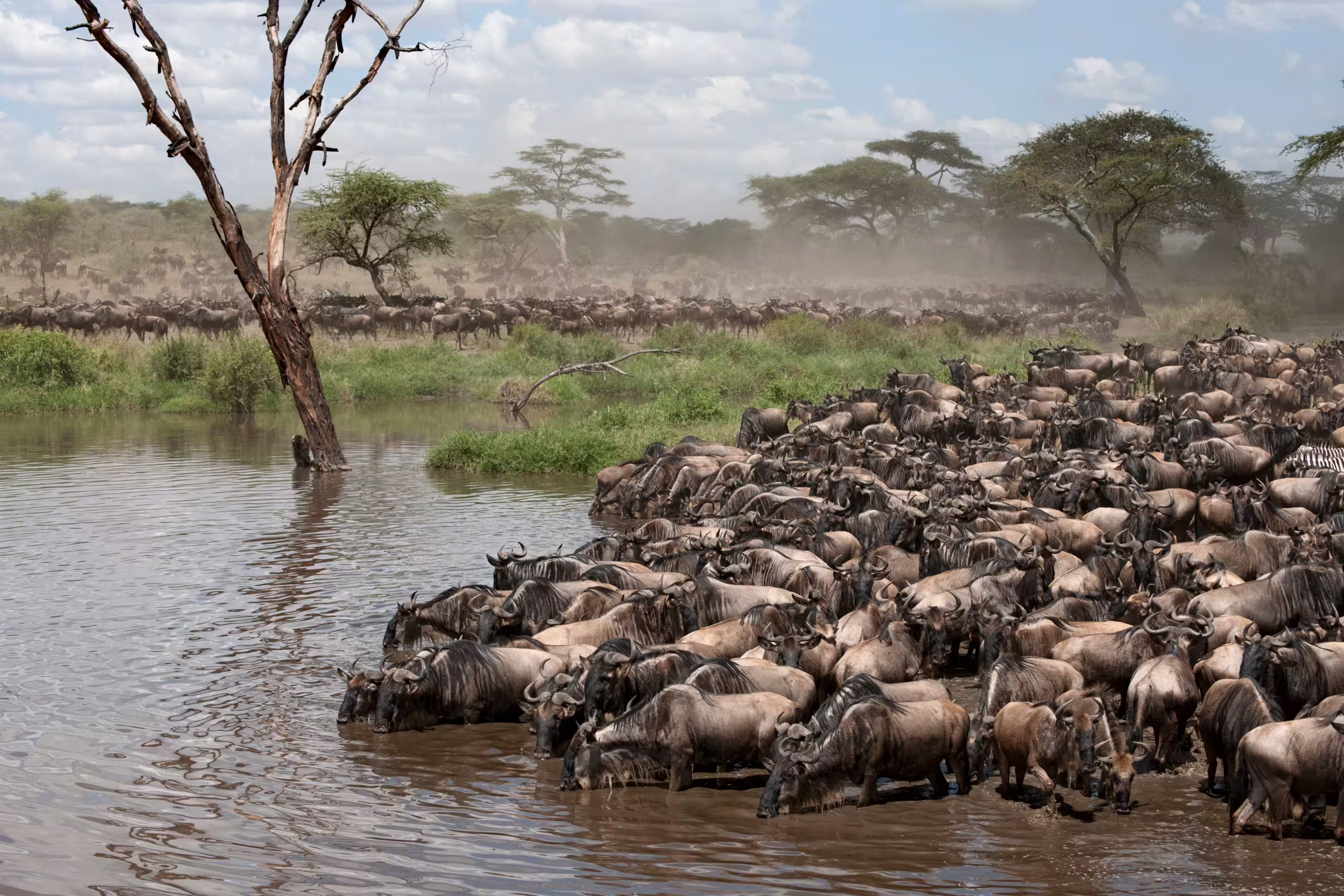
The Great Ruaha River is the organising fact of the park. Through the dry season it retreats into its own sand bed, breaking into a chain of isolated pools. By September those pools are the only water for an enormous area, and the concentration of predators and prey around them is as intense as anything in Africa.
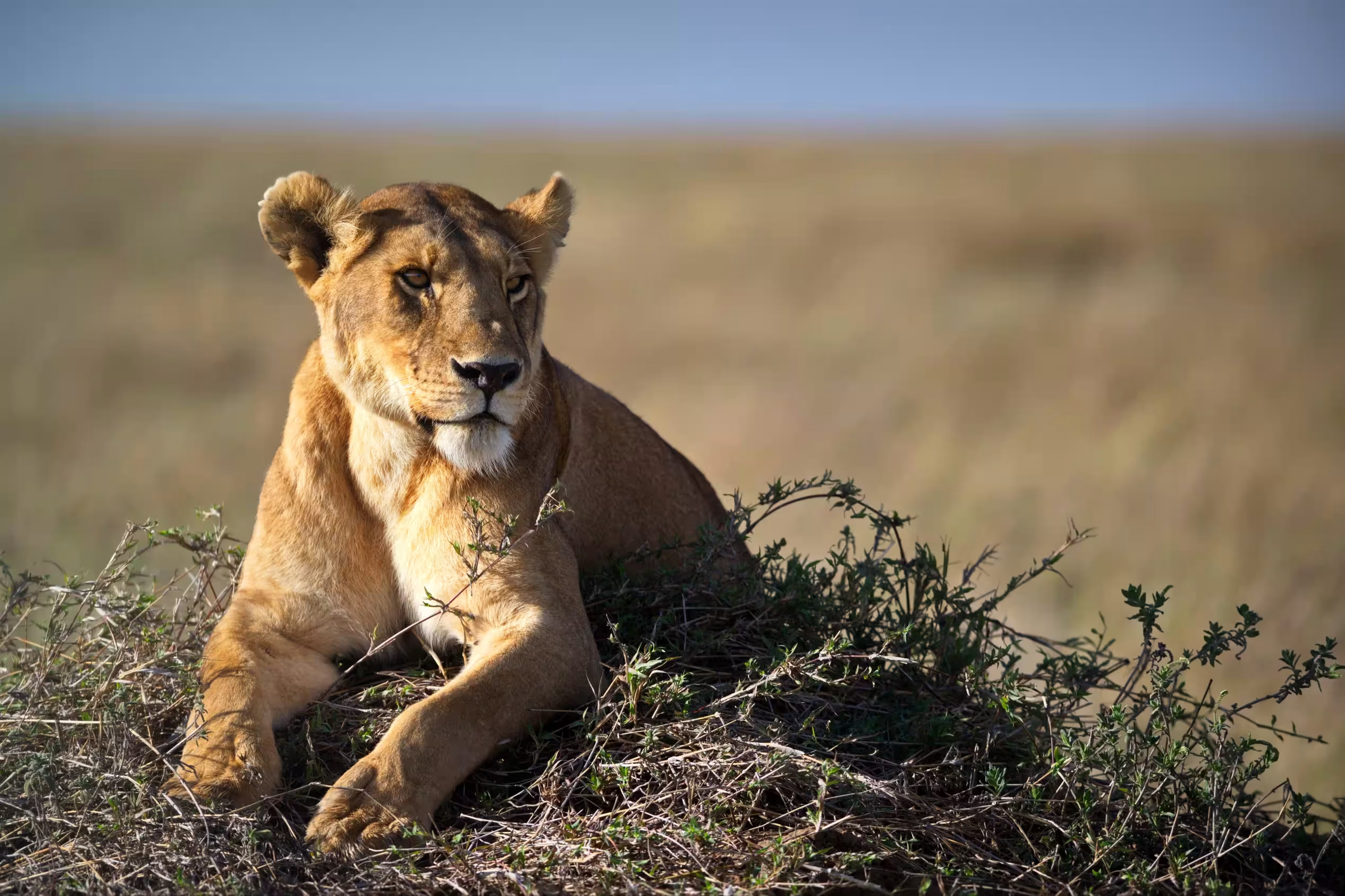
Ruaha's lion prides are famously large — groups of twenty or more are regularly recorded, and they routinely hunt buffalo and occasionally young elephant. The park is also one of the last strongholds of African wild dog, with a genuinely healthy population rather than a token one.
Ruaha is remote and it is not cheap to reach. These are the things that justify it.

The park's spine. As it dries into isolated pools the entire ecosystem converges on it, producing the most concentrated dry-season game viewing in southern Tanzania.
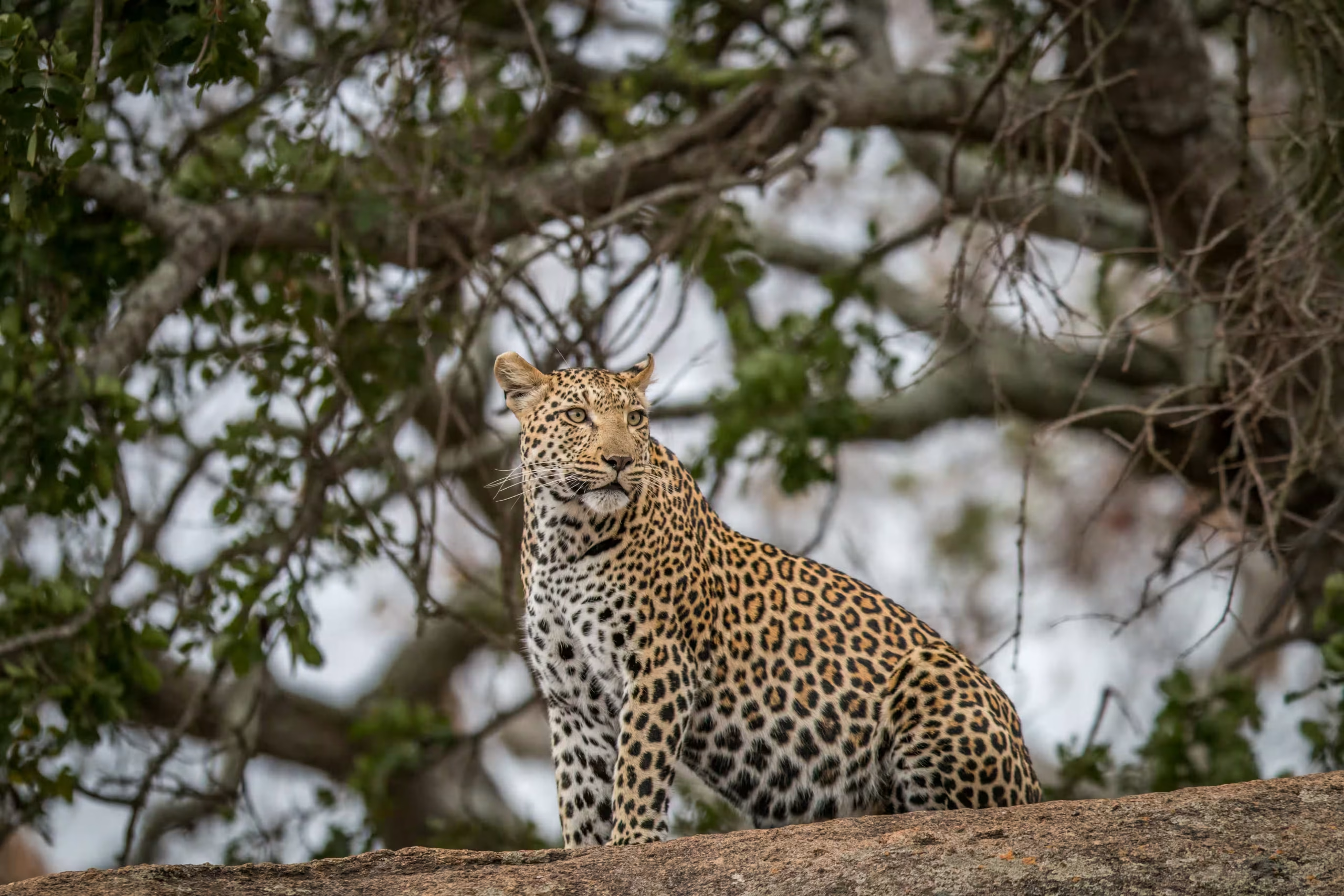
Seasonal tributaries where elephants dig for sub-surface water. Prime leopard country, and where Ruaha's enormous lion prides are most often found.

Rolling brachystegia woodland in the park's south and west, holding sable and roan antelope — two of the most sought-after and hardest-to-see species in Africa.

Rocky escarpments studded with ancient baobabs above the river valley. The most photogenic country in the southern circuit, particularly in early light.
Groups of twenty or more, hunting buffalo — and a genuine wild dog population rather than a hopeful one.
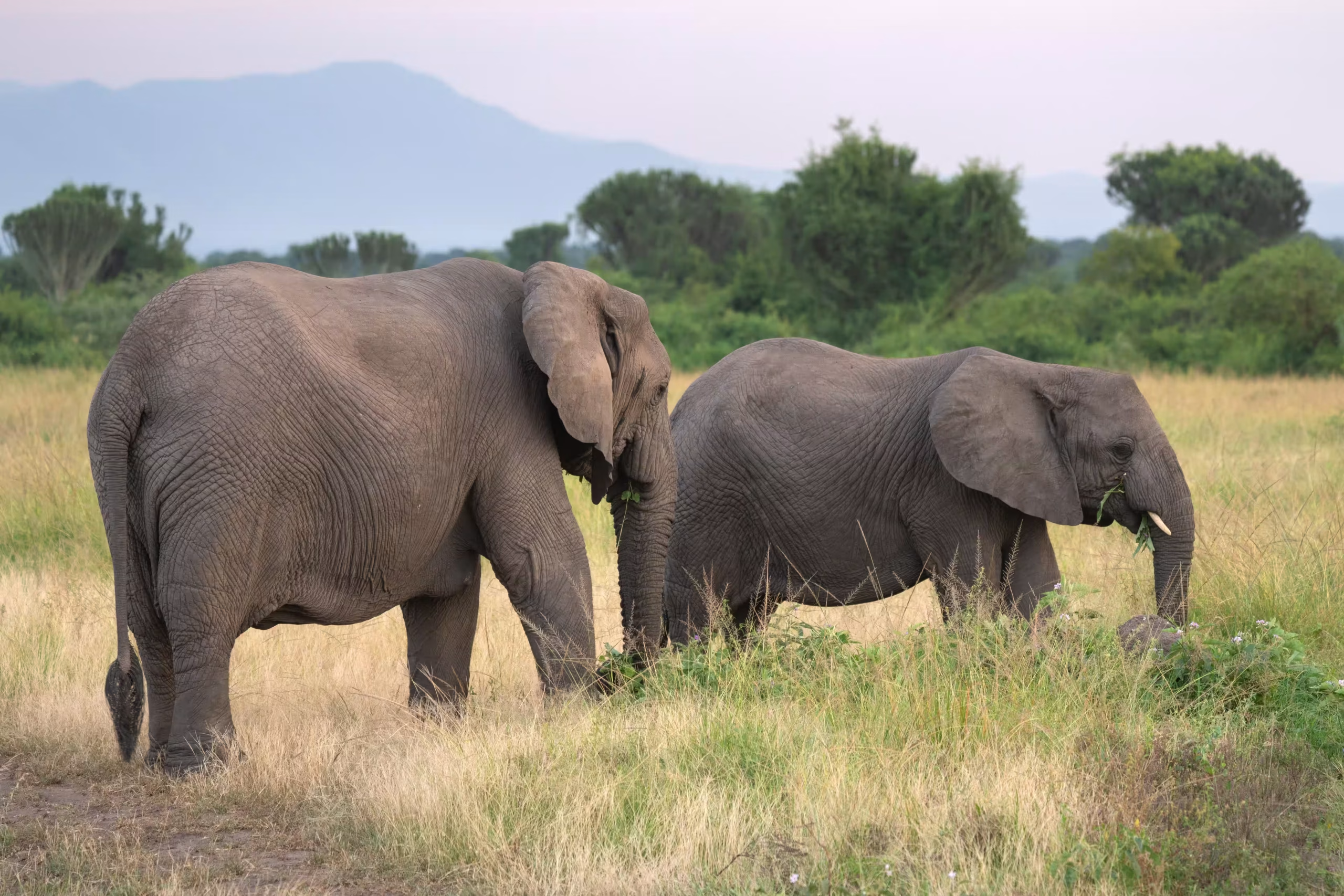
There are no rhino in Ruaha, so the Big Five isn't achievable. What replaces it is arguably better: the largest elephant population in East Africa, exceptional lion density, a real chance of wild dog, and both greater and lesser kudu — the latter being one of the most beautiful antelope in Africa and almost impossible to find on the northern circuit.
A park where walking and night drives are genuinely available, and where you're rarely sharing a sighting.
Following the Great Ruaha and its sand tributaries as the pools shrink. In September the traffic at the water is continuous and the predator activity relentless.
On foot with an armed ranger through baobab and miombo country. Ruaha's scale means you can walk for hours without crossing a vehicle track.
Genet, civet, porcupine, bushbaby and hunting lion. Ruaha allows night drives in most areas, which the northern parks largely don't.
Ruaha is one of Africa's genuine wild dog strongholds. Denning season concentrates packs and gives the best odds of the year.
Light mobile camps set up away from the permanent lodges. Canvas, bucket showers and total darkness — as close to old safari as still exists.
Over 570 species, with the miombo specials that serious birders travel for. The wet season brings migrants and breeding plumage.
Ruaha swings harder than almost anywhere. In the dry season it is world-class; in the wet it is largely inaccessible.
Ruaha has very few beds relative to its size, which is exactly why it stays empty.

Permanent lodges overlooking the Great Ruaha with pools and full service. Elephants regularly walk through the grounds to reach the water below.

Classic canvas on the sand rivers, some seasonal. Small guest numbers, excellent guiding and the best access to the Mwagusi and Mdonya systems.

Park-run bandas and serviced camping near the headquarters. Basic but well-positioned, and by far the cheapest way to experience Ruaha properly.
Ruaha combines naturally with Nyerere — both are reached from Dar es Salaam by light aircraft.

Tanzania's two great southern parks by light aircraft, with boat safaris on the Rufiji and walking in Ruaha.
Enquire →
Four nights on the sand rivers in peak dry season, built around Ruaha's enormous lion prides and wild dog packs.
Enquire →
Ruaha and Nyerere followed by four nights on the Indian Ocean. The quiet alternative to the northern circuit.
Enquire →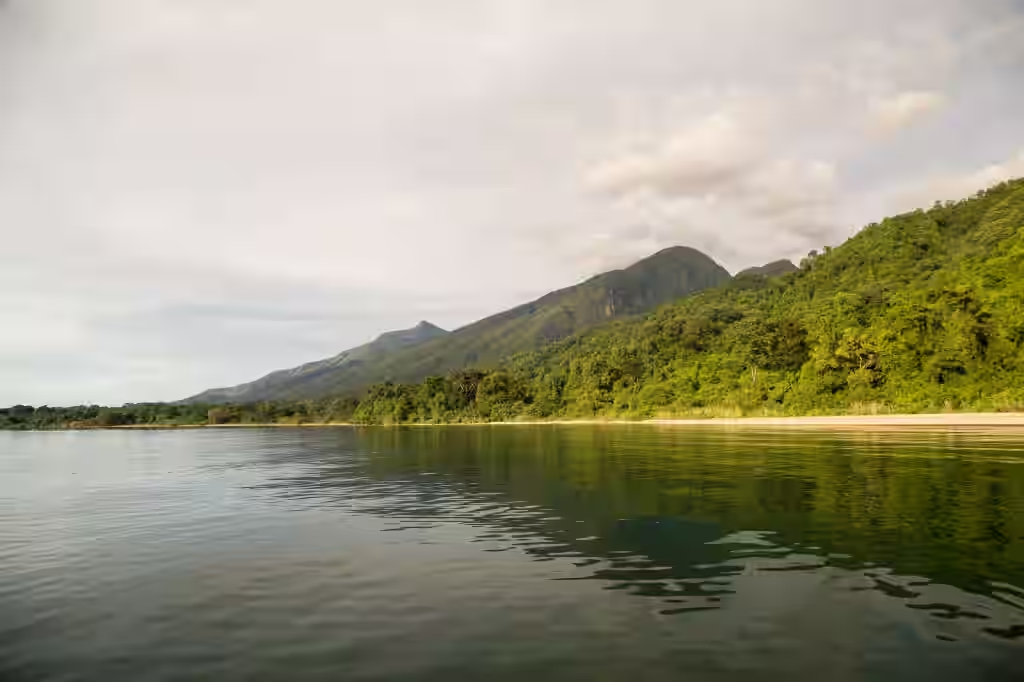
Ruaha, Nyerere and the chimpanzees of Mahale. Tanzania's wildest circuit, entirely by light aircraft.
Enquire →Most journeys combine two or three. Tell us which pull at you and we will build the route.
Ruaha's flights and camps are limited and the good months book out early. Tell us your dates and we'll secure them. No cost, no commitment.
 ✓Live specialist
✓Replies within 1 hr
✓Live specialist
✓Replies within 1 hr
Tell us a little about the trip you have in mind. A planner in Arusha will write back within one working day.
Speak with us directly on WhatsAppinto wilderness toursPlanner