into wilderness tours

Mara River crossings peak August – September · limited northern camps remain
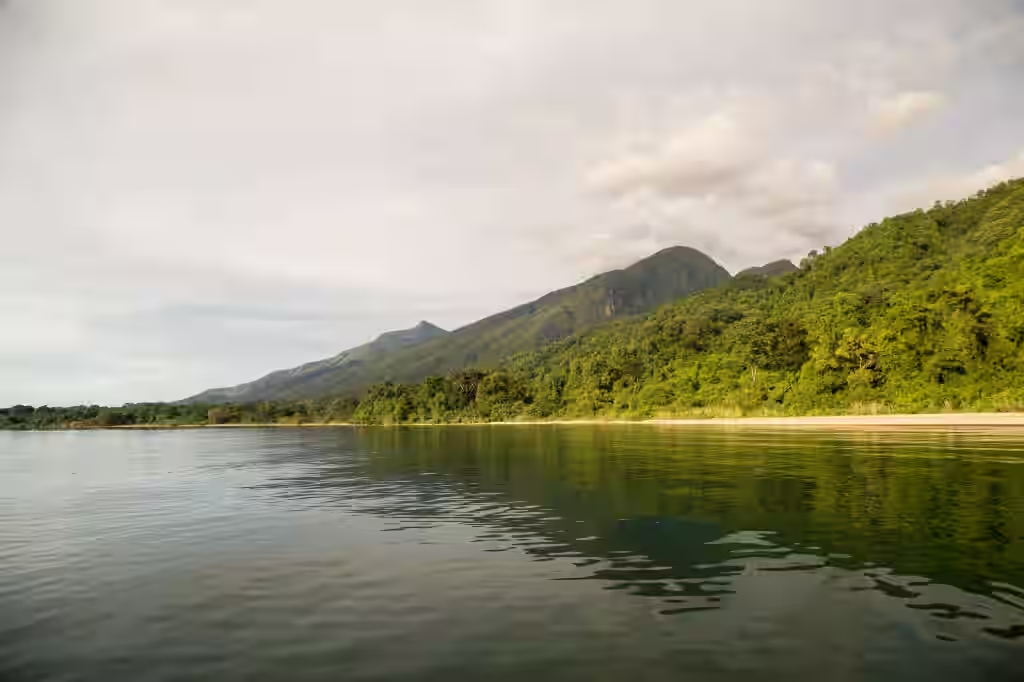
Forested slopes of Gombe above Lake Tanganyika
Home  /  Destinations  /  Western Circuit

GOMBE NATIONAL PARK

Where We Learned What We Are
Sixty Years of Watching — What Gombe Taught Us
Hover or tap a year
1960
A 26-Year-Old Arrives
Jane Goodall lands on the beach at Gombe with no scientific training, a notebook and her mother as chaperone. The study she starts is still running today.
Region
Western Circuit
Area
35 km²
Chimpanzees
~100
Best Time
May – Oct
From Kigoma
1.5 hr boat
Goodall's Forest

Thirty-Five Square Kilometres That Changed Science

Tanzania's smallest national park, and arguably the most consequential piece of forest in the history of biology.

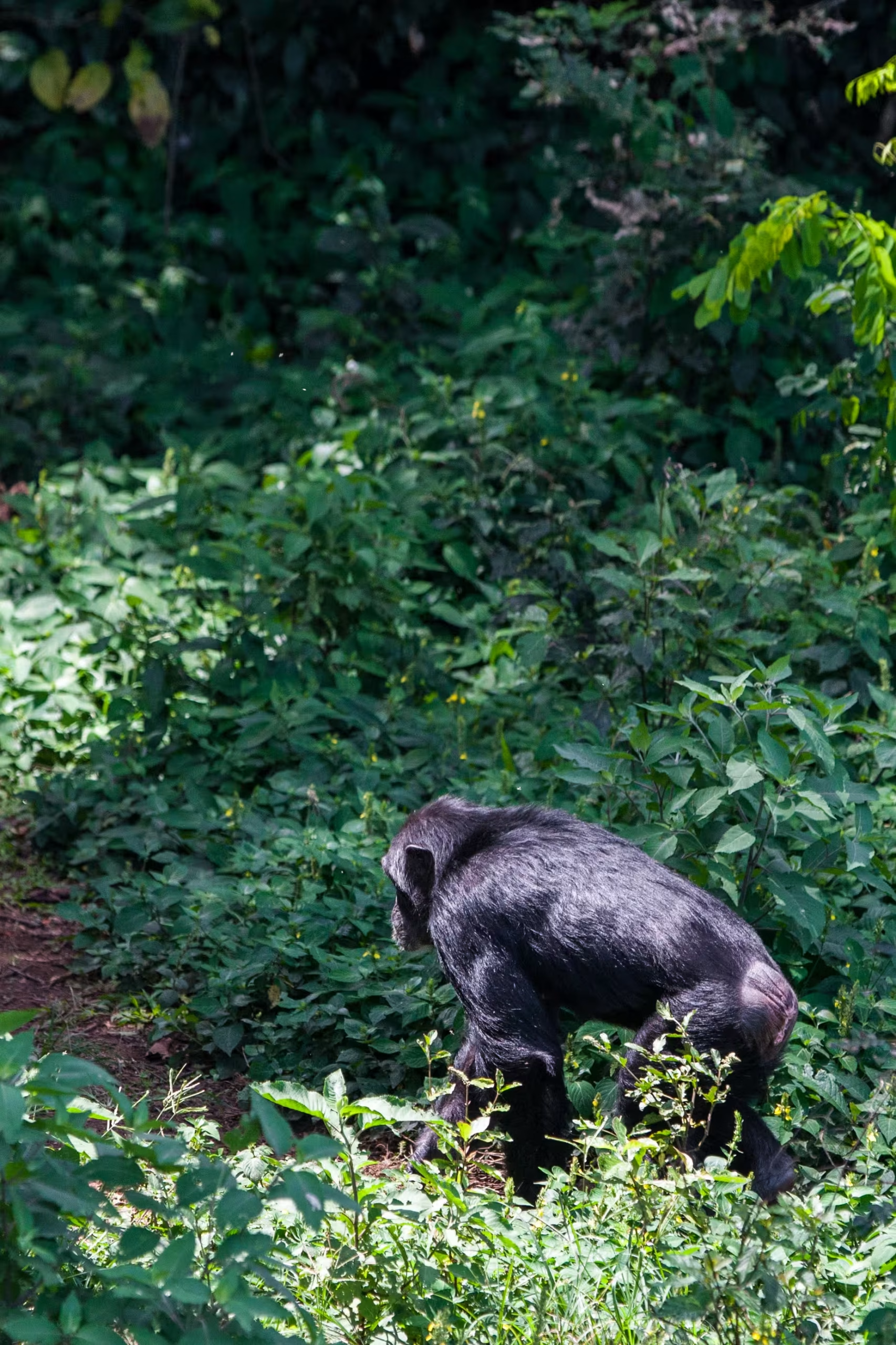
Gombe is a narrow strip of forested valleys on the eastern shore of Lake Tanganyika, thirty-five square kilometres in total — you could walk across it in a morning. It is Tanzania's smallest national park and it is world-famous for one reason.

In 1960 a twenty-six-year-old Jane Goodall arrived here with no formal scientific training and began watching chimpanzees. Within months she had recorded a chimp stripping leaves from a twig to fish termites out of a mound — tool manufacture, which at the time was regarded as the defining line between humans and every other animal.

Now we must redefine tool, redefine Man, or accept chimpanzees as human. — Louis Leakey, on receiving Goodall's telegram.

The observations kept coming and kept being uncomfortable. Chimpanzees hunt cooperatively and eat meat. They wage sustained warfare — the four-year conflict Goodall documented from 1974 remains the first recorded case in a non-human species. Sixty-five years on, the Gombe study is among the longest continuous wildlife research projects ever conducted.

For visitors, Gombe offers around a hundred chimpanzees in groups habituated across generations, in a park small enough that treks are typically shorter and gentler than at Mahale. It is the more accessible of Tanzania's two chimpanzee destinations, and by some distance the more historically significant.

Established
1968
Area
35 km² — Tanzania's smallest park
Chimpanzee population
Approximately 100
Research began
1960, by Jane Goodall
Study duration
Over 65 years, continuous
Key discovery
Chimpanzee tool manufacture
Other primates
Red colobus, olive baboon, vervet
Highest point
Around 1,500 m
Getting there
1.5 hr boat from Kigoma
Park fees
From $100 per adult per day
Trek time
1 – 3 hrs, generally
Ideal stay
2 nights
What Gombe Offers

Small Park, Long Shadow

Easier to reach and gentler to trek than Mahale — and carrying a scientific history nowhere else can match.

Chimpanzee Trekking
Daily
Chimpanzee Trekking

Groups habituated over six decades, in a park small enough that treks usually run one to three hours rather than a full day of climbing.
One hourMaskedShorter treks
Kakombe Waterfall
Year-round
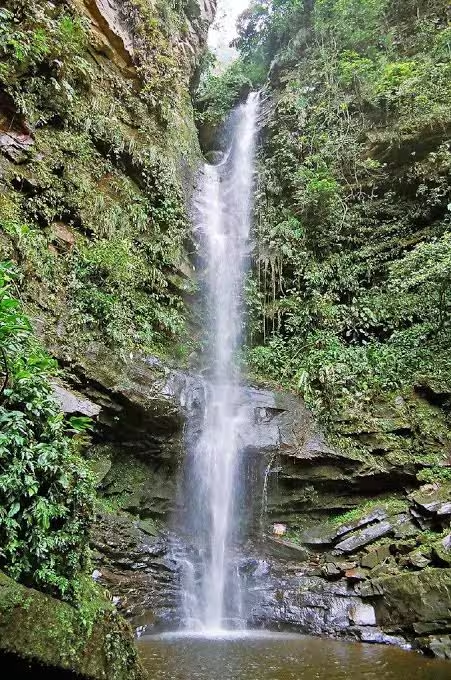
Kakombe Waterfall

A forest waterfall in the valley where much of the early research happened. Goodall described sitting here for hours, and it is still the quietest place in the park.

WaterfallForest walkHistoric
The Research Legacy
By arrangement
The Research Legacy

The Gombe Stream Research Centre still operates daily. Visits and talks with researchers can sometimes be arranged, and they transform the experience.

ScienceGoodall1960 – now
Lake Tanganyika Shore
Afternoons
Lake Tanganyika Shore

The park runs down to a beach on the world's second-deepest lake. Swimming, snorkelling among endemic cichlids, and sunsets over the Congo.

SwimmingCichlidsSunset
The Wildlife

Primates, in a Very Small Space

Four primate species in thirty-five square kilometres, plus a lake full of endemic fish.

~100
Chimpanzees
35
km² of park
65+
Years of research
200+
Bird species

Gombe has no large mammals beyond primates and bushpig — no elephant, no big cats, no antelope of note. It is a primate destination and a place of scientific pilgrimage, nothing more and nothing less. Anyone expecting a general safari should combine it with Katavi or the southern parks.

Realistic Sighting Odds — Dry Season
Chimpanzee
Very likely
Olive baboon
Near certain
Red colobus
Likely
Vervet monkey
Likely
Bushpig
Uncommon
Also Present
Red-tailed monkeyBlue monkeyBushbuckOtterFish eaglePalm-nut vultureCichlid shoalsForest butterflies
Experiences

Ways to Meet Gombe

Two full days is enough to trek twice, walk the research valleys and swim every afternoon.

Chimpanzee Trekking

Trackers locate the group at dawn and you follow. One hour with the chimps, masked and at distance. Generally less punishing than the Mahale equivalent.

1 – 3 hrs·Age 15+

Research Centre Visit

The Gombe Stream Research Centre has run continuously since 1960. Talks with resident researchers add enormous depth, when they can be arranged.

1 hr·By arrangement

Kakombe Waterfall Walk

A gentle forest walk to the waterfall in the valley where the early observations were made. Excellent for birds, butterflies and red colobus.

2 hrs·Easy

Jane's Peak Hike

The ridge viewpoint where Goodall sat scanning the valleys for chimps. Panoramic views over the forest and the lake toward the Congo.

2 – 3 hrs·Moderate

Snorkelling & Swimming

The lakeshore below the camps holds shoals of endemic cichlids in clear water. The standard and very welcome reward after a humid morning trek.

1 – 2 hrs·Every afternoon

Kigoma & Ujiji

Ujiji, just south of Kigoma, is where Stanley is said to have met Livingstone in 1871. A small museum marks the spot, and it's easy to add on.

Half day·En route
Timing

Dry Months for Trekking, Wet Months for Photographs

Gombe's trails are steep and forested. Rain makes them slippery and the chimps harder to follow.

Season
What's Happening
Consider
Verdict
May – JunDry season opens
Trails dry out and trekking becomes straightforward. Chimps often lower down, which shortens the walk considerably.
Occasional late rains early in May.
Very good
Jul – OctPeak dry
The prime trekking months. Reliable conditions, best chimp-finding rates and superb lake weather for swimming.
Warmest and busiest, though busy at Gombe is still very quiet.
Best window
Nov – DecShort rains
Afternoon storms and greener forest. Chimps often stay lower for fruiting trees, which can make finding them easier.
Trails get muddy and slippery underfoot.
Fair
Jan – AprWet season
Heavy rain, spectacular forest and outstanding butterflies. Fewest visitors of the year by a wide margin.
Steep trails become genuinely hazardous. Some accommodation closes.
Difficult
Where to Stay

Very Limited, and Simple

Gombe has almost no beds. Most visitors stay in park accommodation or come across from Kigoma.

Forest Tented Camp
Best available
Forest Tented Camp

A small tented camp on the lakeshore inside the park. Simple, well-run, and the only option that puts you at the trailhead for a dawn start.

From $420 per person / night
Park Resthouse & Bandas
Our Recommendation
Park Resthouse & Bandas

Park-run rooms and hostel beds at Kasekela, right beside the research centre. Basic but perfectly comfortable and remarkably good value.

From $120 per person / night
Kigoma Hotels
Value
Kigoma Hotels

Staying in Kigoma and taking the boat across each day works, and is cheapest. It costs you three hours of boat time and an early start.

From $60 per person / night
Journeys

Journeys Featuring Gombe

Gombe is reached via Kigoma, which has scheduled flights from Dar es Salaam and Arusha.

10-Day Ultimate Western Tanzania
Wilderness
10-Day Ultimate Western Tanzania
10 Days·From $3,000

Katavi safari, Mahale and Gombe chimpanzees, and Lake Tanganyika. Tanzania's wildest and least-visited circuit.

View Itinerary →
4-Day Gombe & Kigoma
Short & Historic
4-Day Gombe & Kigoma
4 Days·From $1,900

Two nights at Gombe with multiple treks and the research centre, plus Ujiji and the Livingstone memorial near Kigoma.

Enquire →
8-Day Both Chimpanzee Parks
Primates
8-Day Both Chimpanzee Parks
8 Days·From $6,100

Gombe's research history and Mahale's wilder forest, linked along Lake Tanganyika. The definitive chimpanzee trip.

Enquire →
9-Day Chimps & Zanzibar
Forest & Ocean
9-Day Chimps & Zanzibar
9 Days·From $6,400

Chimpanzee trekking on Lake Tanganyika followed by the Indian Ocean. Two very different kinds of water.

Enquire →
Before You Go

Gombe Questions, Answered Plainly

Gombe is easier to reach, cheaper, and the treks are shorter and gentler. Mahale is wilder, more beautiful, has ten times the chimpanzees and considerably better camps — but costs far more because it needs charter flights. If the science and Goodall's history matter to you, choose Gombe. If the setting and remoteness matter more, choose Mahale.
Moderate rather than severe. Gombe's valleys are steep and the trails are rough and often muddy, but the park is only thirty-five square kilometres, so treks typically run one to three hours rather than the all-day efforts common at Mahale. You need to be comfortable on uneven ground and steep short climbs in humidity.
Several things that changed biology. In 1960 she watched chimpanzees strip leaves from twigs to fish for termites — the first documented non-human tool manufacture. She then recorded cooperative hunting and meat-eating, overturning the belief that chimps were vegetarian. And from 1974 she documented a four-year war between two communities, the first sustained warfare recorded in any species other than us.
Sometimes. The Gombe Stream Research Centre is a working facility rather than a visitor attraction, so access depends on who is there and what they're doing. When a talk with a researcher can be arranged it transforms the visit — we always request it, and we're always honest that it can't be guaranteed.
Fly to Kigoma from Dar es Salaam or Arusha — there are scheduled services several times a week — then take a boat about ninety minutes north along the lakeshore. There's no road access and no airstrip in the park. Most visitors combine it with Mahale, which lies further down the same lake.
Fifteen for chimpanzee trekking, which is higher than the twelve typical at Mahale. The rules exist partly for the trekking conditions and partly for disease transmission risk. Younger children can stay at the camps and do the waterfall walk and lake activities, but cannot join the chimp treks themselves.
Plan Your Gombe Visit

Stand Where Primatology Changed

Gombe has very few beds and boat transfers need arranging in advance. Tell us your dates and we'll organise the routing from Kigoma. No cost, no commitment.

Loading itinerary…
Saved Trips