What each month actually delivers, including the ones we would talk you out of.
Month
What is happening
Weather
Verdict
JanuaryShort dry spell
Calving begins on the southern Serengeti plains. Green landscapes, excellent birding, big predator activity around Ndutu.
Warm, occasional showers
Excellent
FebruaryPeak calving
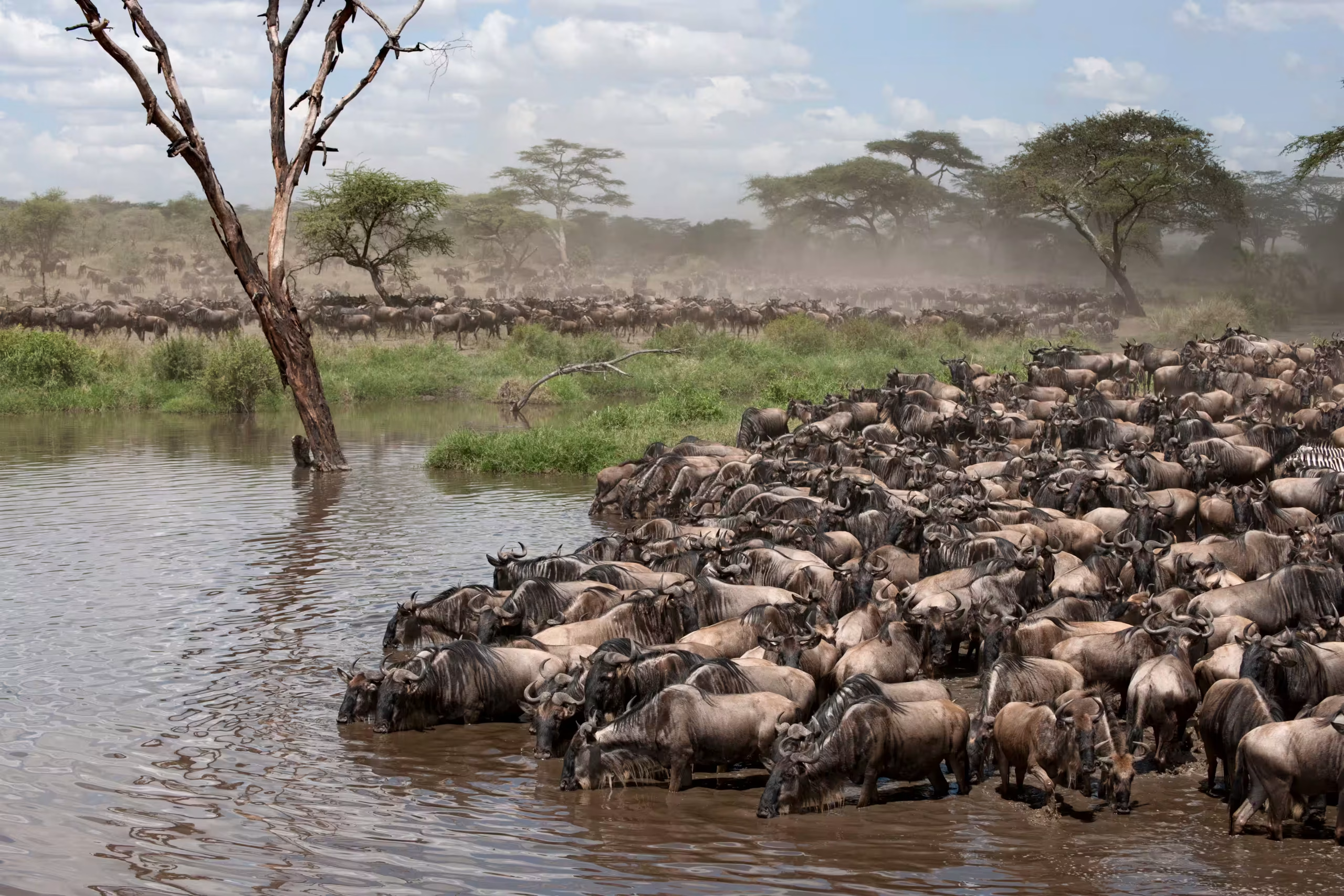
The single best month for predator action. Roughly 8,000 wildebeest born a day around Ndutu. Zanzibar at its calmest and clearest.
Hot, mostly dry
Excellent
MarchRains beginning
Herds start drifting north-west. Still good early in the month; the long rains usually arrive in the second half.
Warm, increasing rain
Fair
AprilLong rains
Wettest month. Landscapes are spectacular and the parks are nearly empty, but roads are difficult and many camps close.
Wet, humid
Lowest season
MayLong rains easing
Rain tapers through the month. Camps reopen, rates are low, and the Western Corridor starts to fill with herds.
Wet early, drying
Good value
JuneDry season opens
Grumeti crossings begin. Weather turns reliable, grass thins, and Ruaha and Nyerere become excellent.
Dry, cool nights
Very good
JulyHerds move north
Migration pushes toward the Mara River. Consistently good conditions everywhere. Kilimanjaro's main climbing season.
Dry, clear
Peak
AugustMara crossings
Peak river-crossing season in the northern Serengeti. The busiest and most expensive month, and the most dramatic.
Dry, dusty
Peak
SeptemberCrossings continue
Crossings still running, slightly fewer visitors than August. Ruaha at its most concentrated as the river breaks into pools.
Dry, warm
Peak
OctoberLate dry season
Herds linger north. Southern parks at their absolute best. Hot and dusty, with excellent predator visibility.
Hot, very dry
Very good
NovemberShort rains
Brief afternoon storms. Herds move back south, migrant birds arrive, rates drop noticeably before the festive period.
Short showers
Good value
DecemberGreen returning
Landscape greens quickly and herds reach the southern plains. Mid-month onward climbs to peak festive pricing.
Warm, short showers
Good



 ✓Live specialist
✓Replies within 1 hr
✓Live specialist
✓Replies within 1 hr