Mara River crossings peak August – September · limited northern camps remain
Tanzania · Choose Your Star
Enter to open first result · Esc to close


Fourteen thousand square kilometres of grassland, kopje and riverine forest — and the oldest migration route on Earth.
The name comes from the Maasai siringet — the place where the land runs on forever. Stand on the southern plains in February and you understand it immediately: grass to every horizon, broken only by granite kopjes that rise like islands from a green sea.
The Serengeti is Tanzania's oldest national park and a UNESCO World Heritage Site, but its real distinction is ecological. This is the last place on Earth where a million-strong ungulate migration still completes its ancient circuit unbroken — 1.5 million wildebeest, 250,000 zebra and 400,000 gazelle moving in a clockwise loop that has run, uninterrupted, for well over a million years.
What that means practically is that the Serengeti is not one destination but several. The southern plains around Ndutu are a calving ground from December to March. The Western Corridor carries the herds along the Grumeti in May and June. The north, around Kogatende and the Mara River, holds the crossings from July into October. And Seronera, in the centre, offers resident big cats and reliable game viewing every month of the year.
Our guides plan each Serengeti itinerary around where the herds actually are — not where a brochure says they should be. That single decision is the difference between watching the migration and merely visiting the park.
The park divides into four distinct regions. Each has its season — and choosing correctly is the whole art of a Serengeti safari.

Short-grass plains where the herds calve. Roughly 8,000 wildebeest are born each day in February, and the predator density that follows is unmatched anywhere on the continent.
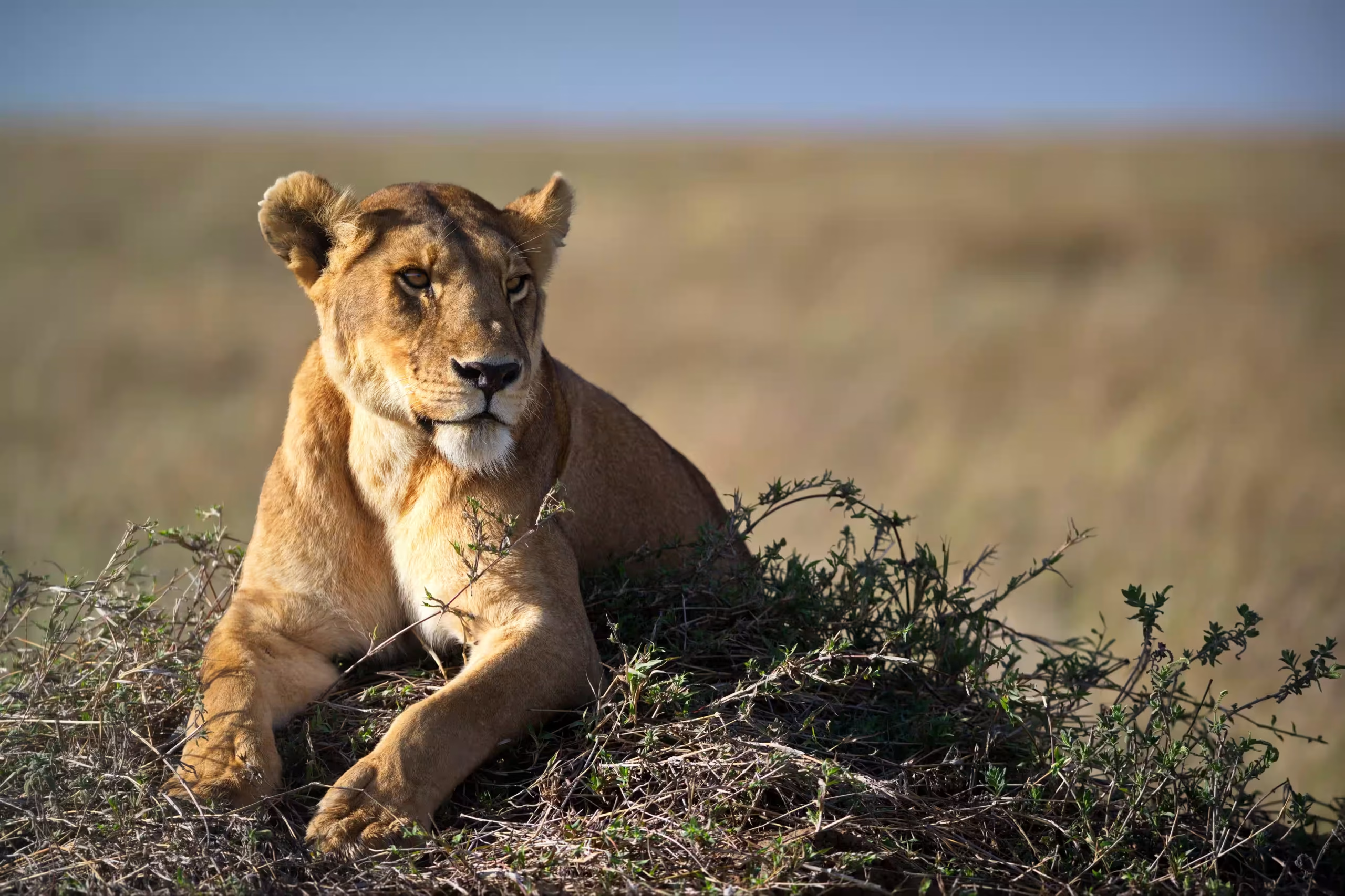
The Seronera River valley holds water all year, which means resident lion prides, leopard in the sausage trees and cheetah on the open ground — regardless of where the migration is.

A finger of land reaching toward Lake Victoria, following the Grumeti River. Rutting season, the first crossings, and enormous resident crocodiles — with far fewer vehicles than the north.
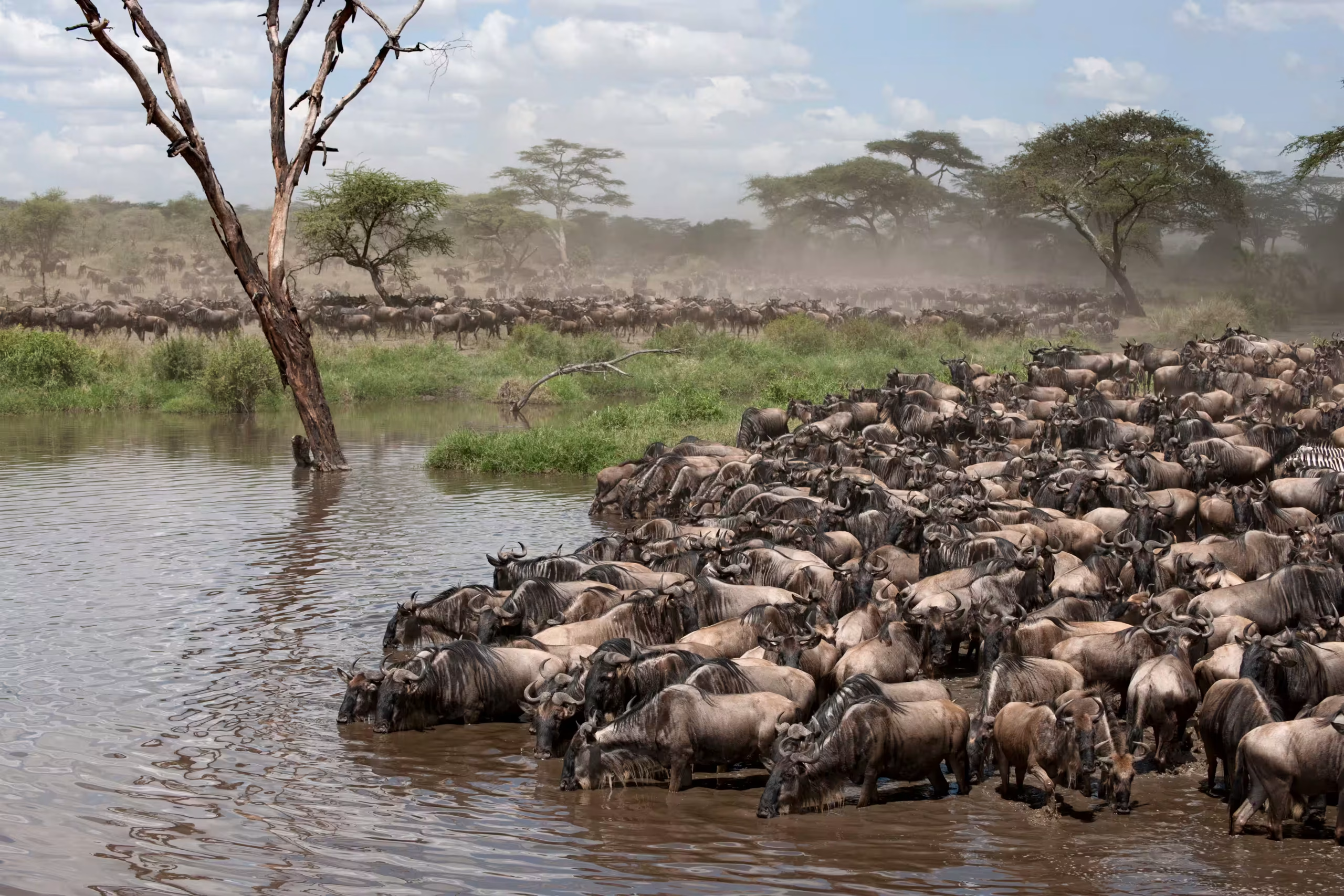
Kogatende and Lamai, on the Mara River. This is where the crossings happen — the single most dramatic wildlife event on Earth, and the reason most travellers come in August.
Roughly 3,000 lions, 1,000 leopards and the largest cheetah population in Africa — all sustained by the migration passing through.
Rhino remain the hard one. A small, closely protected black rhino population survives in the Moru Kopjes — sightings are rare and never guaranteed. Travellers set on the full Big Five usually pair the Serengeti with a day in the Ngorongoro Crater.
Beyond the game drive — the experiences that turn a safari into something you'll still be describing in twenty years.
Full days in an open-roof 4×4 with a guide who knows the herds' position because he was there yesterday. In season, this means river crossings; out of season, it means predators on the plains.
Lift off before dawn and drift a few metres above the grass as the plains turn gold beneath you. Ends with a champagne bush breakfast set under an acacia. The single most requested add-on we book.
On foot with an armed ranger and a walking guide. You lose the ability to cover ground and gain everything else — tracks, dung, birdsong, the specific feeling of being a species among species.
Dedicated photographic vehicles with bean bags, no fixed schedule and a guide briefed to hold position for the light rather than chase the next sighting. Built for people who came for the images.
Seasonal camps that move with the herds — canvas, bucket showers, dinner under the stars and lion contact-calling somewhere past the firelight. As close to the old safari as still legally exists.
A visit to a working Maasai boma on the park's eastern boundary, arranged directly with the community rather than through a middleman. Honest, unstaged, and paid fairly at the source.
An honest breakdown of what each season actually delivers, including the ones most operators quietly discourage.
Location matters more than thread count. We place you within the migration's reach first, then match the comfort level to your budget.

Full-service lodges with pools, spa treatments and private decks overlooking the plains. Best for travellers who want the Serengeti without giving up any comfort at all.

Seasonal camps that relocate three or four times a year to stay with the herds. En-suite canvas, proper beds, excellent food — and a location no permanent lodge can match.

Serviced camping inside the park with your own crew, cook and mess tent. Basic shared facilities, unbeatable value, and honestly the most atmospheric nights on the plains.
Every one of these can be reshaped around your dates, pace and budget.
The classic Northern Circuit loop — Tarangire's elephants, the Serengeti plains and a full day on the Ngorongoro crater floor.
View Itinerary →Built around the northern Serengeti in crossing season, with four nights at Kogatende to give the herds time to commit to the water.
Enquire →January to March on the southern short-grass plains, when the calving draws in every predator on the ecosystem at once.
Enquire →Six nights on the plains followed by four on the Indian Ocean. The most requested combination we run, and for good reason.
Enquire →Most journeys combine two or three. Tell us which pull at you and we will build the route.
Give us your dates and we'll tell you exactly where the herds will be — and build the journey around them. No cost, no commitment.
 ✓Live specialist
✓Replies within 1 hr
✓Live specialist
✓Replies within 1 hr
Tell us a little about the trip you have in mind. A planner in Arusha will write back within one working day.
Speak with us directly on WhatsAppinto wilderness toursPlanner

