Mara River crossings peak August – September · limited northern camps remain
Tanzania · Choose Your Star
Enter to open first result · Esc to close


Fifty kilometres north of Unguja, and about fifty years behind it — in the best possible way.
Pemba is the second island of the Zanzibar archipelago and it receives a tiny fraction of Unguja's visitors. The Arabs called it Al Khudra, the Green Island, and it still deserves the name: hilly, densely farmed, and covered in the clove plantations that once made this the world's largest producer.
The reason serious divers come is geological. The Pemba Channel separating the island from the mainland drops past 800 metres, and it comes close inshore. That means fringing reef ending in near-vertical walls with genuine deep water immediately beyond — wall diving of a standard you would otherwise travel to the Red Sea or the Coral Sea for.
Above water it is a different island from Unguja in temperament as much as geography. Tourism is small-scale, the pace is genuinely slow, and traditional Swahili village life carries on largely uninterrupted. Ngezi Forest in the north-west protects one of the last remnants of the indigenous forest that once covered the whole archipelago, holding Pemba flying fox and the endemic Pemba scops owl.
Be honest with yourself about what this is. Pemba has few hotels, limited nightlife and no real resort scene. If you want that, stay on Unguja. If you want quiet, extraordinary diving and an island that hasn't been rearranged for visitors, come here.
Pemba asks more of you logistically than Unguja. These are the things that repay it.

Misali, Manta Point and the western drop-offs. Vertical coral walls into 800 m of channel, with gorgonians, reef sharks, tuna and exceptional visibility.
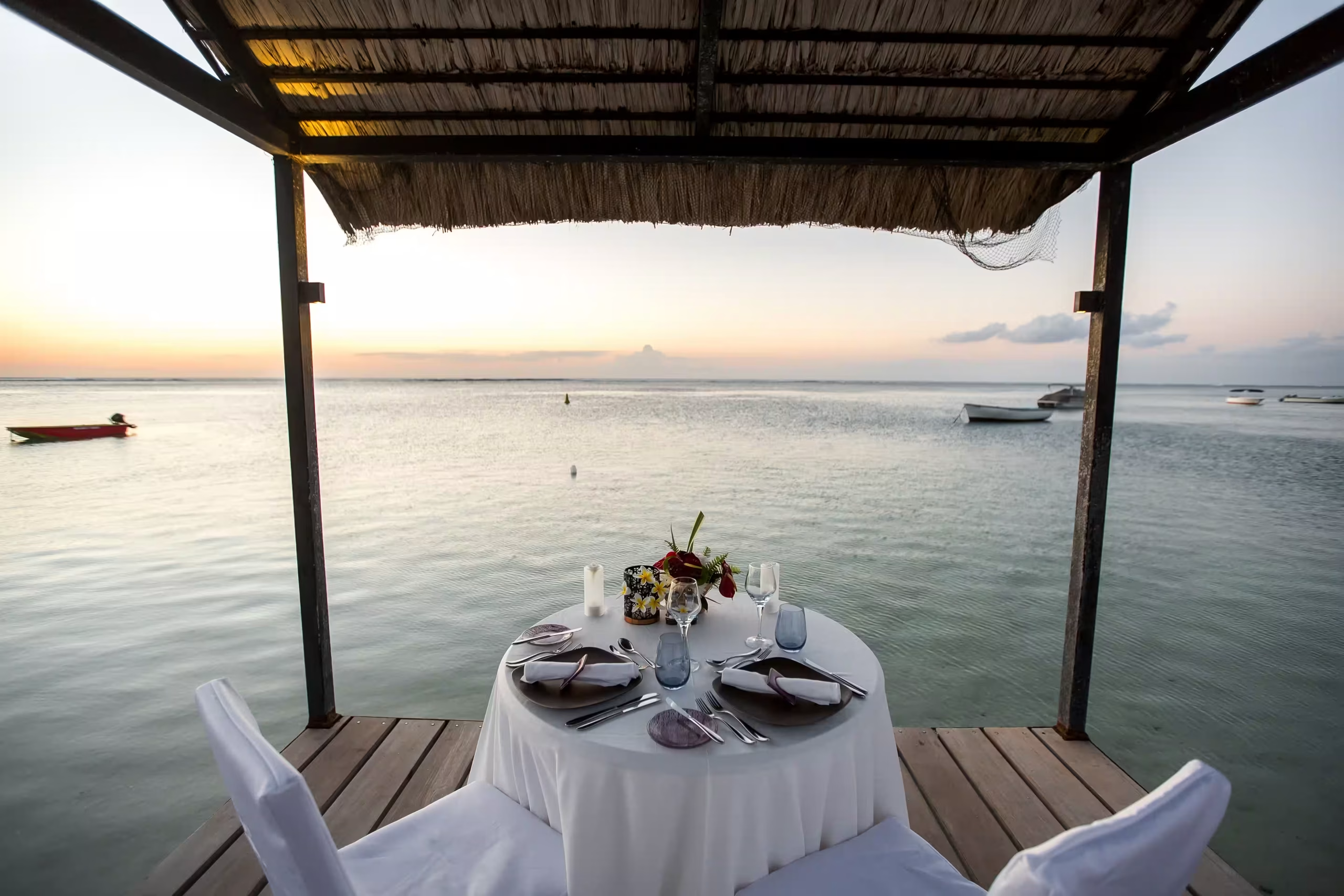
A protected islet with white sand, nesting turtles and some of the best snorkelling in East Africa. Community-managed, and reached by dhow in under an hour.

A remnant of the indigenous forest that once covered the archipelago, holding the endemic Pemba flying fox and Pemba scops owl. Guided walks and a night option.

Hills of clove, mango and breadfruit worked much as they have been for two centuries. Drying mats along every road, and the smell everywhere in harvest season.
Two species found nowhere else on the island, and reef walls in a condition that is increasingly rare anywhere.
Some of Pemba's best dive sites involve strong currents and depths beyond 30 metres, and they are genuinely not suitable for beginners. Advanced Open Water with drift experience is the realistic entry point for the wall sites. There is easy shallow diving and superb snorkelling for everyone else, particularly around Misali.
Diving is the headline, but the island above water rewards the days you're off the boat.
The reason to come. Vertical coral faces into the Pemba Channel with gorgonians, pelagics and visibility that regularly reaches forty metres.
Dhow across to a protected islet for snorkelling over pristine coral, a beach lunch and, in season, nesting turtles on the sand.
Guided walks in the indigenous forest for Pemba flying fox and, on a night walk, the endemic scops owl. A genuinely different side of the island.
Walking working plantations with the farming families. Harvest and drying is labour-intensive and unchanged, and it built this island's economy.
The Pemba Channel is a serious game-fishing ground — marlin, sailfish, tuna and kingfish. Catch-and-release is standard with the reputable operators.
Ras Mkumbuu's ruined mosque and settlement date from the fourteenth century, and Chake Chake's market is refreshingly unperformed for visitors.
Pemba dives well most of the year. The long rains are the exception and they are decisive.
Pemba has a handful of properties. Book ahead, and don't expect the Unguja resort scene.

A small number of high-end properties, including an underwater room and private-island retreats. Expensive, remote and genuinely memorable.

Owner-run lodges built around their dive centres, with boats leaving from the beach below. The right choice if diving is your reason for coming.

Simple guesthouses in Chake Chake and Wete. Basic, friendly and inexpensive, with dive centres reachable by taxi or dala-dala.
Pemba is thirty minutes by air from Zanzibar, so it slots naturally onto the end of any coastal trip.

Stone Town and Unguja's beaches, then the quieter diving and forest of Pemba to the north.
Enquire →
Four nights at a dive lodge with two dives daily on the western walls, plus Misali and a Ngezi forest walk.
Enquire →
Northern Circuit safari followed by five nights diving on Pemba. For travellers who want the quiet version of both.
Enquire →
The classic short Zanzibar break, easily extended north to Pemba for a few quieter nights.
View Itinerary →Most journeys combine two or three. Tell us which pull at you and we will build the route.
Pemba's flights and lodges are limited and fill early. Tell us your dates and dive certification and we'll build the routing. No cost, no commitment.
 ✓Live specialist
✓Replies within 1 hr
✓Live specialist
✓Replies within 1 hr
Tell us a little about the trip you have in mind. A planner in Arusha will write back within one working day.
Speak with us directly on WhatsAppinto wilderness toursPlanner