into wilderness tours

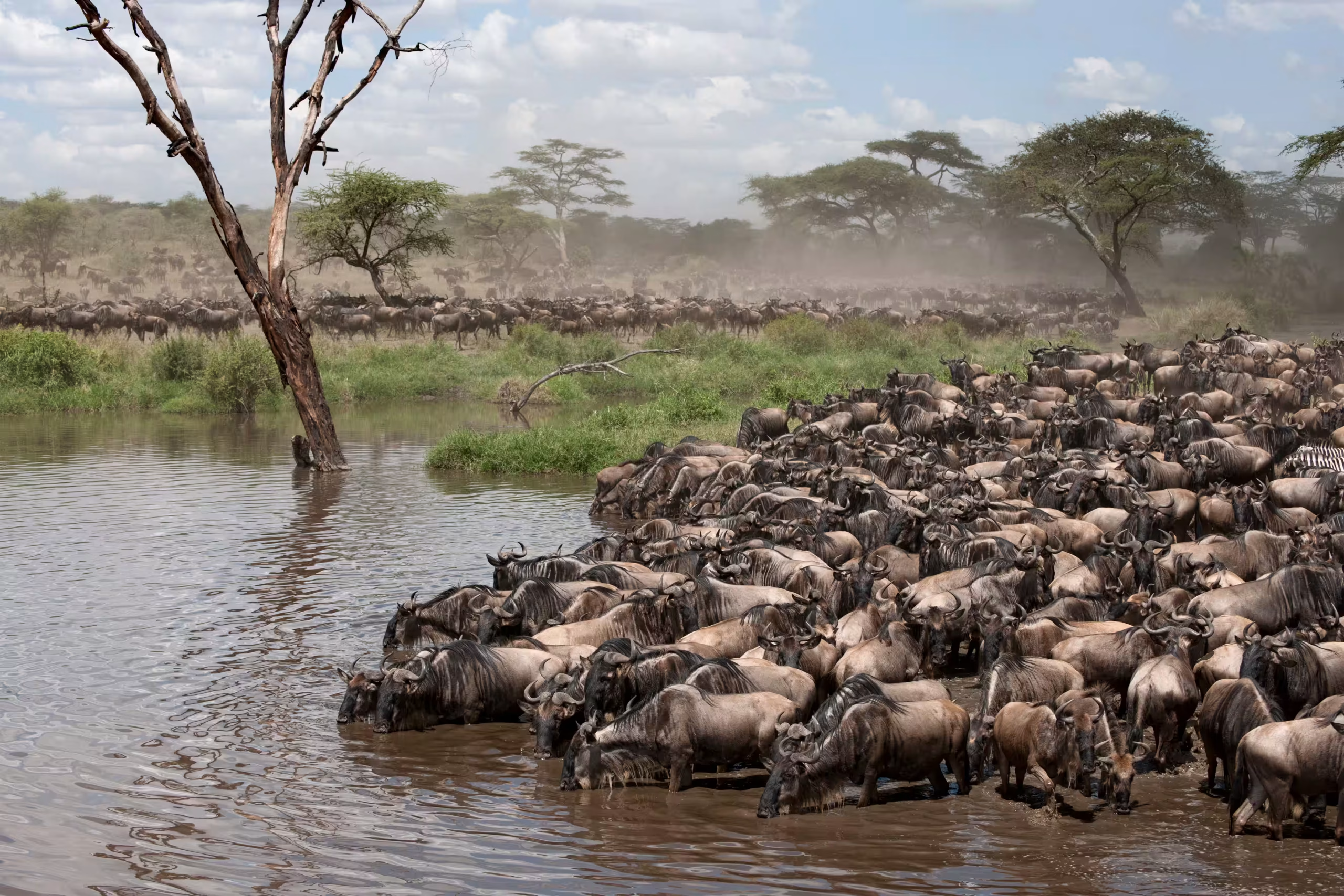
Mara River crossings peak August – September · limited northern camps remain
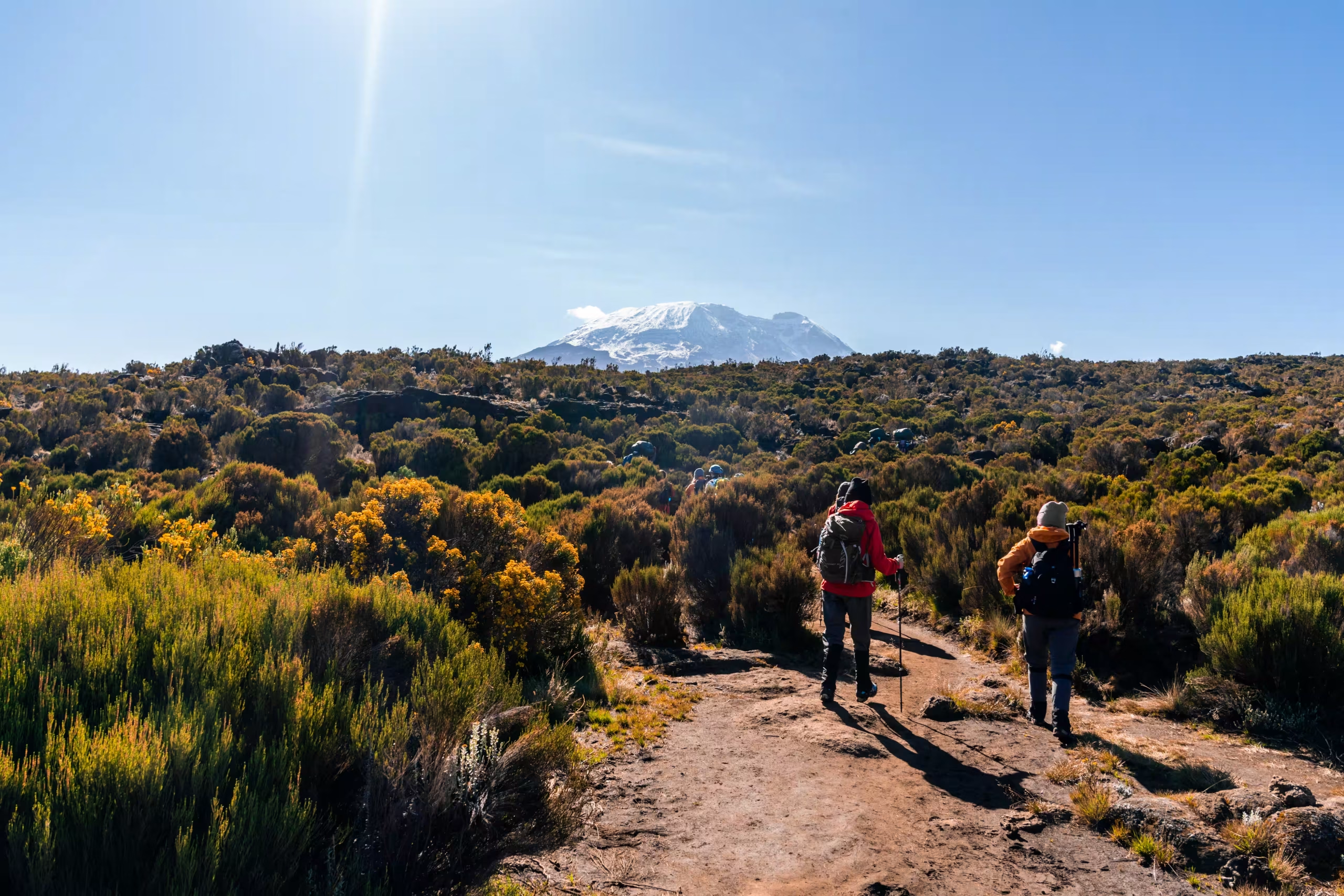
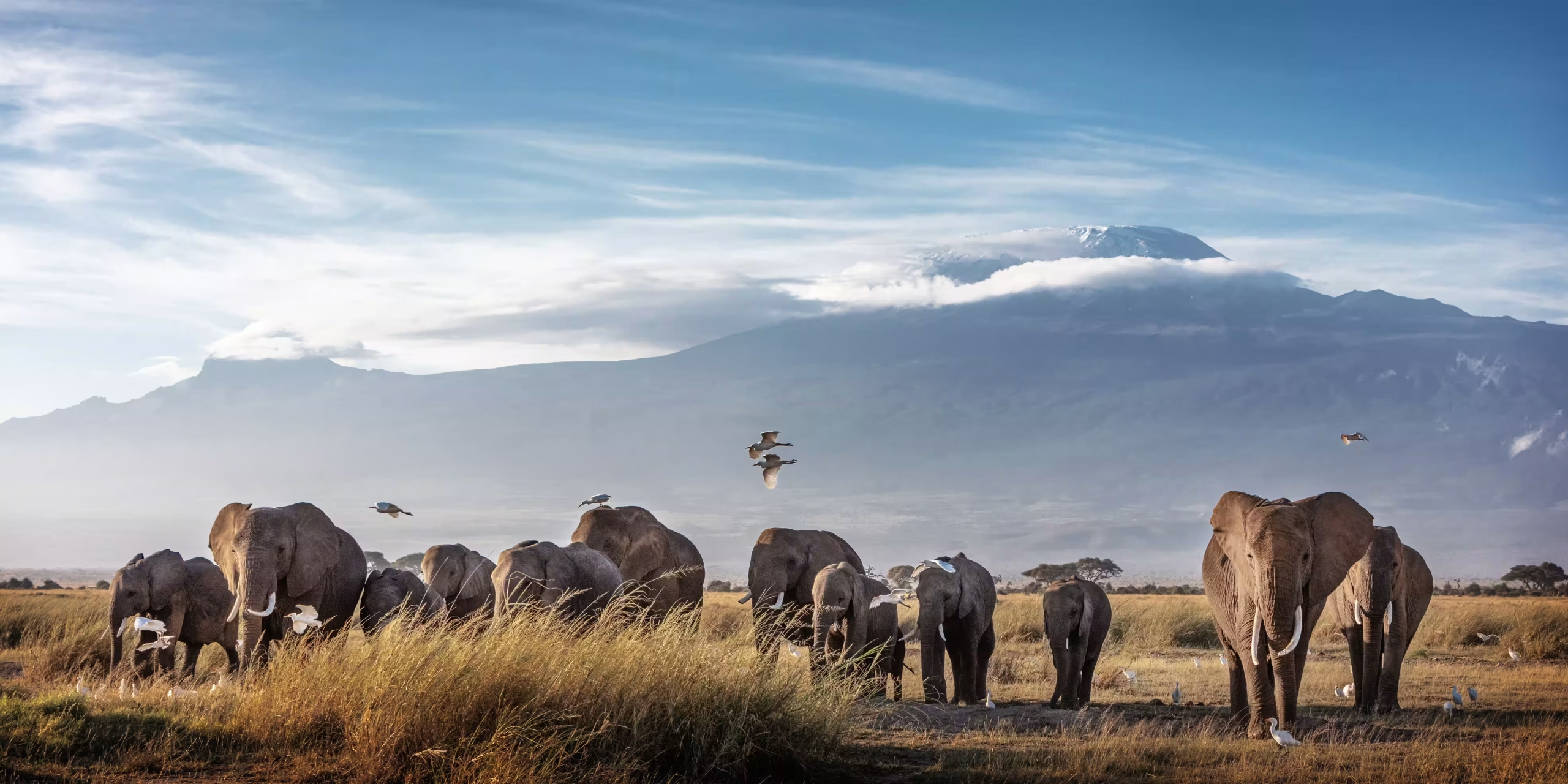
Mount Kilimanjaro rising above the plains
Home  /  Destinations  /  Northern Circuit

MOUNT KILIMANJARO

The Roof of Africa
Compare the Routes — Altitude Profile
Select a route
Machame Route
The most popular route on the mountain. Steep, scenic and with a strong climb-high-sleep-low profile that aids acclimatisation.
Days
7
Success
85%
Traffic
High
Sleep
Tents
GateSummit · 5,895 mDescent
Summit
5,895 m
Type
Dormant volcano
Climate zones
Five
Best Time
Jan–Mar, Jun–Oct
From Arusha
1.5 hrs
The Roof of Africa

The Highest Walk on Earth

5,895 metres, five climate zones, and no technical climbing required — which is exactly why people underestimate it.

Kilimanjaro is the highest free-standing mountain in the world and the highest point in Africa. It is also, unusually for a peak of that scale, a walk rather than a climb. No ropes, no crampons, no technical skill required on any of the standard routes.

That accessibility is the mountain's reputation and its trap. Roughly 35,000 people attempt it each year and a significant proportion don't reach the summit — not because they lack fitness, but because they ascend too fast for their bodies to adapt. Altitude sickness is the only thing that reliably turns people back, and the single strongest predictor of success is simply how many days you spend on the mountain.

Fitness gets you up the hill. Acclimatisation gets you to the summit. They are not the same thing, and people confuse them constantly.

The climb passes through five distinct climate zones in under a week — cultivated farmland, then rainforest, then heather and moorland, then high alpine desert, and finally the arctic zone of the summit glaciers. You walk from banana palms to permanent ice in five days.

We run every route on the mountain but recommend Lemosho over eight days for most people: it approaches from the west, has the best acclimatisation profile of the popular routes, the finest scenery, and a summit success rate around ninety percent. The six-day Marangu, by contrast, sits closer to sixty-five percent — the two extra days are worth more than any amount of training.

Summit
Uhuru Peak, 5,895 m
Type
Dormant stratovolcano
Three cones
Kibo, Mawenzi, Shira
First ascent
1889 — Hans Meyer & Ludwig Purtscheller
Climate zones
Five, from farmland to arctic
Attempts per year
Approximately 35,000
Technical skill
None required on standard routes
Minimum age
10 years (park regulation)
Park fees
Roughly $1,000 – $1,400 per climb
Crew ratio
Typically 3 – 4 staff per climber
Nearest airport
Kilimanjaro International (JRO)
Ideal duration
8 days
The Ascent

Five Zones in Five Days

You walk from equatorial farmland to permanent glacier in under a week. Each zone has its own weather, its own life, and its own demands.

Rainforest
800 – 2,800 m
Rainforest

Humid, dripping montane forest. Colobus monkeys overhead, turaco calling, and mud underfoot. Warm, green and often raining — this is where you get wet.

HumidColobusDay 1
Heath & Moorland
2,800 – 4,000 m
Heath & Moorland

Giant lobelia and groundsel, strange prehistoric-looking plants found nowhere else. Big skies, first views of the summit, and the start of real altitude.

Giant lobeliaViews openDays 2–3
Alpine Desert
4,000 – 5,000 m
Alpine Desert

Rock, dust and almost nothing living. Fierce sun by day, hard frost by night, and the zone where altitude begins to bite in earnest.

BarrenCold nightsDays 4–5
Arctic Summit
5,000 – 5,895 m
Arctic Summit

Glaciers, scree and roughly half the oxygen at sea level. You leave camp around midnight and reach Uhuru Peak at sunrise. The hardest six hours of the trip.

GlaciersSummit night−20°C
The Numbers

What Actually Determines Success

Route length is the strongest predictor of reaching Uhuru Peak — considerably stronger than age, gender or fitness.

5,895
Metres to Uhuru
~35K
Attempts per year
5
Climate zones
8
Days we recommend

These figures are broad industry averages across all operators and vary considerably with crew quality, group size and pace. Our own success rates run above these because we walk slowly, carry supplementary oxygen and a pulse oximeter on every climb, and our guides are trained to turn people around early rather than late. A good operator changes these numbers materially.

Summit Success by Route Length
9 days
Northern Circuit
8 days
Lemosho / Shira
7 days
Machame / Rongai
6 days
Marangu
5 days
Not advised
What We Include on Every Climb
Supplementary oxygenPulse oximeterTwice-daily health checksPortable stretcherMountain-crew fair wagesPrivate toilet tentQuality four-season tentsFresh-cooked meals
Beyond the Summit

Around the Mountain

Most people fly in, climb, and fly out. The country around Kilimanjaro is worth two extra days.

Lemosho 8-Day Climb

Our default recommendation. Western approach, excellent acclimatisation profile, the best scenery on the mountain and quiet trails for the first three days.

8 days·~90% success

Northern Circuit 9-Day

The longest route on Kilimanjaro, circling the northern slopes. The highest success rate available and near-empty trails throughout — the connoisseur's climb.

9 days·~95% success

Marangu 6-Day Climb

The only route with permanent huts rather than tents. Cheapest and shortest, with correspondingly lower success — best suited to those who genuinely can't camp.

6 days·Hut accommodation

Materuni Falls & Coffee

A waterfall hike and traditional Chagga coffee roasting on the mountain's lower slopes. The standard and very welcome recovery day after descending.

Half day·Post-climb

Mount Meru Acclimatisation

Climbing 4,566 m Meru first is the single most effective preparation for Kilimanjaro. Superb in its own right, and it materially raises your summit odds.

4 days·Pre-climb

Kilimanjaro Day Hike

Walk to the first hut and back through the rainforest zone. For travellers who want the mountain's atmosphere without eight days of it.

1 day·No summit
Timing

Two Good Windows, Two to Avoid

Kilimanjaro creates its own weather, but the seasons are still clear enough that timing meaningfully changes your experience.

Season
What's Happening
Consider
Verdict
Jan – MarWarm & dry
Warmer and generally clear, with fewer climbers than mid-year. Good chance of snow on the summit, which makes for the most striking photographs.
Late March can catch the start of the long rains.
Excellent
Apr – MayLong rains
The wettest months. Trails become mud, cloud sits on the mountain and views are frequently lost entirely.
Cheapest of the year, but we generally advise against it.
Avoid
Jun – OctDry season
The main climbing season. Dry, stable and clear, with the most reliable summit conditions of the year.
Busiest trails and highest prices. Book several months ahead.
Peak season
Nov – DecShort rains
Brief afternoon showers, mostly in the forest zone. Quieter trails and often perfectly good conditions higher up.
Rongai handles this period best. Late December returns to peak pricing.
Variable
On the Mountain

How You Sleep at Altitude

Six nights of your climb are spent on the mountain. The quality of that sleep matters more than most people expect.

Private Expedition
Premium
Private Expedition

Walk-in sleeping tents, proper camp beds, a heated mess tent and a private chef. For those who want the climb to be hard and the camp to be comfortable.

From $4,200 per person / climb
Standard Tented Climb
Our Recommendation
Standard Tented Climb

Quality four-season tents, thick sleeping mats, a mess tent with table and chairs, and a private toilet tent. Everything you need and nothing you'll resent carrying.

From $2,600 per person / climb
Marangu Route Huts
Huts
Marangu Route Huts

Shared dormitory huts with bunk beds and mattresses, the only route offering them. Warmer and drier than canvas, at the cost of privacy and success rate.

From $2,100 per person / climb
Journeys

Kilimanjaro Expeditions

Every climb includes park fees, crew, meals, oxygen and airport transfers.

6-Day Marangu Expedition
Hut Route
6-Day Marangu Expedition
6 Days·From $3,800

The classic hut route with scenic landscapes, staged acclimatisation and a Uhuru Peak summit bid.

View Itinerary →
8-Day Lemosho Route
Best Odds
8-Day Lemosho Route
8 Days·From $4,300

Our recommended climb. Western approach, superb acclimatisation and around ninety percent summit success.

Enquire →
9-Day Northern Circuit
Highest Success
9-Day Northern Circuit
9 Days·From $4,900

The longest route on the mountain with the best acclimatisation and the quietest trails anywhere on Kilimanjaro.

Enquire →
Climb & Safari Combination
Complete
Climb & Safari Combination
12 Days·From $6,800

Eight days on Lemosho followed by the Northern Circuit safari. The mountain and the plains in one trip.

Enquire →
Before You Go

Kilimanjaro Questions, Answered Plainly

Lemosho over eight days, for most people. It has the best combination of acclimatisation profile, scenery and success rate, and the first three days are genuinely quiet. Choose the nine-day Northern Circuit if you want the highest possible odds and can spare the time. Choose Marangu only if you truly cannot camp — its six-day profile is why its success rate is the lowest on the mountain.
Fitter than average, but this is not primarily a fitness challenge. If you can walk five to six hours over hilly ground on consecutive days, you have the fitness. What stops people is altitude, and altitude tolerance is largely unrelated to how strong you are — we've seen marathon runners turn back at 4,800 m and unremarkably fit people in their sixties walk onto the summit. Train by hiking, ideally with a pack, on back-to-back days.
Hard. You wake around 11pm, leave camp by midnight, and walk six to seven hours in the dark up steep scree in temperatures around −15 to −20°C with wind. Oxygen is roughly half of sea level, so everything is slow and everything is an effort. You reach Uhuru Peak at or shortly after sunrise, spend maybe fifteen minutes there, then descend. It is the hardest thing most climbers have done, and it is why the summit means something.
Most climbers experience some mild symptoms — headache, poor appetite, disturbed sleep. That is normal and manageable. Serious altitude illness is uncommon on a properly paced route but it is the reason we carry supplementary oxygen and a pulse oximeter and check every climber twice daily. If a guide judges you need to descend, that decision is final. It is not negotiable and it is not a reflection on you.
Because crew wages, food quality, equipment and safety kit vary enormously. A very cheap climb is almost always subsidised by underpaying and under-equipping porters, cutting the number of days, or skipping oxygen. Park fees alone run to roughly $1,000–$1,400 per climber, so anything near that figure has essentially nothing left for the people carrying your bags. We pay above KPAP guideline rates and are open about it.
January to March or June to October. The first window is warmer, quieter and often has more snow on the summit. The second is the main dry season, most reliable and most crowded. Avoid April and May, which are the long rains — trails turn to mud and the mountain spends much of its time inside a cloud.
Plan Your Climb

Tell Us How Many Days You Have

Days on the mountain matter more than anything else you can control. Give us your dates and fitness and we'll recommend the route that gets you to the top. No cost, no commitment.

Loading itinerary…
Saved Trips