
As we guide you through preparing for your Tanzanian safari, we emphasize the importance of packing the right gear. Our expert advice will ensure you’re well-prepared for an unforgettable adventure.
In this comprehensive guide, we’ll cover everything from clothing to safari gear, helping you navigate the unique demands of Tanzania’s wilderness. With the right preparation, you’ll be free to immerse yourself in the breathtaking landscapes and rich cultural heritage that Tanzania has to offer.
Key Takeaways
- Understand the essentials for a Tanzanian safari
- Learn how to prepare for the unique demands of Tanzania’s wilderness
- Discover the importance of proper gear for a successful safari
- Gain insights into the cultural and natural heritage of Tanzania
- Be prepared for an unforgettable adventure
Understanding Tanzania’s Safari Environment
Tanzania’s vast wilderness areas, from the Serengeti’s endless plains to the Ngorongoro Crater’s lush depths, present a complex tapestry of climates and terrains. This diversity is what makes a Tanzanian safari so rich and rewarding.
Climate Variations Across Serengeti, Ngorongoro, and Tarangire
The climates across these regions vary significantly. The Serengeti experiences a more temperate climate, while Ngorongoro’s crater is generally cooler due to its high altitude. Tarangire, known for its baobab trees, can be quite hot during the day. Understanding these variations helps in packing appropriately for the conditions you’ll face.
Terrain and Conditions to Prepare For
The terrain in these safari destinations can be challenging, ranging from rugged paths to muddy tracks after rains. Preparing for such conditions involves choosing the right footwear and clothing that can withstand the elements. Sturdy, waterproof gear is essential for navigating these terrains comfortably.
Safari Vehicle Considerations and Space Limitations
Safari vehicles in Tanzania are designed to accommodate the rugged terrain and varying weather conditions. However, space is often limited, making it crucial to pack efficiently. Prioritizing essentials and using compact, multi-functional gear can greatly enhance your safari experience.
| Region | Climate | Terrain |
|---|---|---|
| Serengeti | Temperate | Plains, occasional rocky outcrops |
| Ngorongoro | Cooler due to high altitude | Craters, forests |
| Tarangire | Hot during the day | Baobab forests, riverbeds |
Essential Clothing for Your Tanzanian Adventure
The right attire for a Tanzanian safari is not just about comfort; it’s about harmonizing with the natural world around us. As we prepare for our journey, understanding the importance of appropriate clothing can significantly enhance our experience.
The Art of Layering for Variable Temperatures
Tanzania’s vast landscapes and varying altitudes mean that temperatures can fluctuate significantly between day and night. Layering is key to adapting to these changes, allowing us to adjust our clothing to suit the conditions. A breathable base layer, followed by insulating layers, and topped with a waterproof jacket, ensures we’re prepared for any weather.
Safari-Appropriate Colors and Moisture-Wicking Fabrics
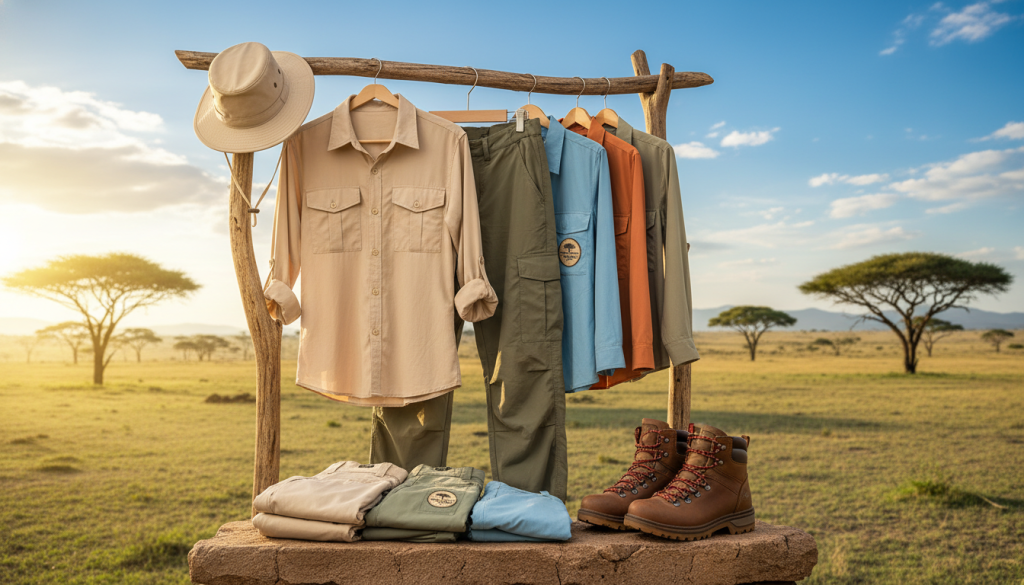
Choosing the right colors and fabrics is crucial for a safari. Neutral tones that blend with the environment are recommended, as they minimize our impact on wildlife. Moisture-wicking fabrics keep us dry and comfortable, especially during long game drives or walking safaris. These fabrics are designed to draw sweat away from the skin, ensuring we remain cool and dry.
Footwear for Game Drives, Walking Safaris, and Camp Life
Footwear is a critical aspect of our safari attire. Sturdy, comfortable shoes are necessary for walking safaris, while ankle-high boots can provide additional support and protection. For camp life, lightweight sandals or shoes are ideal for relaxation. Ensuring our footwear is suitable for the terrain and activities will enhance our overall comfort and enjoyment.
Headwear and Sun Protection Essentials
Protecting ourselves from the sun is vital in Tanzania’s open landscapes. A wide-brimmed hat or a cap with a neck flap can shield us from the harsh sun, while sunglasses with UV protection safeguard our eyes. Additionally, applying sunscreen regularly and wearing lightweight, breathable clothing with a UPF rating can further protect us from the sun’s intense rays.
By carefully selecting our clothing and accessories, we not only ensure our comfort but also our ability to fully immerse in the Tanzanian safari experience, connecting with nature in a meaningful way.
Safari Gear and Equipment Essentials
Tanzania’s vast savannas demand more than just a keen eye; they require the right gear to truly experience their majesty. As we prepare for our Tanzanian adventure, it’s essential to pack the right equipment to enhance our safari experience.
Binoculars and Wildlife Viewing Equipment
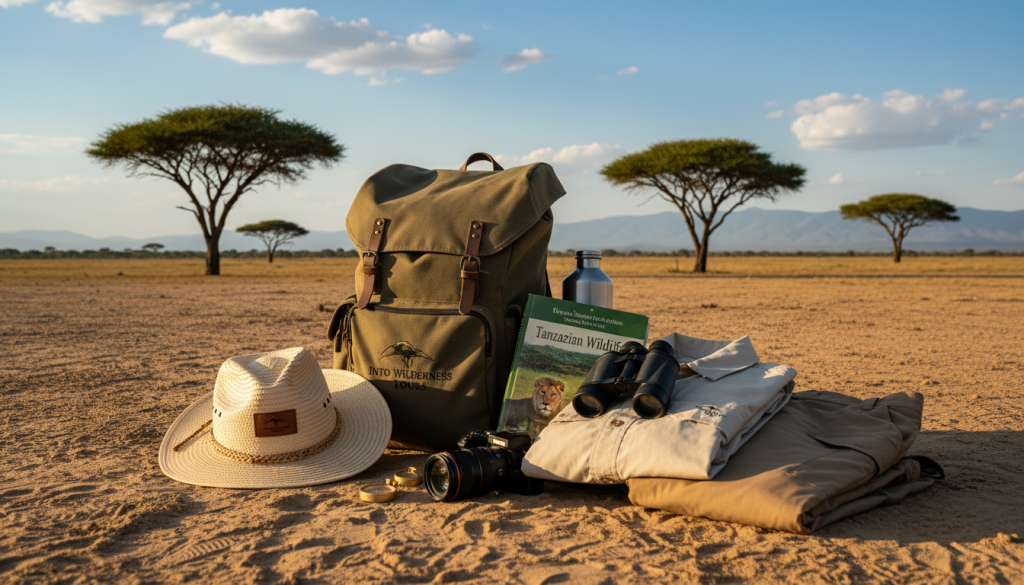
Good binoculars are crucial for a satisfying safari experience, allowing us to observe wildlife from a distance without disturbing it. When choosing binoculars, look for ones that are waterproof and have a good magnification power, typically 7x or 8x. Some popular brands include Nikon and Swarovski, known for their clarity and durability.
| Binoculars Model | Magnification | Waterproof | Weight |
|---|---|---|---|
| Nikon Monarch 7 | 8x | Yes | 25 oz |
| Swarovski EL | 8.5x | Yes | 30 oz |
| Leica Ultravid | 8x | Yes | 22 oz |
Daypacks and Field Bags for Daily Excursions
A comfortable daypack is essential for carrying the necessities during daily safari excursions. Look for one that is lightweight, has multiple compartments, and is made of durable, weather-resistant material. Brands like Osprey and Fjallraven offer excellent options.
Water Bottles and Hydration Systems for Tanzania’s Climate
Staying hydrated is crucial, especially in Tanzania’s climate. Consider a hydration system or a durable water bottle that can withstand the rigors of safari travel. Insulated bottles that keep water cool for hours are particularly useful.
Safari Accessories Worth Packing
Other safari accessories worth considering include a good camera for capturing memories, a portable power bank to keep devices charged, and a lightweight, compact first-aid kit. Don’t forget a pair of comfortable walking shoes and a hat for sun protection.
Complete Packing List for Safari in Tanzania
A well-planned safari begins long before we step into the savannah, starting with a comprehensive packing list. To ensure we’re fully prepared for the Tanzanian wilderness, we’ve compiled a detailed checklist that covers clothing, gear, and personal items essential for a comfortable and enriching safari experience.
Clothing Checklist with Recommended Quantities
Packing the right clothing is crucial for a Tanzanian safari. We recommend bringing:
- 3-4 pairs of lightweight, neutral-colored pants and shorts
- 5-6 moisture-wicking tops for layering
- 1-2 warm layers for cooler mornings and evenings
- 1 waterproof jacket
- Comfortable walking shoes and sandals
- Hat and gloves for sun protection
This selection will keep us comfortable across varying temperatures and activities.
Equipment and Gear Inventory
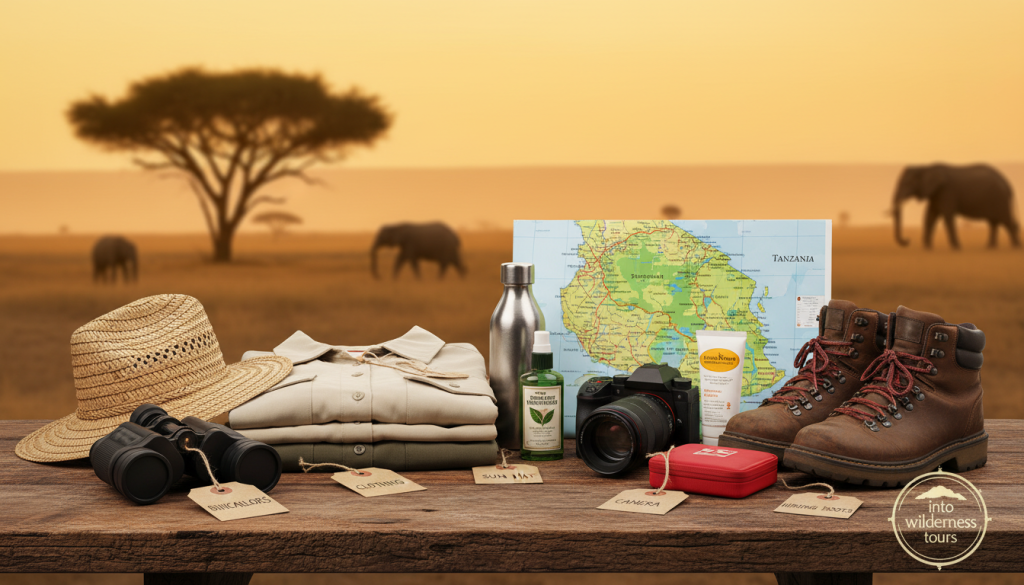
Having the right equipment enhances our safari experience. Essential gear includes:
- Binoculars for wildlife viewing
- A daypack or field bag for daily excursions
- A reusable water bottle or hydration system
- A camera with extra batteries and memory cards
- A personal first-aid kit
These items will ensure we’re prepared for the adventure ahead.
Personal Items Checklist
Personal items can make a significant difference in our comfort and enjoyment. Don’t forget to pack:
- Toiletries and personal hygiene items
- Any personal medications
- Sunscreen and insect repellent
- A travel adapter for charging electronic devices
These essentials will help maintain our well-being throughout the safari.
By following this comprehensive packing list, we’ll be well-equipped to fully immerse ourselves in the Tanzanian safari experience, enjoying the beauty and wonder of the African wilderness with confidence and comfort.
Health and Safety Essentials for Tanzanian Conditions
As we venture into the Tanzanian wilderness, our health and safety become paramount. The vast and diverse landscapes of Serengeti, Ngorongoro, and Tarangire pose unique challenges that require careful preparation and attention to detail.
First Aid Kit Components for Remote Safari Locations
A well-stocked first aid kit is essential for any safari adventure. It should include bandages, antiseptic wipes, pain relievers, and any personal medications. Given the remote nature of many safari locations, having the means to treat minor injuries promptly can prevent more serious issues from developing.
Medications and Prescriptions Including Antimalarials
Consulting with a healthcare professional before traveling to Tanzania is crucial. Antimalarial medications may be prescribed, depending on the time of year and regions visited. Additionally, any personal prescriptions should be packed in sufficient quantities, along with a copy of the prescription and a letter explaining the medication.
Insect Protection and Tsetse Fly Repellents
Insect protection is vital in preventing diseases such as malaria and dengue fever. Using DEET-based repellents and wearing protective clothing can significantly reduce the risk of bites. For areas with high tsetse fly populations, specific repellents containing permethrin can be used on clothing.
Sanitization and Hygiene Products
Maintaining hygiene is crucial in remote safari environments. Hand sanitizers and biodegradable soaps are essential for keeping clean. For camps with limited facilities, wet wipes can be a practical addition to your packing list.
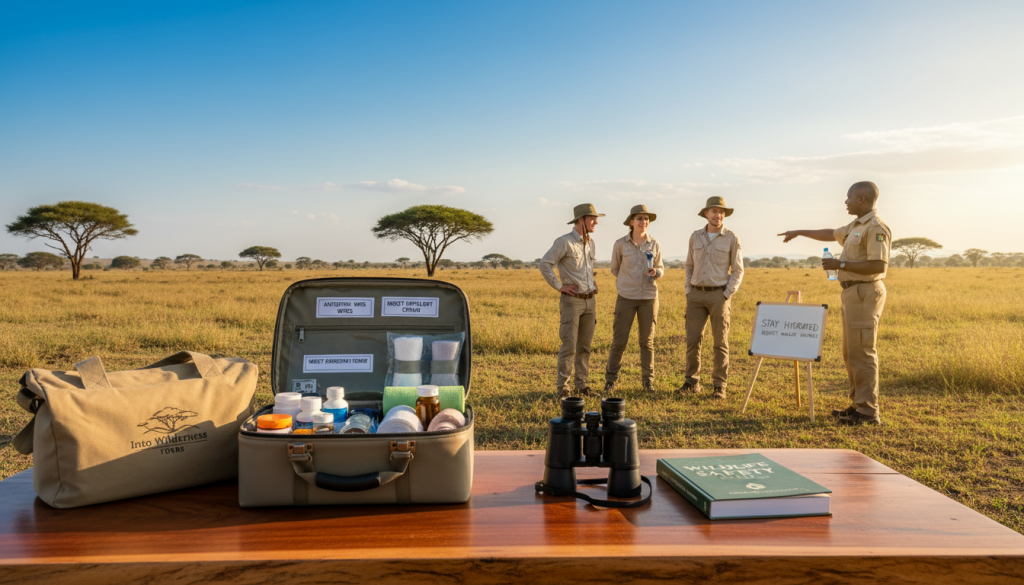
By prioritizing health and safety, we can ensure a more enjoyable and responsible safari experience. Preparation is key to mitigating risks and responding effectively to any challenges that may arise during our Tanzanian adventure.
Documentation and Travel Requirements
Proper documentation is the key to unlocking a seamless Tanzanian safari experience. As we prepare for our adventure, it’s crucial to understand the various travel requirements that will ensure a smooth journey.
Passport, Visa, and Entry Requirements for Tanzania
First and foremost, our passport must be valid for at least six months beyond our intended stay in Tanzania, with at least two blank pages for visa stamps. Most nationalities require a visa to enter Tanzania, which can often be obtained upon arrival at major airports and border crossings. The cost and requirements for visas vary, so it’s essential to check the Tanzanian embassy or consulate website for the most current information. We should also be prepared to show proof of onward travel and sufficient funds for our stay.
Travel Insurance Documents and Coverage Recommendations
Travel insurance is a vital component of our safari preparations. We recommend comprehensive coverage that includes medical emergencies, trip cancellations, and evacuations. Our policy should cover the full cost of our trip and any potential medical expenses, including emergency evacuations, which can be particularly costly in remote safari areas.
Vaccination Records and Yellow Fever Requirements
Tanzania has specific health requirements, including a yellow fever vaccination certificate if we’re traveling from or through a country with a risk of yellow fever transmission. We should consult our healthcare provider or a travel clinic to ensure we have all the necessary vaccinations and medications for travel to Tanzania.
Emergency Contact Information and Embassy Details
Before departing, we should leave a copy of our itinerary and contact information with a trusted friend or family member. It’s also wise to register with our country’s travel advisory department and note the contact details of our embassy in Tanzania, in case of an emergency.
By attending to these documentation and travel requirements, we can ensure a well-prepared and enjoyable Tanzanian safari adventure.
Technology and Photography Equipment for Wildlife Encounters
In the heart of Tanzania’s wildlife, technology and passion converge to create unforgettable safari experiences. Capturing the essence of the African wilderness requires more than just a keen eye; it demands the right equipment and a deep understanding of the environment.
Camera Gear for Capturing the Big Five
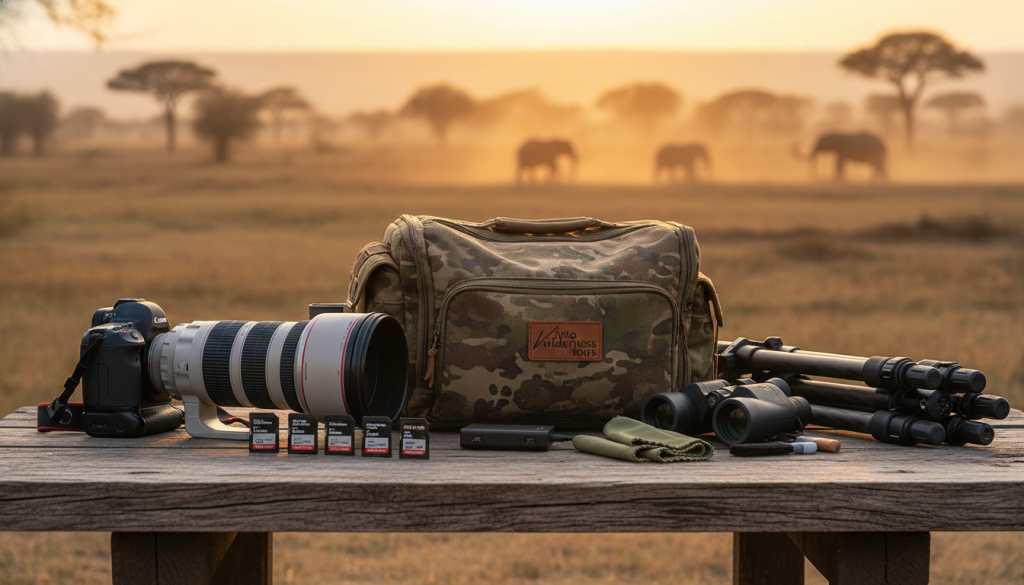
When it comes to safari photography, having the appropriate camera gear is crucial. For capturing the Big Five – lion, leopard, rhinoceros, elephant, and Cape buffalo – a DSLR or mirrorless camera with interchangeable lenses is indispensable. High-quality telephoto lenses allow for intimate shots without disturbing the wildlife.
Lenses for Different Safari Scenarios
The versatility of your lens can make or break your safari photography experience. A 70-200mm lens is ideal for general wildlife photography, while a 100-400mm lens or a 600mm or longer lens is better suited for capturing distant or skittish animals.
Camera Protection in Dusty Conditions
Tanzania’s safari environments can be dusty, posing a risk to your camera equipment. Using camera rain covers or protective housings can safeguard your gear against dust and moisture, ensuring it remains functional throughout your adventure.
Power Solutions and Tanzanian Electrical Adapters
With the extensive use of technology on safari, power management becomes critical. Bringing spare batteries and portable power banks can keep your devices charged. Additionally, a Tanzanian electrical adapter (Type D, G, or M) is necessary for charging your equipment.
Communication Devices and Connectivity in Remote Areas
While on safari, staying connected can be challenging due to remote locations. Satellite phones offer a reliable means of communication in emergencies, and some safari operators provide mobile Wi-Fi hotspots for limited internet access.
Protecting Your Tech in Safari Conditions
Protecting your technology from the elements is vital. Using protective cases and bags can shield your equipment from dust, water, and extreme temperatures, ensuring it remains operational.
Personal Items and Toiletries for Bush Living
When venturing into the heart of Tanzania’s conservation areas, we must thoughtfully select personal items and toiletries that are not only practical but also eco-friendly. Living in the bush requires a delicate balance between comfort and conservation.
Eco-Friendly Toiletry Options for Conservation Areas
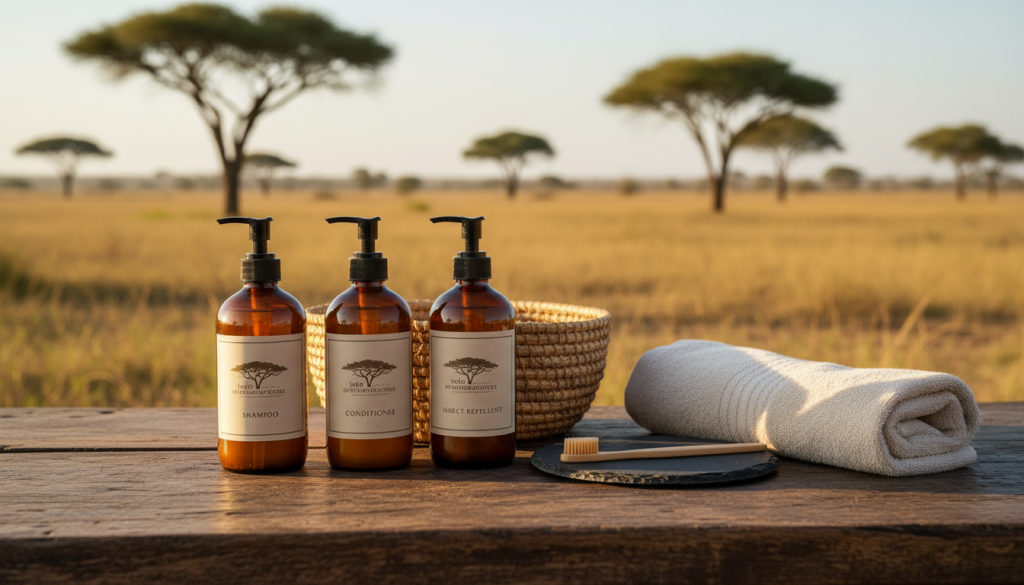
Choosing eco-friendly toiletries is crucial for minimizing our impact on Tanzania’s sensitive ecosystems. We recommend opting for biodegradable soaps, toothpaste, and other personal care items that are free from harsh chemicals. Brands like Dr. Bronner’s and Seventh Generation offer a range of eco-friendly products that are perfect for safari living.
Specialized Items for Safari Conditions
Safari conditions demand specialized personal items. Insect repellents containing DEET or picardin are essential for protecting against tsetse flies and other biting insects. We also recommend packing quick-dry towels, wet wipes, and hand sanitizer to maintain personal hygiene in the bush.
Comfort Items for Long Safari Days and Nights
After a long day of game drives and exploring, comfort items can greatly enhance our safari experience. Consider packing a favorite book, a portable hammock, or a set of comfortable, moisture-wicking clothing. These small luxuries can make a significant difference in our overall comfort and enjoyment.
| Item | Description | Eco-Friendly Option |
|---|---|---|
| Toothpaste | Biodegradable and fluoride-free | Yes |
| Insect Repellent | DEET or picardin-based | Yes |
| Wet Wipes | Biodegradable and gentle on skin | Yes |
Luggage Selection and Packing Strategy
The key to a hassle-free Tanzanian safari lies in the details, particularly in choosing the appropriate luggage and adopting a thoughtful packing strategy. As we prepare for the adventure of a lifetime, it’s essential to consider the unique demands of safari travel.
Soft-Sided vs. Hard-Shell Luggage for Safari Travel
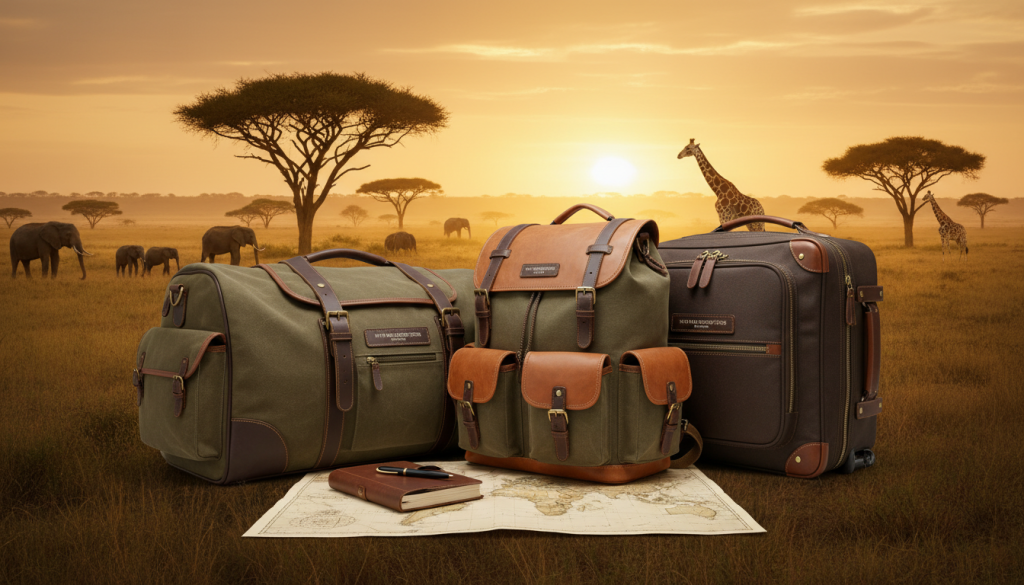
When it comes to selecting luggage for a Tanzanian safari, travelers often debate between soft-sided and hard-shell options. Soft-sided luggage offers flexibility and is generally lighter, making it easier to maneuver in tight spaces, such as those found in safari vehicles or small aircraft. On the other hand, hard-shell luggage provides superior protection for your gear, shielding it from the rigors of travel and potential rough handling.
Weight Restrictions for Small Aircraft Flights to Remote Camps
Many Tanzanian safaris involve flights to remote camps on small aircraft, which often have strict weight restrictions. It’s crucial to check with your tour operator or airline for specific weight limits to avoid any last-minute adjustments or additional fees. Packing lightly while still bringing all necessary items is a delicate balance that requires careful planning.
Organizing Your Safari Luggage Efficiently
Efficient organization is key to making the most of your luggage space. Utilizing packing cubes can help keep your belongings tidy and make it easier to find what you need quickly. Additionally, compression bags can be invaluable for reducing the bulk of clothing items, allowing for more efficient use of space.
Packing Cubes and Compression Bags
Packing cubes help in categorizing your gear, from clothing to accessories, making it easier to pack and unpack. Compression bags, particularly useful for bulky items like jackets or sleeping bags, can significantly reduce luggage volume.
Accessibility Planning for Essential Items
It’s also important to plan for easy access to essential items during your safari. Consider packing a small daypack with essentials like water, snacks, and a first-aid kit, so they’re readily available during game drives or excursions.
| Luggage Type | Advantages | Disadvantages |
|---|---|---|
| Soft-Sided Luggage | Flexible, Lighter, Easier to Maneuver | Less Protection for Gear |
| Hard-Shell Luggage | Superior Protection, Durable | Less Flexible, Heavier |
Seasonal Packing Adjustments for Tanzania
As we venture into the Tanzanian wilderness, understanding the seasonal nuances becomes crucial for a well-prepared safari adventure. Tanzania’s climate varies significantly across different regions and seasons, making it essential to adapt your packing list accordingly.
Dry Season Essentials (June-October)
During the dry season, the landscape transforms into a vast, open canvas, ideal for spotting wildlife. Pack light, breathable clothing and consider layers for cooler mornings and evenings. Don’t forget sun protection, including a wide-brimmed hat and sunglasses, as the sun can be intense.
Wet Season Considerations (November-May)
The wet season brings life to the savannah, with lush vegetation and an abundance of birdlife. It’s essential to pack waterproof gear and clothing that can withstand sudden rain showers. Additionally, consider insect repellent and protective clothing to ward off mosquitoes and other insects.
Altitude-Based Packing for Ngorongoro Highlands and Kilimanjaro Region
For regions like the Ngorongoro Highlands and Kilimanjaro, altitude becomes a significant factor. Pack warm, insulating layers for cooler temperatures, especially in the mornings and evenings. It’s also crucial to be prepared for potential altitude sickness by bringing necessary medications and staying hydrated.
Cultural Considerations and Respectful Packing
As we embark on our Tanzanian safari, it’s essential to consider the cultural nuances that will enrich our experience. Tanzania is home to numerous ethnic groups, each with their unique customs and traditions. Being respectful of these cultural differences will not only enhance our safari experience but also contribute to a positive and enriching interaction with the local communities.
Appropriate Attire for Maasai Village Visits
When visiting Maasai villages, it’s crucial to dress modestly as a sign of respect. We recommend wearing comfortable, neutral-colored clothing that covers your shoulders and knees. Avoiding bright colors and flashy jewelry is also advisable, as these can be distracting. By dressing appropriately, we show respect for the local customs and traditions, creating a more meaningful and enjoyable experience for both us and our hosts.
Gift-Giving Etiquette and Suggestions for Local Communities
Gift-giving is a thoughtful gesture when interacting with local communities. Consider bringing items that are practical and useful, such as clothing, utensils, or educational materials. It’s also appreciated to bring items that support community projects or conservation efforts. Some recommended gifts include:
- Clothing for local children or adults
- Educational materials like books or pencils
- Items for community projects, such as water filters or first aid kits
Cultural Sensitivities to Be Aware Of
Being aware of cultural sensitivities is vital when engaging with local communities. For instance, certain gestures or actions may be considered offensive in some cultures. We should be mindful of our body language, tone, and the way we interact with locals. By being respectful and considerate, we can foster a positive and enriching experience for everyone involved.
What Not to Bring on Your Tanzanian Safari
Knowing what not to bring on your Tanzanian safari is crucial for a hassle-free and enjoyable experience. As we venture into the wild, it’s essential to understand that certain items are better left behind, not just for our convenience but also for the preservation of Tanzania’s delicate ecosystem.
Prohibited and Restricted Items in Tanzania
Tanzania has strict regulations regarding certain items that can be brought into the country, especially when venturing into protected areas. Some of these prohibited items include:
- Firearms and ammunition without proper permits
- Certain medications and narcotics
- Protected species and their products
- Drone equipment without prior approval
It’s crucial to check with your tour operator or relevant Tanzanian authorities for the most up-to-date information on restricted items to avoid any complications during your trip.
Unnecessary Items That Waste Precious Luggage Space
When preparing for your safari, it’s easy to overpack. However, leaving behind unnecessary items can significantly enhance your travel experience. Consider avoiding:
- Excessive clothing that won’t be used
- Bulky electronics not essential for your safari experience
- Valuables that could be lost or damaged
By packing light, you’ll not only save space but also reduce the risk of losing important items during transit.
Environmental Considerations for Protected Areas
Tanzania’s national parks and protected areas are home to incredible biodiversity. To preserve these environments, we must be mindful of our impact. This includes avoiding:
- Single-use plastics
- Non-biodegradable products
- Any items that could potentially harm local wildlife
By making eco-friendly choices, we contribute to the conservation of these precious ecosystems, ensuring they remain pristine for generations to come.
Last-Minute Shopping in Arusha and Dar es Salaam
As you prepare for your Tanzanian safari, you might find yourself in need of last-minute items in Arusha or Dar es Salaam. Both cities offer a range of shopping experiences, from local markets to modern supermarkets, where you can acquire necessary gear and supplies.
Available Supplies in Tanzania’s Gateway Cities
Arusha and Dar es Salaam are well-stocked with essentials for safari travelers. You can find everything from clothing and camping gear to personal care items and medications. Local markets are ideal for purchasing traditional clothing or souvenirs, while supermarkets offer a wide range of modern conveniences.
| Item | Arusha | Dar es Salaam |
|---|---|---|
| Safari Gear | Available in local shops | Widely available in outdoor stores |
| Medications | Found in pharmacies | Available in major pharmacies |
| Traditional Clothing | Plentiful in local markets | Abundant in local markets |
Items Better Purchased Locally
Some items are better purchased locally due to their relevance to the Tanzanian environment. For instance, insect repellents specifically designed to combat local pests can be more effective than what you might find elsewhere. Additionally, purchasing local handicrafts not only supports the community but also provides you with unique souvenirs.
Budget-Friendly Packing Tips for Safari Travelers
In the spirit of adventure and conservation, we share our insights on budget-friendly safari travel. Planning a Tanzanian safari requires careful consideration of what to pack, balancing between essential items and those that can be rented or omitted altogether.
Essential vs. Optional Safari Items
When preparing for your safari, distinguishing between essential and optional items is crucial for a cost-effective trip. Essential items include durable, versatile clothing and personal gear that can withstand the rigors of safari life. Consider packing clothes that can be layered for different temperatures and activities. Optional items, on the other hand, might include luxury or specialized gear that can be expensive or difficult to transport.
For instance, while a high-end camera is desirable, a good quality, compact camera or even a smartphone with a good camera can suffice for capturing memories. Prioritizing your packing list based on necessity and utility can significantly reduce costs.
| Item | Essential/Optional | Cost-Saving Tip |
|---|---|---|
| Safari Jacket | Essential | Choose a versatile, neutral-colored jacket that can be layered. |
| Binoculars | Essential | Invest in a good pair; they can be used for years to come. |
| Luxury Camping Gear | Optional | Consider renting or opting for simpler, more durable options. |
Rental Options for Specialized Equipment in Tanzania
Tanzania offers various rental options for specialized safari equipment, allowing travelers to access high-quality gear without the need for purchase or transport. Camera equipment, binoculars, and even safari vehicles can be rented in major cities like Arusha and Dar es Salaam. This not only saves on luggage space and initial investment but also ensures that you have access to the latest technology and models.
For example, renting a high-quality camera lens or binoculars can enhance your safari experience without the hefty upfront cost. Researching and booking rental equipment in advance is advisable to ensure availability, especially during peak safari seasons.
Conclusion: Your Safari Adventure Awaits
As we conclude this comprehensive guide, we’re confident that you’re now well-prepared to embark on your Tanzanian safari. With careful planning and the right mindset, your safari will be a transformative experience, connecting you deeply with Tanzania’s incredible wilderness and cultures.
From the essentials of packing lists to cultural considerations, we’ve covered the crucial elements to ensure a seamless and enriching adventure travel experience. As you prepare for your Tanzanian safari, remember that safari preparation is key to unlocking the full potential of your journey.
As local hosts and guardians of this beautiful land, we invite you to immerse yourself in the majestic landscapes and vibrant cultures that Tanzania has to offer. Your Tanzanian safari awaits, promising memories that will last a lifetime.
FAQ
What is the best time to go on a Tanzanian safari?
The best time for a Tanzanian safari depends on your preferences and the region you plan to visit. Generally, the dry season from June to October is considered ideal for wildlife viewing, as animals congregate around water sources, making them easier to spot.
What vaccinations are required for travel to Tanzania?
Travelers to Tanzania typically need vaccinations against yellow fever, hepatitis A, and typhoid. Consult your healthcare provider for the most current advice, as requirements can vary based on your travel plans and health status.
What should I pack for a Tanzanian safari?
Packing for a Tanzanian safari should include lightweight, breathable clothing in neutral colors, a good quality camera, binoculars, sunscreen, insect repellent, a first-aid kit, and appropriate footwear for walking safaris or game drives.
Are there any specific cultural considerations for visiting local communities during my safari?
Yes, when visiting local communities such as the Maasai villages, it’s essential to dress modestly, respect local customs, and be mindful of gift-giving etiquette. We guide you on appropriate attire and cultural sensitivities to ensure a respectful experience.
Can I rent specialized safari equipment in Tanzania?
Yes, certain specialized equipment like cameras and binoculars can be rented in major cities like Arusha and Dar es Salaam. We provide insights into rental options to help you plan a cost-effective safari.
What are the weight restrictions for luggage on small aircraft flights to remote safari camps?
Weight restrictions vary by operator, but typically, luggage is limited to 15-20 kg (33-44 lbs) per person for safety reasons. It’s crucial to check with your safari operator for their specific baggage restrictions.
How can I minimize my environmental impact during the safari?
Minimizing your environmental footprint involves choosing eco-friendly toiletry options, respecting wildlife and their habitats, and adhering to guidelines provided by your safari guides. We discuss these practices in detail to help you contribute to conservation efforts.
What are the prohibited items in Tanzania that I should be aware of?
Certain items, such as specific plastics, drone usage in protected areas, and some types of hunting gear, are restricted or prohibited in Tanzania. We outline these restrictions to ensure compliance with local regulations.
How do I stay connected with family or friends back home during my safari?
While remote, many safari locations have some form of mobile or satellite connectivity. We advise on communication devices and expectations for staying in touch during your adventure.
What health precautions should I take for a Tanzanian safari?
Precautions include antimalarial medication, vaccinations, and a well-stocked first-aid kit. We provide a comprehensive guide on health essentials to ensure your safety and well-being.
Can I purchase travel insurance for my Tanzanian safari, and what should it cover?
It’s highly recommended to have travel insurance that covers medical emergencies, trip cancellations, and evacuations. We offer recommendations on what to look for in a travel insurance policy.