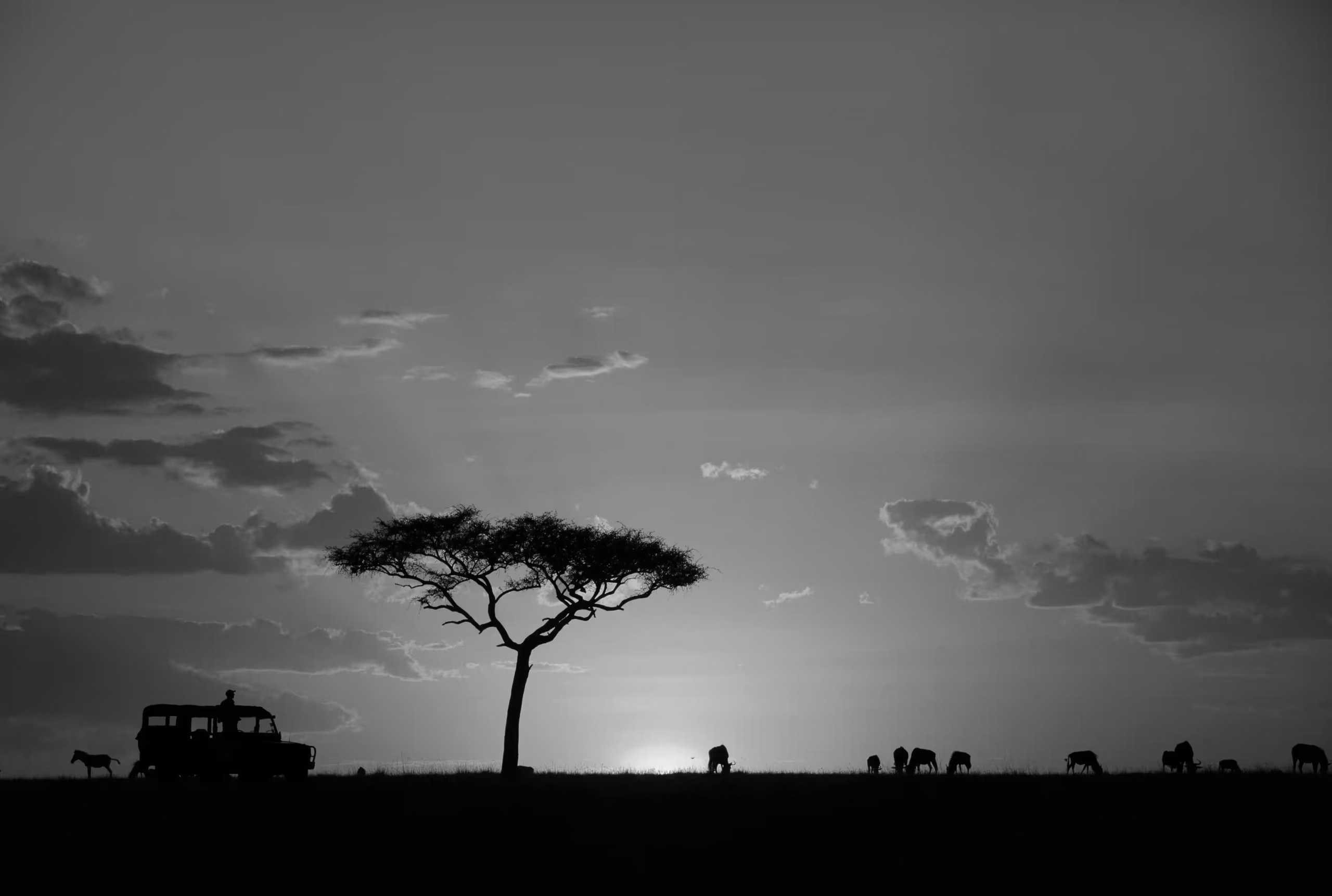

We invite you to join us on a journey to witness one of the world’s most spectacular natural events: the Tanzania Great Migration Safari. As we venture into the heart of Tanzania, the rhythm of the wild awakens our senses, and the vast expanse of the savannah unfolds before us like a canvas of endless possibility.
As local hosts and guardians of this land, we share with you the essence of our homeland, where the ancient paths of wildlife converge in a majestic display of nature’s splendor. Our safari is more than a journey; it’s an immersion into the soul of Tanzania, where the land, its people, and its creatures come alive in a dance of wonder.
Key Takeaways
- Experience the world’s largest wildlife migration in Tanzania’s iconic national parks.
- Immerse yourself in the local culture and traditions of Tanzanian communities.
- Enjoy a luxurious safari experience with expert guides and personalized service.
- Contribute to conservation efforts and responsible tourism practices.
- Witness breathtaking landscapes and wildlife encounters that will leave you in awe.
The Magnificent Spectacle of Nature’s Greatest Wildlife Show
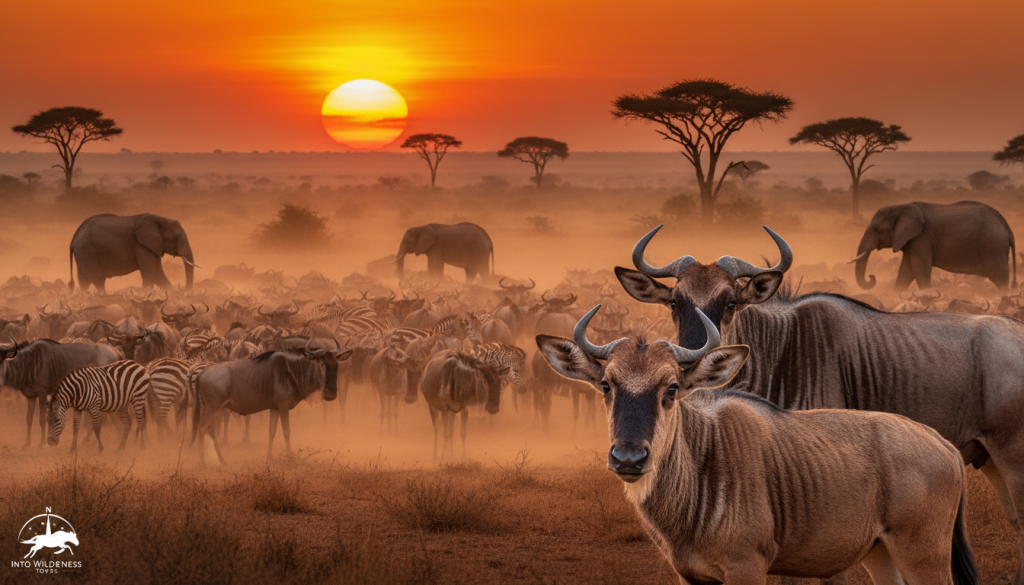
As we step into the vast expanse of Tanzania’s savanna, we’re about to witness a spectacle that defies human imagination. The Great Migration is a wildlife show like no other, a breathtaking display of nature’s majesty that spans across the endless plains, majestic rivers, and diverse landscapes of Tanzania.
The Scale and Significance of this Natural Wonder
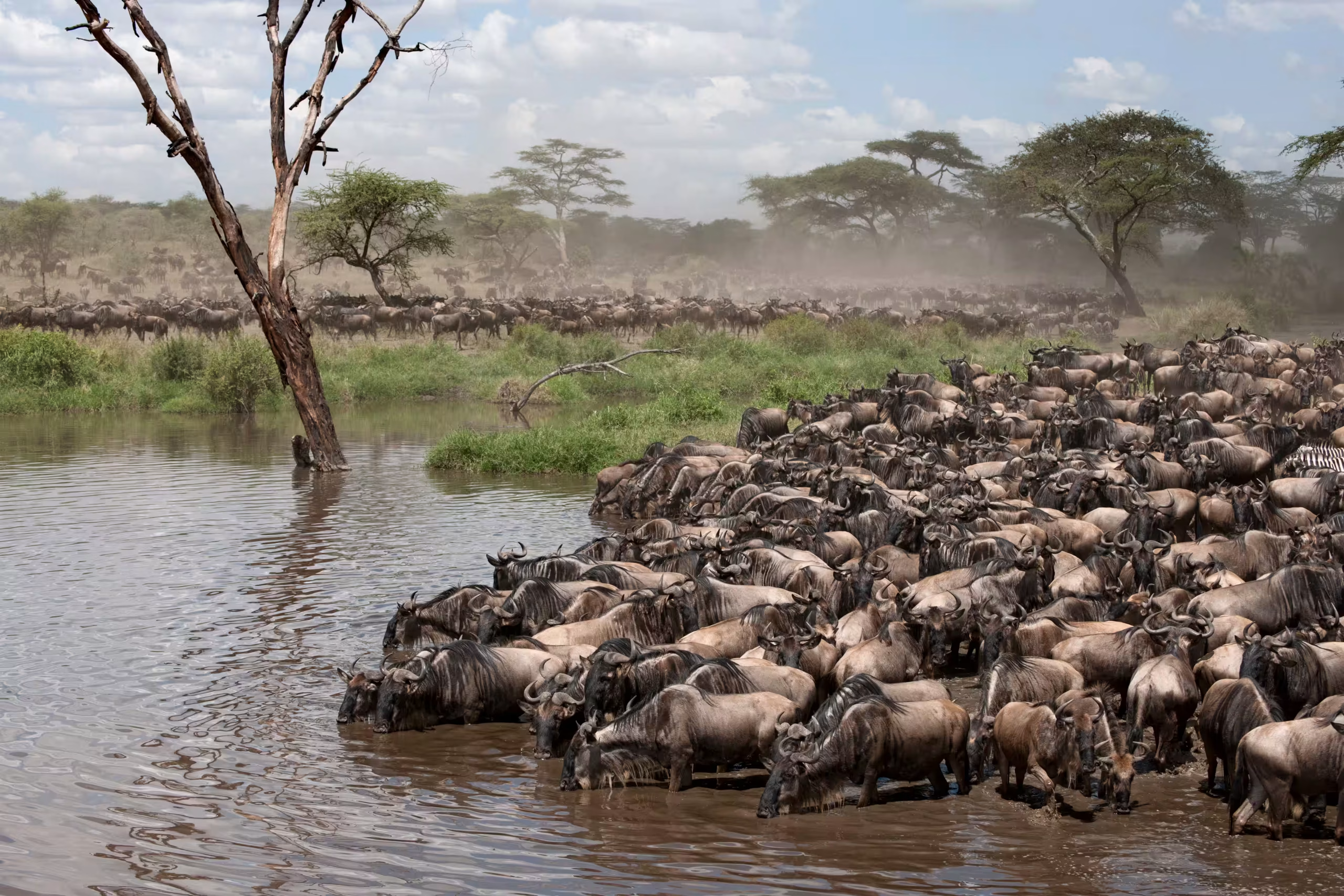
The Great Migration is a monumental event involving over a million wildebeest, zebras, and gazelles. It’s a circular journey driven by the search for greener pastures, a phenomenon that has been unfolding for millennia.
This natural wonder is not just about the numbers; it’s about the intricate dance between predator and prey, the delicate balance of the ecosystem, and the awe-inspiring moments that leave travelers speechless.
| Aspect | Description | Significance |
|---|---|---|
| Scale | Over 1 million wildebeest, zebras, and gazelles | Unparalleled wildlife spectacle |
| Ecosystem Balance | Predator-prey dynamics, vegetation cycles | Maintains ecological harmony |
| Cultural Impact | Inspires local communities and tourism | Supports conservation efforts |
Life-Changing Moments on the Savanna
Witnessing the Great Migration is a deeply personal experience, one that can evoke a range of emotions from awe to introspection. As travelers, we’re given a rare opportunity to connect with nature on a primal level.
These moments on the savanna can be transformative, challenging our perceptions and fostering a deeper appreciation for the natural world. It’s an experience that stays with you long after you’ve left the savannas of Tanzania.
The Great Migration in Tanzania is more than just a wildlife event; it’s a journey into the heart of nature’s splendor.
Understanding the Great Migration in Tanzania: Nature’s Epic Journey
As we embark on a journey to understand the Great Migration in Tanzania, we uncover the intricate science and ecological significance that make this natural phenomenon so extraordinary. The Great Migration is not just a marvel of nature; it’s a complex process that involves the movement of millions of wildebeest, zebras, and gazelles across the Tanzanian landscape.
This epic journey is driven by the search for greener pastures and is influenced by seasonal rainfall patterns, the availability of food, and the presence of predators. The migration route spans across iconic national parks and conservation areas, including the Serengeti and Ngorongoro, creating a dynamic ecosystem that supports a rich variety of wildlife.
The Science Behind the Annual Cycle
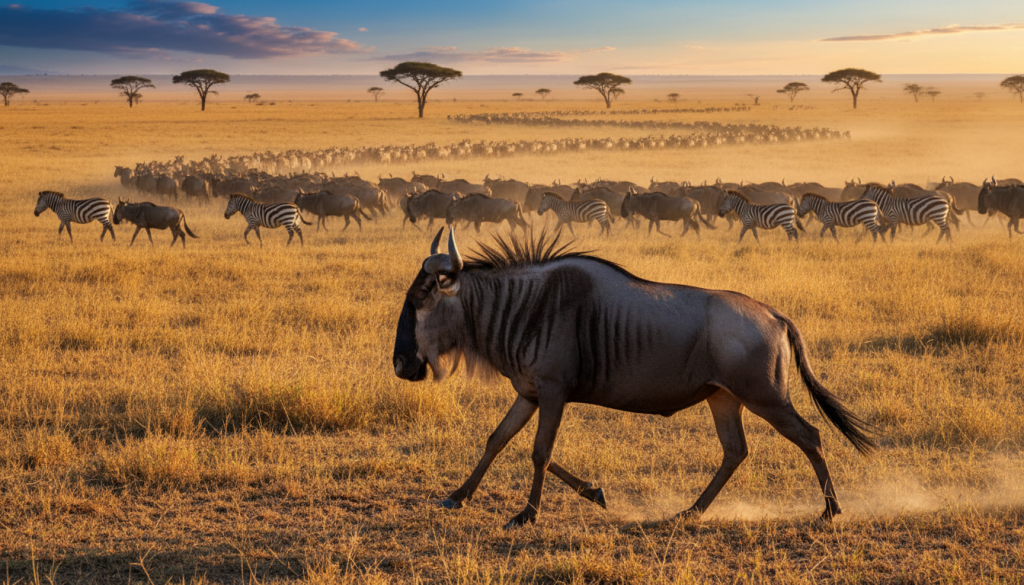
The annual cycle of the Great Migration is a fascinating process that is influenced by various natural factors. The migration is primarily driven by the wildebeest’s instinct to follow the rains and find fresh grazing. This movement is synchronized with the calving season, which typically occurs between January and March in the southern Serengeti. The annual cycle is crucial for the survival of the migrating herds, as it ensures they have access to nutrient-rich food throughout the year.
The science behind this phenomenon involves understanding the intricate relationship between the migrating animals, their habitat, and the climatic conditions. Research has shown that the migration patterns are influenced by factors such as rainfall, temperature, and the availability of food. By studying these factors, scientists can better understand the dynamics of the Great Migration and its importance in the ecosystem.
Ecological Importance of the Migration
The Great Migration plays a vital role in maintaining the ecological balance of Tanzania’s wilderness. The movement of the herds helps to distribute nutrients across the landscape, promoting the growth of vegetation and supporting the complex food web. The ecological importance of the migration cannot be overstated, as it sustains the rich biodiversity of the region and maintains the health of the ecosystem.
Furthermore, the migration has a significant impact on the local environment, shaping the landscape through grazing and trampling. This process contributes to the creation of diverse habitats that support a wide range of plant and animal species. By understanding the ecological importance of the Great Migration, we can better appreciate the need to conserve and protect this natural wonder for future generations.
When to Witness the Great Migration: Seasonal Guide
The rhythm of the Great Migration follows the Tanzanian seasons, each bringing its own magic to the vast savannas and grasslands. As we journey through this natural spectacle, understanding the seasonal patterns becomes essential to witnessing the most dramatic moments.
January to March: Calving Season in Southern Serengeti
January marks the beginning of the calving season in the southern Serengeti, a time of new life and abundant wildlife viewing opportunities. The lush grasslands provide nourishment for the pregnant wildebeest, zebras, and gazelles, resulting in a surge of newborns.
Wildlife Viewing Opportunities During Calving
During this period, the savannas are teeming with life. Witness the tender moments between newborns and their mothers, and observe the cautious steps of young calves taking their first wobbly strides.
Weather Conditions and Accessibility
The weather during January to March is generally warm and dry, making it an ideal time for safari adventures. The short grass and open plains offer unobstructed views of the wildlife.
April to June: The Long Rains and Westward Movement
As the long rains arrive, typically from April to June, the landscape transforms into a lush, green paradise. This period sees the herds beginning their westward movement towards the central Serengeti, driven by the search for fresh grazing lands.
The rains bring a renewal of life, and the migration continues its epic journey.
July to October: River Crossings and Northern Migration
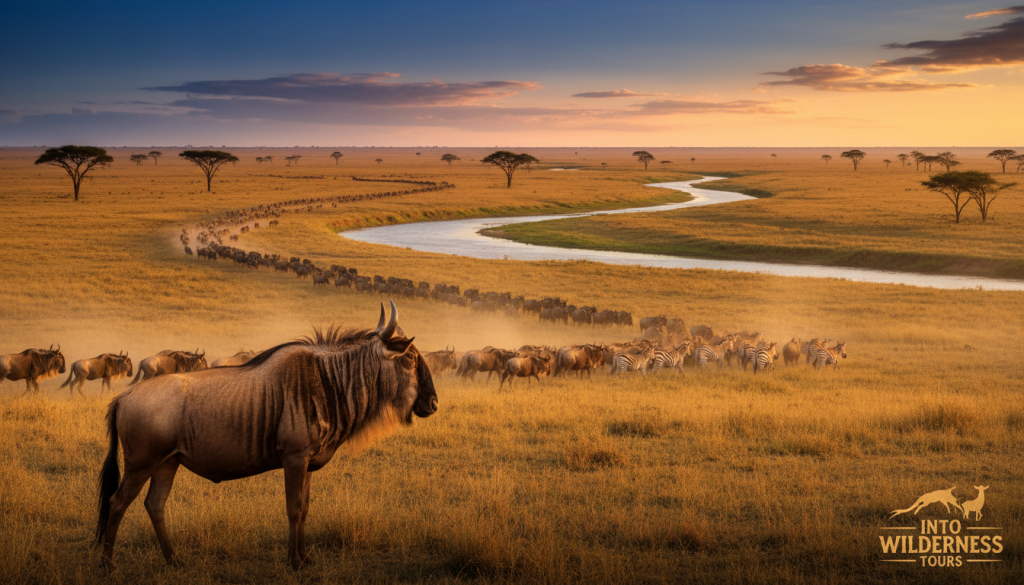
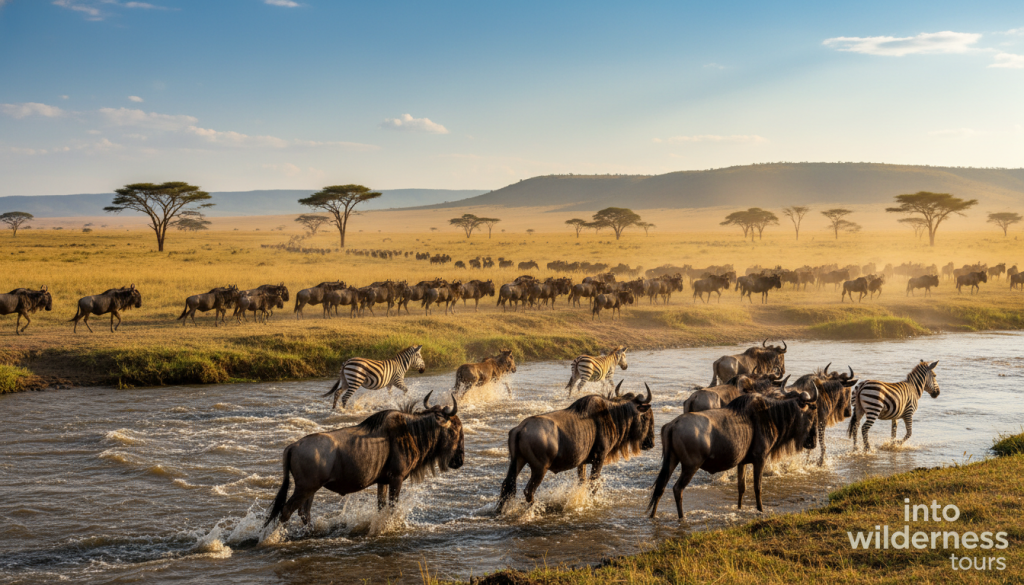
The dry season, from July to October, brings the great herds to the northern Serengeti and the Mara River, setting the stage for one of nature’s most dramatic events: the river crossings.
Dramatic Mara River Crossing Spectacles
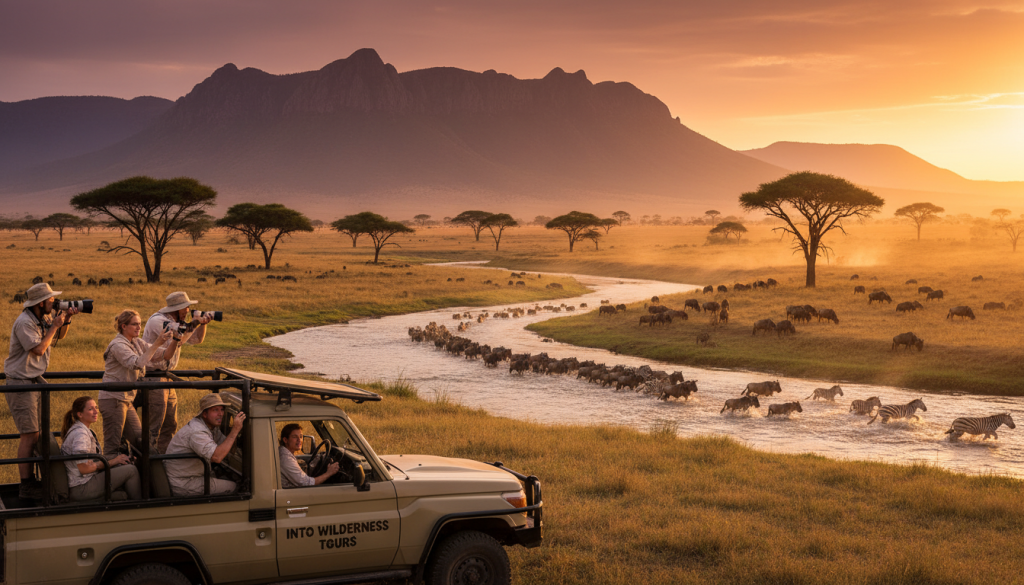
Witness the heart-stopping moments as wildebeest and zebras brave the crocodile-infested waters of the Mara River. These crossings are a highlight of the Great Migration, showcasing the determination and resilience of the migrating herds.
Predator-Prey Interactions at Their Peak
During this time, predator-prey interactions reach a fever pitch. Lions, leopards, and crocodiles lie in wait, making every crossing a potential hunt. The tension is palpable as the drama unfolds on the riverbanks.
Key Locations to Experience the Great Migration in Tanzania
As we journey through Tanzania’s wilderness, we find that the Great Migration unfolds across several pivotal sites, each offering a unique perspective on this natural spectacle. The vast expanse of the Serengeti, the dramatic river crossings, and the stunning landscapes of the Ngorongoro Conservation Area all play host to this epic event.
Serengeti National Park: The Heart of the Action
Serengeti National Park is the epicenter of the Great Migration, with its endless plains providing a stage for the wildebeest, zebras, and gazelles as they make their way across Tanzania. The park’s diverse landscapes, from open grasslands to rocky outcrops, support a wide variety of wildlife.
Northern Serengeti Viewing Points
The northern Serengeti offers some of the most dramatic viewing points, with the Mara River crossing being a highlight. Witnessing the herds navigate the treacherous waters is a thrilling experience.
Central and Southern Serengeti Hotspots
The central and southern regions of the Serengeti are known for their abundant wildlife during the calving season. The short grass plains make it easier to spot predators and their prey.
| Location | Best Time to Visit | Key Experiences |
|---|---|---|
| Northern Serengeti | July to October | Mara River crossings, predator sightings |
| Central Serengeti | January to March | Calving season, abundant wildlife |
| Southern Serengeti | January to March | Calving season, newborn animals |
Ngorongoro Conservation Area: Stunning Landscapes
The Ngorongoro Conservation Area provides a unique backdrop for the Great Migration, with its crater landscapes and diverse wildlife. The area is also home to the Maasai people, offering insights into traditional cultures.
Grumeti and Mara River: Dramatic Crossing Points
The Grumeti and Mara Rivers are crucial to the Great Migration, serving as dramatic crossing points for the herds. These areas are known for their high concentrations of wildlife and predators.
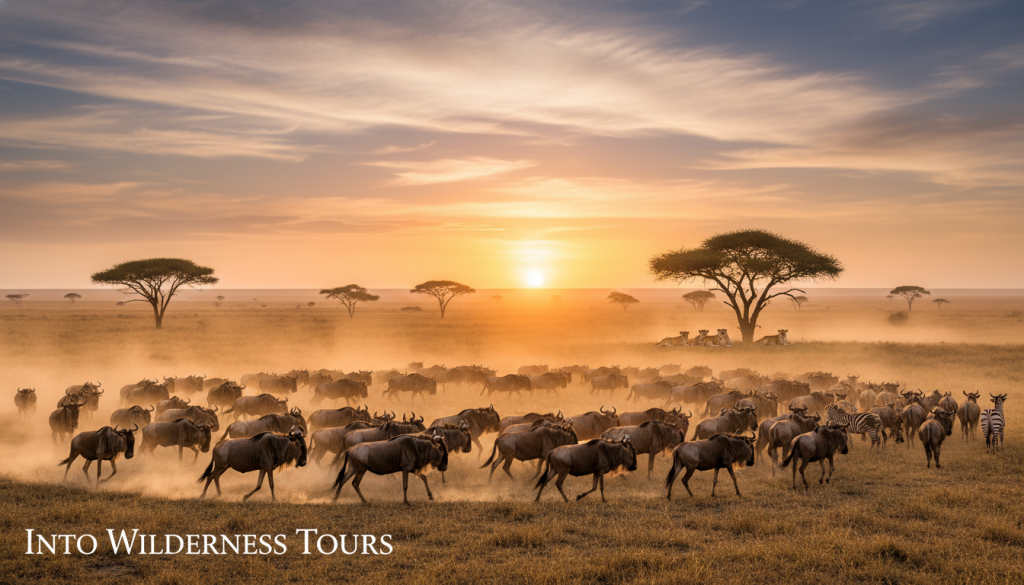
As we explore these key locations, we gain a deeper understanding of the Great Migration’s complexity and beauty. Each site offers a unique perspective on this natural wonder, making Tanzania’s Great Migration a truly unforgettable experience.
Safari Options for American Travelers Witnessing the Migration
As American travelers plan their Tanzania Great Migration safari, they have various options to choose from, each offering a unique experience. We understand that witnessing the Great Migration is a once-in-a-lifetime adventure, and selecting the right safari is crucial for an unforgettable journey.
Guided Group Safaris: Social and Cost-Effective
Guided group safaris offer an excellent way for American travelers to experience the Great Migration while enjoying the camaraderie of like-minded individuals. These safaris are not only cost-effective but also provide a safe and guided experience through Tanzania’s wilderness. By joining a guided group, travelers can share the excitement of the migration with others, creating lasting memories.
Private Safari Experiences: Personalized Adventures
For those seeking a more personalized adventure, private safari experiences are an ideal choice. We offer tailored itineraries that cater to individual preferences, allowing American travelers to explore the Great Migration at their own pace. With a private safari, visitors can enjoy flexible scheduling, personalized guides, and a more intimate connection with nature.
Fly-in Safaris: Maximizing Wildlife Viewing Time
Fly-in safaris are another fantastic option for witnessing the Great Migration, especially for those with limited time. By utilizing Tanzania’s domestic flights, travelers can quickly move between different migration hotspots, maximizing their wildlife viewing time. This option is particularly beneficial for busy professionals or those who want to make the most of their safari experience.
Luxury Air Safari Packages
Our luxury air safari packages combine the thrill of flying over Tanzania’s breathtaking landscapes with the comfort of high-end accommodations. These packages are designed to provide an exclusive and hassle-free experience, allowing travelers to focus on enjoying the Great Migration.
Time-Efficient Itineraries for Busy Professionals
We understand that many American travelers have busy schedules, which is why we offer time-efficient itineraries tailored to their needs. Our expert guides will work with travelers to create a personalized schedule that ensures they witness the most spectacular moments of the Great Migration, even with limited time.
At Into Wilderness Tours, we pride ourselves on providing exceptional safari experiences that not only showcase the beauty of Tanzania’s Great Migration but also support local conservation efforts. Whether you choose a guided group safari, private experience, or fly-in adventure, we’re committed to making your Tanzania Great Migration safari unforgettable.
| Safari Option | Key Features | Benefits |
|---|---|---|
| Guided Group Safaris | Cost-effective, guided experience, social | Safe, shared experience, lasting memories |
| Private Safari Experiences | Personalized, flexible scheduling, intimate | Tailored adventure, deeper connection with nature |
| Fly-in Safaris | Maximizes wildlife viewing time, convenient | Time-efficient, covers more ground, exciting |
Accommodation Choices Along the Migration Route
From luxury lodges to mobile camps, the options for accommodation during the Great Migration are as varied as the landscapes we traverse. As we journey through Tanzania’s wilderness, our choice of lodging can significantly enhance our experience, offering comfort, authenticity, and a deeper connection to nature.
Luxury Lodges: Comfort in the Wilderness
Luxury lodges along the migration route offer the perfect blend of comfort and wilderness experience. These high-end accommodations provide spacious rooms, fine dining, and exceptional service, all while being surrounded by the breathtaking beauty of Tanzania’s savannas.
Top-Rated Luxury Properties for American Visitors
Some of the top-rated luxury lodges for American visitors include Four Seasons Safari Lodge Serengeti and Singita Sasakwa Lodge. These properties offer luxurious amenities, guided tours, and unparalleled access to the Great Migration.
What to Expect from 5-Star Safari Accommodations
Five-star safari accommodations offer more than just luxury; they provide an immersive experience into the Tanzanian wilderness. Expect spacious suites, gourmet meals, and guided safaris led by experienced rangers.
| Lodge Name | Location | Amenities |
|---|---|---|
| Four Seasons Safari Lodge Serengeti | Serengeti National Park | Luxury rooms, infinity pool, guided safaris |
| Singita Sasakwa Lodge | Serengeti National Park | Spacious suites, private decks, gourmet dining |
Tented Camps: Authentic Safari Experiences
Tented camps offer an authentic safari experience, bringing us closer to nature without sacrificing comfort. These camps are typically set up in remote areas, providing a more intimate connection with the wilderness.
Mobile Camps: Following the Migration
Mobile camps take the concept of following the Great Migration to the next level. These camps are set up seasonally near the migrating herds, offering a unique opportunity to witness the migration up close.
By choosing mobile camps, travelers can experience the migration from various vantage points, enjoying a more dynamic and immersive experience.
Wildlife Encounters During the Great Migration in Tanzania
The Great Migration transforms the Tanzanian savanna into a living, breathing entity, pulsating with the rhythms of wildebeest, zebras, and gazelles. As we witness this spectacle, we’re surrounded by an astonishing array of wildlife, each species playing its unique role in this grand drama.
The Main Players: Wildebeest, Zebras, and Gazelles
The Great Migration is primarily driven by the movement of wildebeest, zebras, and gazelles as they search for greener pastures. These herbivores form the backbone of the migration, with wildebeest being the most numerous. Their journey is fraught with danger, yet they press on, driven by an ancient instinct to survive.
Wildebeest, with their distinctive beards and curved horns, are the stars of the show, numbering over a million. Zebras, with their striking black and white stripes, often travel alongside the wildebeest, while gazelles dart gracefully across the plains, their large eyes ever-vigilant for predators.
Predators of the Migration: Lions, Cheetahs, and Crocodiles
The Great Migration is not just about the herbivores; it’s also a time when predators thrive. Lions, the kings of the savanna, lie in wait, ready to ambush their prey. Cheetahs, with their incredible speed, chase down unsuspecting gazelles, while crocodiles lurk in the rivers, waiting to snatch wildebeest and zebras as they cross.
Other Remarkable Wildlife in the Ecosystem
Beyond the main players and predators, the Great Migration ecosystem is home to a diverse array of other remarkable wildlife.
The Big Five Safari Experience
Tanzania’s Great Migration offers a chance to witness the Big Five: lion, leopard, rhinoceros, elephant, and Cape buffalo. Each of these majestic creatures adds to the richness of the safari experience.
Rare and Endemic Species to Watch For
In addition to the well-known animals, the migration route is home to lesser-known species like the lesser kudu and bat-eared fox. These unique creatures add to the biodiversity of the region.
| Species | Characteristics | Habitat |
|---|---|---|
| Wildebeest | Distinctive beard, curved horns | Grasslands, savannas |
| Zebras | Black and white stripes | Grasslands, savannas |
| Lions | Golden coats, powerful roars | Savannas, grasslands |
Photography Tips for Capturing the Great Migration
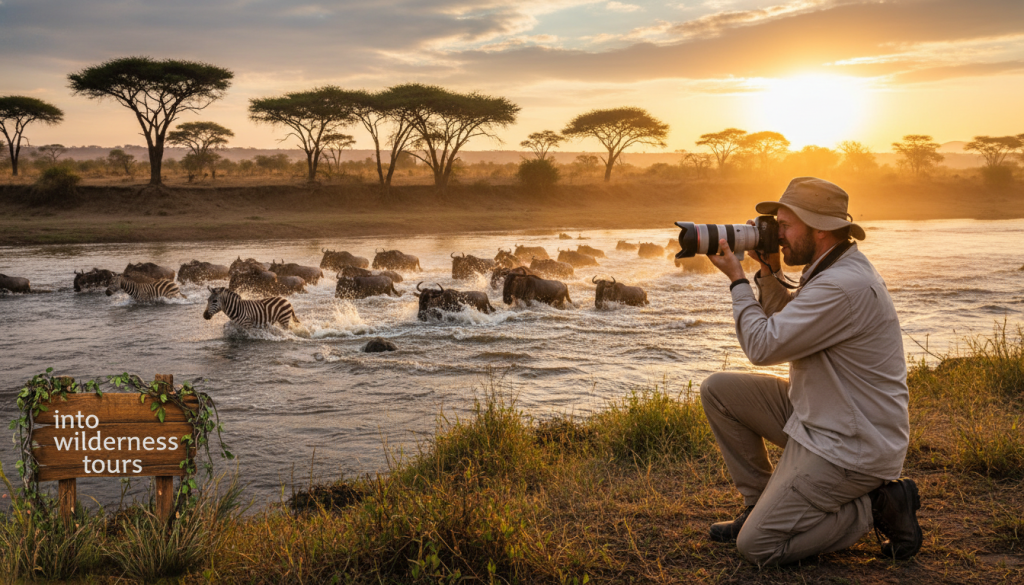
As we embark on a Tanzania Great Migration safari, our cameras become the eyes through which we capture the essence of this natural spectacle. The Great Migration is a visual feast, with its vast herds, dramatic river crossings, and the endless plains of the Serengeti.
Essential Camera Equipment for Safari Photography
To capture the beauty and drama of the Great Migration, having the right camera equipment is crucial. A good DSLR or mirrorless camera forms the backbone of any safari photography kit.
Lens Recommendations for Wildlife Shots
For wildlife photography, telephoto lenses are indispensable. A lens with a focal length of at least 200mm is recommended, with 400mm or more being ideal for capturing distant subjects without disturbing them.
Accessories and Gear Protection in Safari Conditions
In addition to the camera and lenses, protective gear such as lens filters and camera body covers can protect your equipment from dust and rough handling. Don’t forget spare batteries and memory cards, as the cold can quickly drain battery life.
Techniques for Dramatic Migration Shots
Capturing the drama of the Great Migration requires more than just the right equipment; it demands an understanding of the subject and the moment. Patience and anticipation are key, as is knowing the behavior of the animals.
Using a fast shutter speed to freeze the action, and panning to follow the movement, can result in dynamic shots that convey the energy of the migration. Don’t be afraid to experiment with different angles and compositions to add variety to your shots.
Cultural Experiences to Complement Your Migration Safari
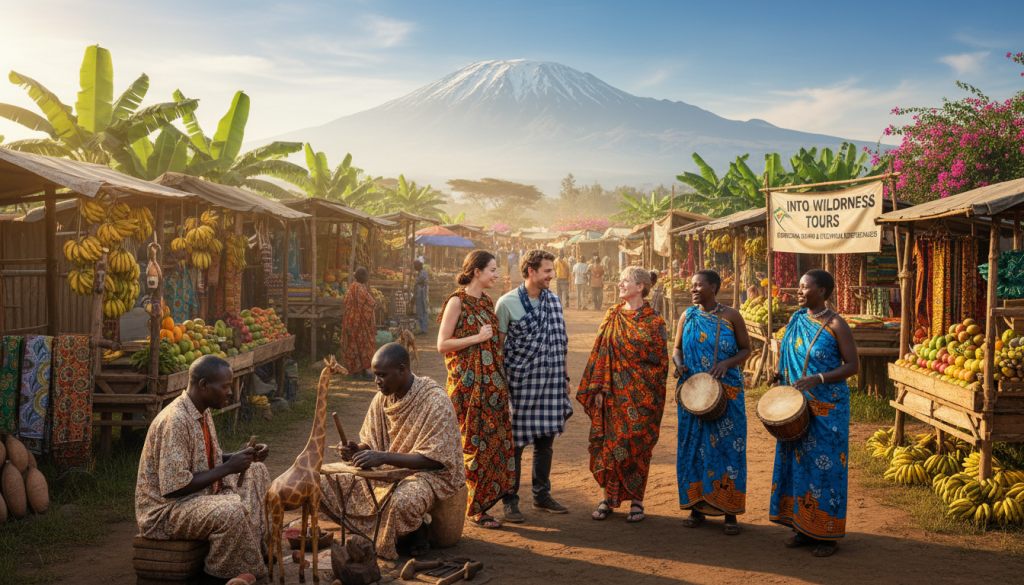
As we journey through Tanzania’s Great Migration, we discover that the experience is not just about witnessing wildlife, but also about immersing ourselves in the rich cultural heritage of the region. The local communities offer a unique window into traditional ways of life that have been preserved for centuries.
Maasai Village Visits: Understanding Local Heritage
Visiting a Maasai village provides an opportunity to engage with one of Tanzania’s most iconic tribes. We learn about their traditional practices, such as their renowned adobe craftsmanship and their vibrant cultural ceremonies. These visits foster a deeper understanding of the Maasai’s symbiotic relationship with the natural environment.
Cultural Centers and Museums in Tanzania
Tanzania is home to numerous cultural centers and museums that showcase the country’s diverse heritage. The National Museum in Dar es Salaam, for instance, offers insights into the country’s history and cultural evolution.
Arusha Cultural Tourism Options
Arusha is a hub for cultural tourism, with options ranging from guided tours of local villages to visits to the Arusha Cultural Heritage Centre. These experiences allow travelers to engage with local artisans and learn about traditional crafts.
Responsible Cultural Engagement Practices
When engaging in cultural experiences, it’s essential to adopt responsible tourism practices. This includes respecting local customs, supporting community-led initiatives, and being mindful of our impact on the local environment.
By embracing these cultural experiences, we enrich our safari adventure and contribute to the preservation of Tanzania’s cultural heritage.
Conservation Efforts Protecting the Migration Routes
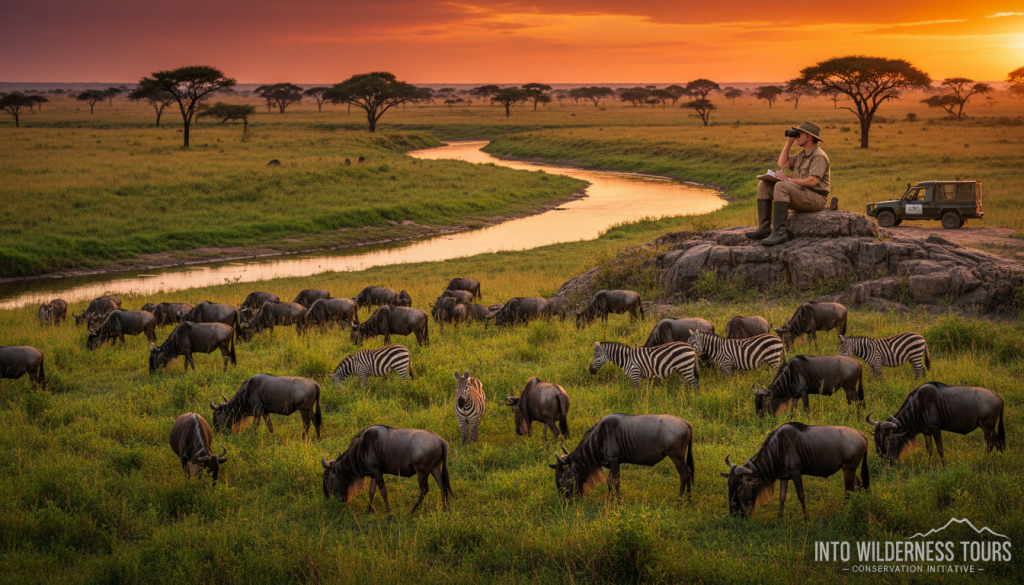
As we witness the grandeur of Tanzania’s Great Migration, we must also acknowledge the challenges it faces and the conservation efforts that are crucial to its survival. The Great Migration is not just a natural wonder; it’s a complex ecosystem that requires careful management to ensure its continued health and vitality.
Current Challenges to the Great Migration
The Great Migration faces numerous challenges, including habitat loss, climate change, and human-wildlife conflict. As the climate continues to change, the traditional migration patterns are being disrupted, affecting the delicate balance of the ecosystem. Human-wildlife conflict is also on the rise as expanding agricultural lands and urban areas encroach upon traditional migration routes.
“The impact of climate change on the Great Migration cannot be overstated,” notes Dr. Jane Smith, a renowned conservation biologist. “As temperatures rise and rainfall patterns become more unpredictable, the very foundation of this natural spectacle is threatened.”
How Tourism Supports Conservation Initiatives
Tourism plays a vital role in supporting conservation initiatives in Tanzania. By visiting the Great Migration, tourists not only witness this incredible natural event but also contribute to the local economy, which in turn supports conservation efforts. Many tour operators are now adopting sustainable tourism practices, minimizing their environmental footprint while maximizing the benefits to local communities and conservation.
Conservation Organizations to Know About
- The Tanzania National Parks (TANAPA) authority, responsible for managing the national parks and ensuring the protection of wildlife and their habitats.
- The Tanzania Wildlife Conservation Society (TWCS), working to protect Tanzania’s wildlife and wild lands through conservation and community development.
- The African Wildlife Foundation (AWF), dedicated to ensuring that wildlife and their habitats thrive in Africa, including the regions affected by the Great Migration.
Sustainable Tourism Practices for Visitors
Visitors can contribute to sustainable tourism by choosing eco-friendly accommodations, supporting local guides, and respecting wildlife and their habitats. By adopting these practices, tourists can help minimize their impact on the environment while supporting the local economy and conservation efforts.
As we continue to marvel at the Great Migration, we must also recognize our role in its conservation. By supporting sustainable tourism and conservation initiatives, we can help ensure that this natural wonder continues to thrive for generations to come.
Practical Planning for Your Tanzania Safari Adventure
Tanzania’s vast wilderness and diverse wildlife demand a thoughtful approach to planning your safari adventure. As we prepare to embark on this journey, we must consider several key factors to ensure a smooth and enjoyable experience.
Visa Requirements and Health Precautions for American Travelers
Before traveling to Tanzania, American citizens must obtain a visa. We recommend checking the current visa requirements and application process. Additionally, it’s essential to consult with a healthcare professional about necessary vaccinations and medications.
Vaccination Requirements and Medical Preparations
Typical vaccinations required for travel to Tanzania include yellow fever, hepatitis A, and typhoid. We must also consider malaria prophylaxis, depending on the time of year and regions visited.
Travel Insurance Considerations
Comprehensive travel insurance is crucial for covering unexpected medical or travel-related expenses. We should look for policies that include emergency evacuation coverage, as this is often a requirement for safari operators.
Packing Essentials for a Comfortable Safari
Packing wisely is vital for a comfortable and enjoyable safari experience. We recommend bringing lightweight, neutral-colored clothing, a good quality camera, and personal items such as sunscreen and insect repellent.
Budget Considerations and Booking Tips
Budgeting for a Tanzania safari involves considering various costs, including tour operators, accommodations, and activities. We advise booking in advance to secure the best rates and availability. It’s also worth considering the value of working with a reputable tour operator who can provide a safe and enriching experience.
By carefully planning our Tanzania safari adventure, we can ensure a memorable and transformative experience that not only delights us but also supports the conservation of this incredible ecosystem.
Personal Transformations: How the Great Migration Changes Travelers
As we immerse ourselves in the majesty of Tanzania’s Great Migration, we undergo a profound transformation that resonates deeply within us. This journey is not just about witnessing a natural wonder; it’s about experiencing a life-changing event that reconnects us with nature and fosters new perspectives on life and conservation.
Reconnecting with Nature’s Rhythms
The Great Migration is a powerful reminder of the natural world’s rhythms and cycles. As we watch the wildebeest, zebras, and gazelles traverse the savanna, we are drawn into the ancient patterns of nature. This experience reconnects us with the land and its creatures, fostering a deeper appreciation for the interconnectedness of all living things.
“The migration is a testament to the enduring power of nature and the resilience of life. It’s a reminder that, despite the challenges we face, there is always a way forward.”
Gaining New Perspectives on Life and Conservation
Witnessing the Great Migration inspires a new perspective on life, encouraging us to reflect on our place within the natural world. It highlights the importance of conservation efforts and the need to protect these incredible ecosystems. As we observe the delicate balance between predators and prey, we gain a deeper understanding of the intricate web of life and our role in preserving it.
| Aspect | Pre-Migration Perspective | Post-Migration Perspective |
|---|---|---|
| Nature’s Importance | Often overlooked in daily life | Recognized as vital to our existence |
| Conservation Efforts | Seen as important but distant | Understood as crucial and personal |
| Personal Values | May prioritize material comfort | Shift towards valuing experiences and nature |
As we conclude our exploration of the personal transformations that occur during the Great Migration, it’s clear that this experience leaves an indelible mark on travelers. It not only changes our perspective but also inspires us to become part of the conservation narrative, ensuring that the wonders of the Great Migration continue to thrive for generations to come.
Conclusion: The Enduring Magic of Tanzania’s Great Migration
As we reflect on the majesty of Tanzania’s Great Migration, we are reminded of the profound impact this natural wonder has on our lives. The Tanzania Great Migration Safari offers more than just a wildlife spectacle; it is an immersive experience that reconnects us with the rhythms of nature.
The enduring magic of this phenomenon lies in its ability to inspire wonder, evoke emotions, and foster a deep appreciation for the beauty and complexity of the natural world. As we witness the wildebeest, zebras, and gazelles traverse the savannas, we are drawn into a world where the boundaries between humans and wildlife blur, and our connection to the land is rekindled.
Our journey through the Great Migration is not just about observing wildlife; it’s about experiencing the essence of Tanzania’s wilderness. We invite you to embark on this transformative adventure, to be a part of the conservation efforts, and to witness the Tanzania Great Migration Safari in all its glory.
FAQ
What is the best time to witness the Great Migration in Tanzania?
The best time to witness the Great Migration in Tanzania is between July and October, when the wildebeest, zebras, and gazelles migrate to the Maasai Mara in search of greener pastures, creating dramatic river crossings and spectacular wildlife viewing opportunities.
What safari options are available for witnessing the Great Migration?
We offer guided group safaris, private safari experiences, and fly-in safaris, catering to different preferences and needs, including cost-effective, personalized, and time-efficient options for American travelers.
What accommodation choices are available along the migration route?
Along the migration route, you can choose from luxury lodges, tented camps, and mobile camps, offering comfort, authenticity, and unique experiences that allow you to immerse yourself in the wilderness.
What are the visa requirements and health precautions for American travelers?
American travelers require a valid passport and a visa to enter Tanzania; it’s also essential to consult your doctor about necessary vaccinations and medications, such as yellow fever and malaria prophylaxis, and to consider travel insurance that covers medical evacuations.
How can I capture the best photographs during the Great Migration?
To capture the best photographs, bring essential camera equipment, such as telephoto lenses and camera bodies with good low-light performance, and use techniques like panning and anticipating dramatic moments, like river crossings and predator-prey interactions.
What conservation efforts are in place to protect the Great Migration?
We support conservation initiatives that protect the Great Migration, including sustainable tourism practices, anti-poaching efforts, and habitat preservation, working closely with local communities and conservation organizations to ensure the long-term protection of this natural wonder.
Can I participate in cultural experiences during my Tanzania safari?
Yes, you can participate in cultural experiences, such as visiting Maasai villages, cultural centers, and museums, which provide a deeper understanding of local heritage and traditions, promoting cross-cultural understanding and responsible tourism practices.
What are the main wildlife encounters during the Great Migration?
During the Great Migration, you can expect to witness the main herbivores, such as wildebeest, zebras, and gazelles, as well as predators like lions, cheetahs, and crocodiles, and other remarkable species, including the Big Five, creating an unforgettable safari experience.
How can I make the most of my Tanzania safari adventure?
To make the most of your Tanzania safari, plan carefully, choosing the right safari option and accommodation, and be prepared for the adventure by packing essentials, understanding local customs, and staying flexible to adapt to changing circumstances.