
We invite you to embark on a journey with us to the enchanting Grumeti River in Tanzania, a wilderness oasis teeming with wildlife.
As local hosts and guardians of this homeland, we share with you the soul of Tanzania through our transformative safaris.
Our journey will take you through the majestic landscapes surrounding the Grumeti River, where the rhythms of nature unfold in harmony with the ancient wilderness.
Here, in this untouched paradise, we create unforgettable experiences for thoughtful travelers seeking meaningful transformation.
Key Takeaways
- Discover the enchanting Grumeti River and its significance in Tanzania’s ecosystem.
- Experience transformative safaris that reveal the soul of Tanzania.
- Explore the majestic landscapes surrounding the Grumeti River.
- Encounter the rich wildlife that inhabits this wilderness oasis.
- Embark on a journey that combines adventure, conservation, and cultural depth.
The Majestic Grumeti River: A Tanzanian Treasure
The Grumeti River, a lifeblood of Tanzania’s ecosystem, flows majestically through the Serengeti’s western corridor. As we explore this enchanting wilderness, we discover the river’s profound impact on the surrounding landscape and its inhabitants.
Geographical Location and Significance
The Grumeti River is strategically located in the western part of the Serengeti National Park, flowing into Lake Victoria. This geographical positioning makes it a crucial link between the Serengeti’s vast plains and the lake’s expansive waters. The river’s course is characterized by gentle slopes and meandering paths, creating a diverse range of habitats that support a wide variety of flora and fauna.
The River’s Role in Tanzania’s Ecosystem
The Grumeti River plays a vital role in sustaining Tanzania’s ecosystem. It provides a reliable source of water for countless animals, especially during the dry seasons. The river’s presence supports a complex food web, from aquatic plants to large predators. Some of the key aspects of its role include:
- Habitat creation: The river and its surrounding areas form a unique habitat for numerous species.
- Water source: It serves as a critical watering point for wildlife, particularly during dry periods.
- Ecosystem balance: The river helps maintain the balance of the ecosystem by supporting a diverse range of flora and fauna.
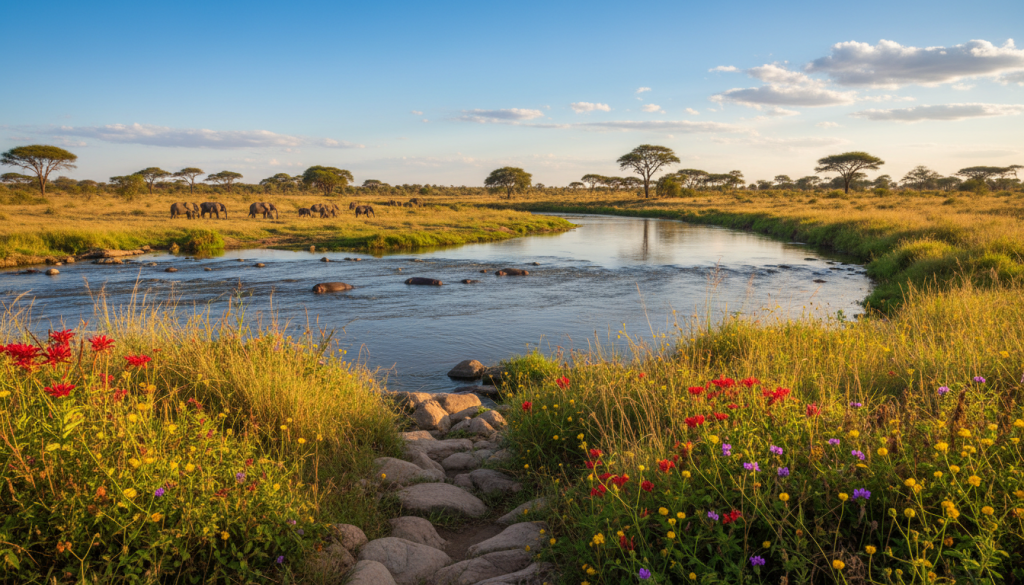
As we reflect on the Grumeti River’s significance, we are reminded of the intricate connections within Tanzania’s ecosystem and the importance of preserving this natural treasure for future generations.
The Heart of the Serengeti: Understanding Grumeti River Tanzania
As a crucial artery of the Serengeti, the Grumeti River’s formation and physical characteristics offer a fascinating glimpse into the geological and ecological processes that have crafted this unique environment. We are drawn into a world where ancient rivers have sculpted the landscape, creating a haven for diverse wildlife.
Formation and Physical Characteristics
The Grumeti River’s journey begins in the highlands of Tanzania, where rainfall and runoff gather to form a steady flow that winds its way through the Serengeti’s vast plains. The river’s path is characterized by gentle slopes and occasional rocky outcrops, which have been shaped over millions of years through erosion and sedimentation.
The river’s physical characteristics are a result of its geological history, with its channel and banks reflecting the dynamic interplay between water flow, sediment load, and surrounding terrain. As we explore the river’s banks, we notice the diverse array of flora that thrives in this environment, from acacia trees to lush grasses.
Seasonal Changes and Water Flow Patterns
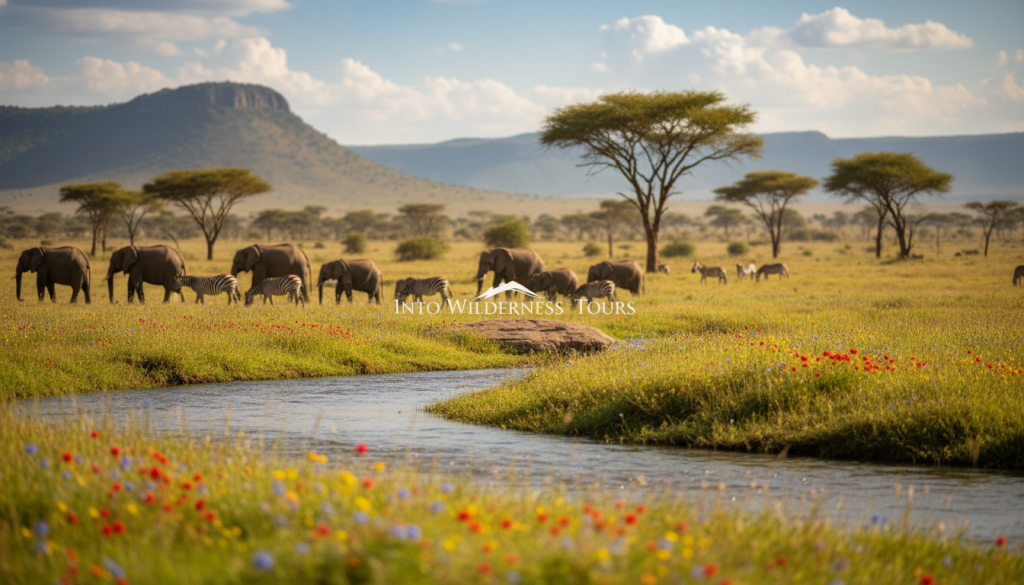
The Grumeti River is subject to significant seasonal fluctuations, with water levels and flow rates varying dramatically between the wet and dry seasons. During the wet season, the river swells, bringing nutrient-rich waters that support an explosion of aquatic life. In contrast, the dry season sees a reduction in flow, with the river often contracting into a series of pools and channels.
| Season | Water Level | Flow Rate | Ecosystem Impact |
|---|---|---|---|
| Wet Season | High | Fast | Nutrient-rich waters support aquatic life |
| Dry Season | Low | Slow | Water sources become critical for wildlife |
As we observe these changes, we are reminded of the river’s vital role in sustaining the Serengeti’s ecosystem. The seasonal rhythms that govern the Grumeti River’s flow have a profound impact on the surrounding landscape and the wildlife that depends on it.
“The river is a mirror to the soul of the Serengeti, reflecting the beauty and power of nature in its every twist and turn.”
Understanding these dynamics is crucial for appreciating the complex interplay between the Grumeti River and the Serengeti’s ecosystem, highlighting the importance of conservation efforts to protect this precious resource.
Wildlife Spectacle: The Great Migration Crossing
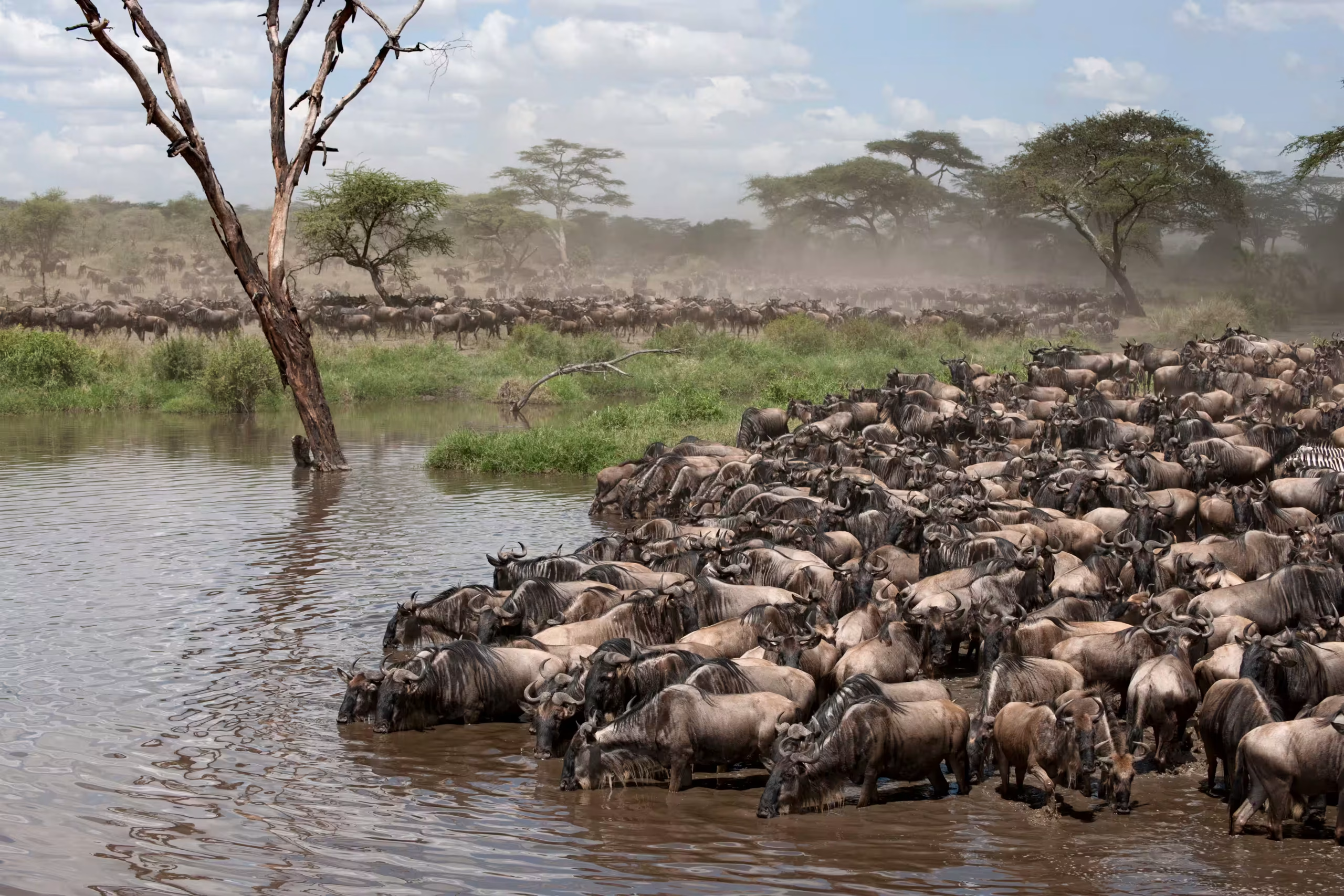
As the seasons change, the Grumeti River plays host to the Great Migration’s most breathtaking moment: the wildebeest river crossing. This event is a testament to nature’s raw power and beauty, as thousands of wildebeest, accompanied by zebras and gazelles, make their way across the river in search of greener pastures.
The Dramatic Wildebeest River Crossing
The wildebeest river crossing is a chaotic and thrilling spectacle. Driven by instinct and the need for survival, these animals brave the treacherous waters, often facing strong currents and lurking predators. The crossing is not just a random event; it’s a carefully timed occurrence based on the availability of food in the different regions of the Serengeti.
Predator-Prey Dynamics at the Crossing Points
The Grumeti River crossing points are hotspots for predator-prey dynamics, where the drama of survival plays out daily. Predators such as crocodiles, lions, and leopards lie in wait, exploiting the vulnerability of the migrating herds.
Crocodile Hunting Strategies
Crocodiles employ stealthy strategies, lying in wait just beneath the surface of the water. They ambush wildebeest as they cross, using their powerful jaws to drag their prey underwater. This ancient predator-prey relationship is a highlight of the Great Migration.
Big Cat Ambushes
Big cats, including lions and leopards, use the riverbanks as ambush points. They stalk their prey, often targeting the weaker or more vulnerable animals. The dense vegetation along the Grumeti River provides the perfect cover for these big cats to launch their attacks, adding another layer of danger to the wildebeest crossing.
The Great Migration across the Grumeti River is a complex and awe-inspiring event, showcasing the intricate balance between predators and prey in this Tanzanian wilderness. As we witness this spectacle, we are reminded of the beauty and brutality that define the natural world.
Beyond the Migration: Year-Round Wildlife at Grumeti
The Grumeti’s waters and surrounding landscapes are home to a rich tapestry of wildlife, visible throughout the year. While the Great Migration is a highlight, the area’s biodiversity is a treasure trove for nature enthusiasts and wildlife lovers.
Resident Mammal Species
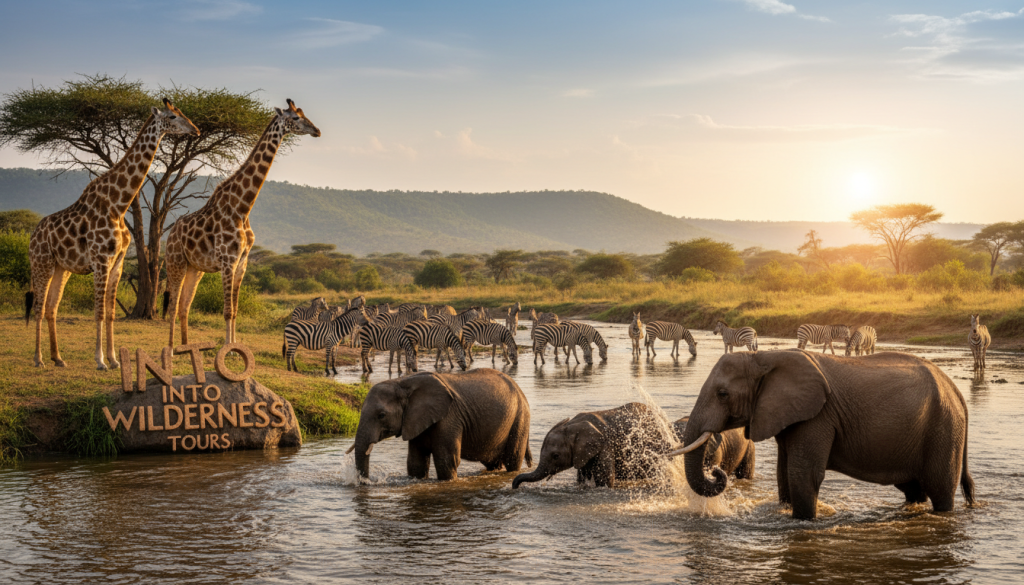
The Grumeti River area is inhabited by a variety of resident mammal species. These include elephants, giraffes, and buffaloes, which can be spotted grazing along the riverbanks or crossing the river. The area’s diverse habitats support a range of predators, such as lions, leopards, and hyenas, making it a thrilling place for wildlife observation.
Birdlife Along the Riverbanks
The Grumeti River is a haven for birdwatchers, with its banks and surrounding wetlands hosting a diverse array of birdlife. Species such as African fish eagles, kingfishers, and lilac-breasted rollers can be seen along the river, adding vibrant colors and melodious calls to the landscape. The river’s birdlife is a testament to the area’s ecological health and diversity.
“The Grumeti River is a lifeline for countless species, providing a habitat for a rich variety of wildlife throughout the year.”
Reptiles and Amphibians of the Grumeti
The Grumeti River is also home to a range of reptiles and amphibians. Nile crocodiles are a prominent feature, lying in wait for unsuspecting prey. The river’s banks and wetlands are inhabited by various species of turtles, frogs, and snakes, contributing to the ecosystem’s complexity and biodiversity.
As we explore the Grumeti River, it becomes clear that its true beauty lies not just in the spectacular events like the Great Migration, but in the everyday lives of the diverse wildlife that call this ecosystem home.
The Notorious Grumeti Crocodiles
Among the many wonders of the Grumeti River, the presence of enormous Nile crocodiles stands out. These ancient creatures have been a part of the river’s ecosystem for millennia, playing a crucial role in its dynamics.
Size and Behavior of Nile Crocodiles
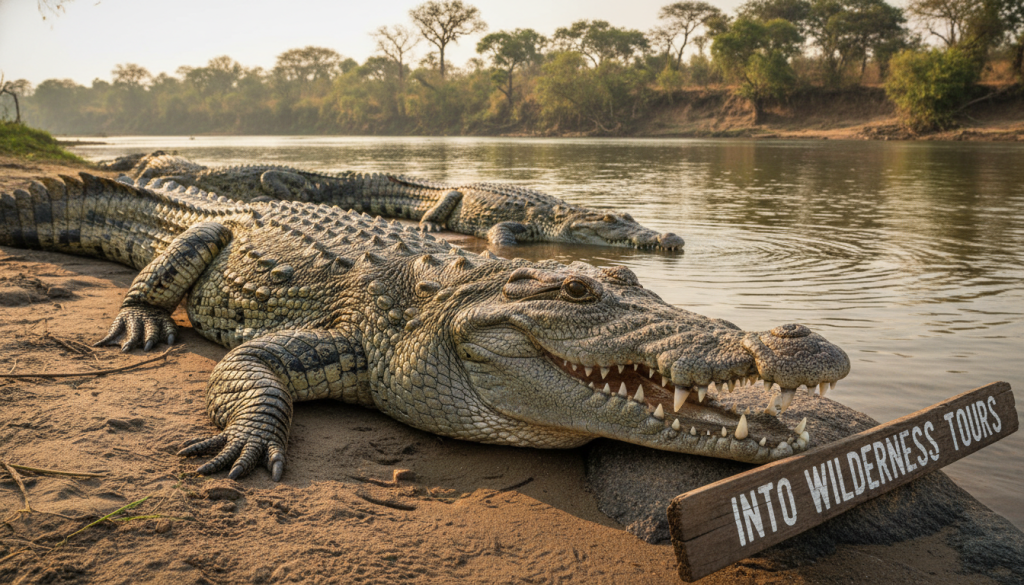
Nile crocodiles in the Grumeti River are known for their impressive size, with some individuals reaching lengths of over 5 meters. Their behavior is characterized by stealth and patience, as they lie in wait for unsuspecting prey. These apex predators are a key part of the river’s ecosystem, influencing the behavior of other animals and maintaining the balance of nature.
Ecological Importance
The ecological importance of Nile crocodiles in the Grumeti River cannot be overstated. As apex predators, they regulate the populations of other aquatic animals, preventing any one species from dominating the ecosystem. Their presence also affects the behavior of other animals, creating a ripple effect throughout the food chain. By maintaining this delicate balance, the Nile crocodiles contribute to the rich biodiversity of the Grumeti River.
The Grumeti crocodiles are a testament to the wild and untamed nature of this Tanzanian treasure. As we explore the Grumeti River, we are reminded of the importance of preserving such natural habitats, not just for the crocodiles, but for the entire ecosystem they inhabit.
Safari Experiences Along the Grumeti River
As we venture into the heart of Tanzania’s wilderness, the Grumeti River offers a diverse array of safari experiences that captivate and transform us. The region’s rich biodiversity and dramatic landscapes provide the perfect backdrop for unforgettable adventures.
Game Drives and Wildlife Viewing
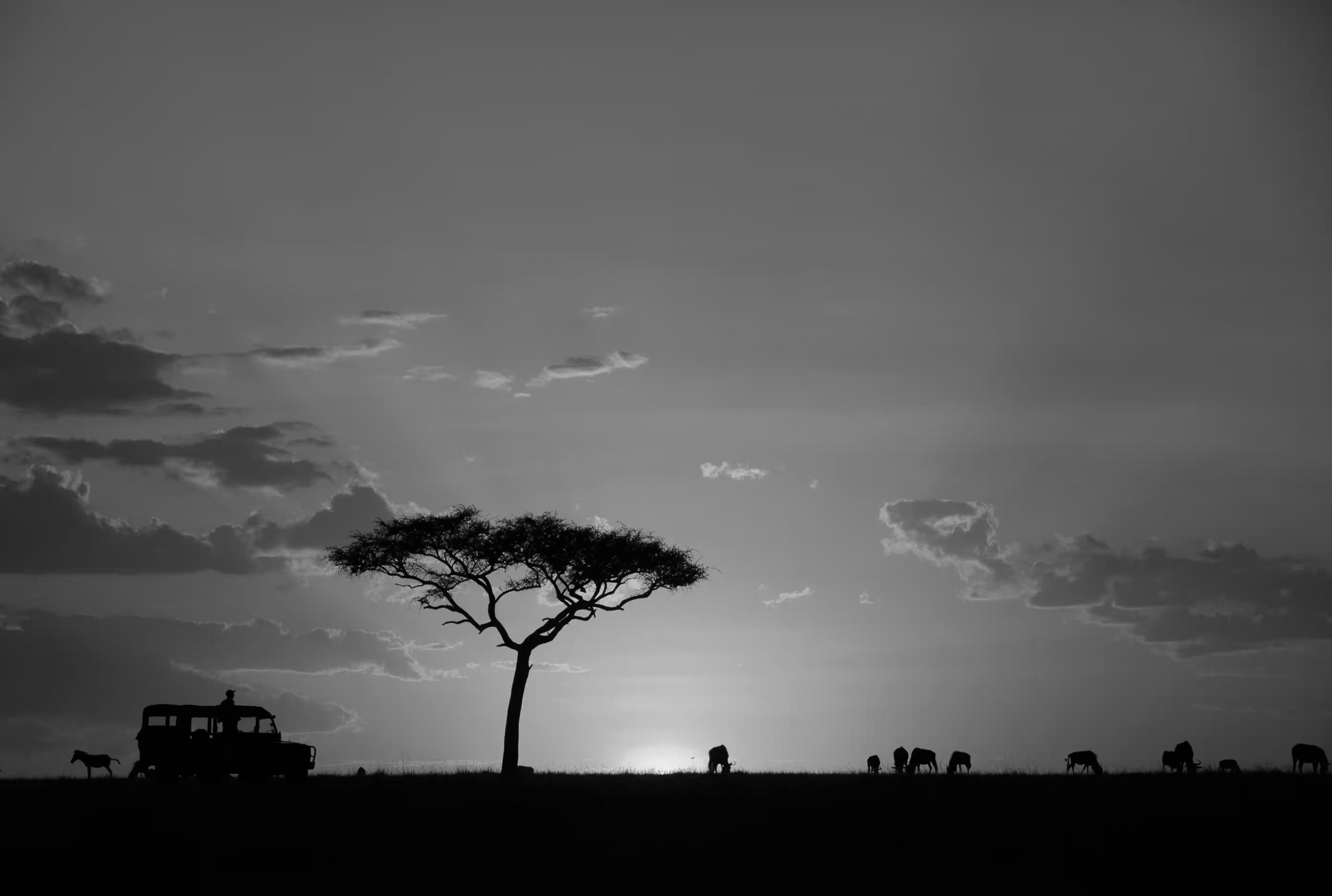
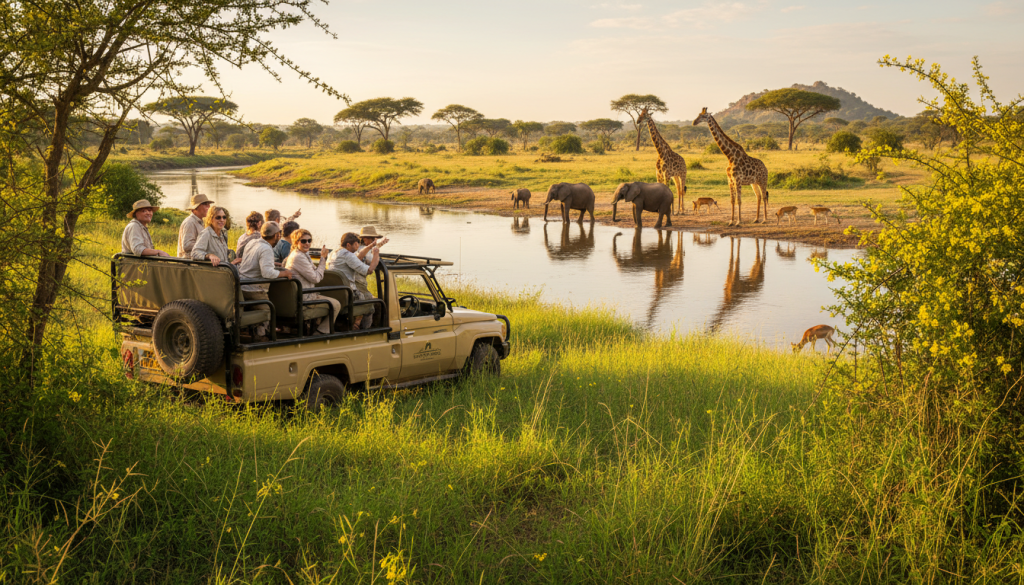
Game drives are a quintessential part of the Grumeti safari experience. As we navigate the savannah in specially adapted vehicles, we’re treated to intimate encounters with the region’s incredible wildlife. The Grumeti River area is renowned for its high concentrations of wildlife, particularly during the Great Migration. We can witness dramatic river crossings, observe predators in their natural habitat, and marvel at the sheer numbers of wildebeest, zebras, and gazelles that call this area home.
The expert guides accompanying us on these game drives are knowledgeable about the local ecosystem, pointing out subtle details and sharing insights that enhance our understanding and appreciation of the wildlife. With their guidance, we can get up close to lions lazing in the shade, leopards perched in trees, and cheetahs stalking their prey.
Walking Safaris with Armed Rangers
For a more immersive experience, we can embark on walking safaris accompanied by armed rangers. These guided walks allow us to explore the Grumeti’s ecosystem on foot, gaining a deeper appreciation for the intricate relationships between plants, animals, and their environment. As we walk, our guides share their knowledge of the bush, pointing out medicinal plants, tracking animals, and explaining the subtle signs that reveal the presence of wildlife.
Walking safaris offer a unique opportunity to engage our senses fully. We can feel the texture of the earth beneath our feet, smell the acacia trees, and listen to the calls of birds and insects. This intimate connection with nature fosters a profound respect for the land and its inhabitants.
Balloon Safaris for Aerial Perspectives
To gain a new perspective on the Grumeti River and its surroundings, we can take to the skies on a balloon safari. As we float gently above the landscape, we’re treated to breathtaking views of the river snaking through the savannah, the surrounding hills, and the vast expanse of the Serengeti. The silence of the balloon ride allows us to observe wildlife below without disturbing them, offering a serene and peaceful experience.
Balloon safaris typically take place at dawn, when the light is soft and golden. As we drift above the treetops, we can watch the sunrise paint the landscape in warm hues, revealing the beauty of the Grumeti in a new and captivating way.
These diverse safari experiences along the Grumeti River offer us a chance to engage with Tanzania’s natural beauty in multiple ways, creating a rich and memorable journey through one of Africa’s most spectacular wilderness areas.
Luxury and Adventure: Accommodation Options
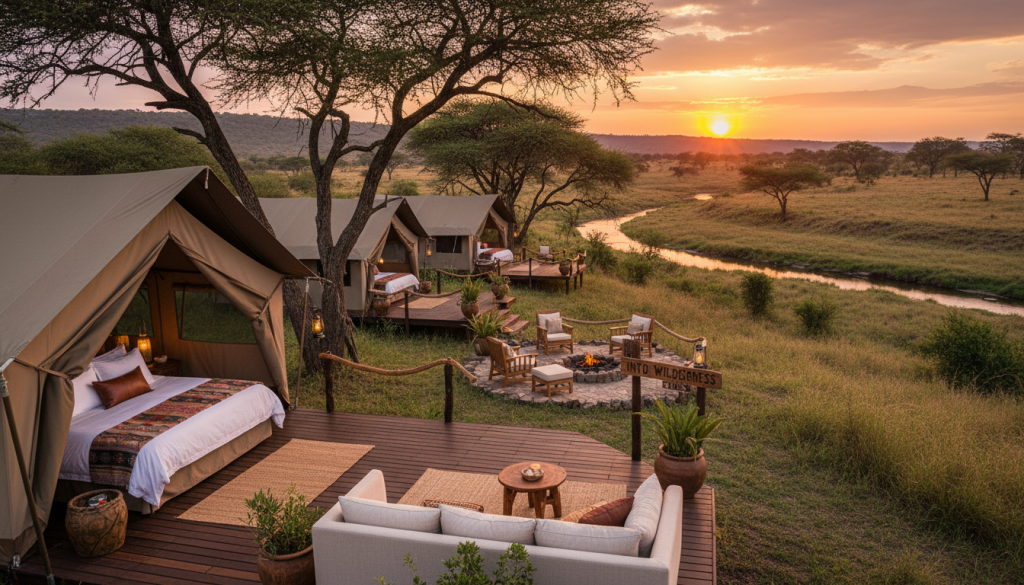
The Grumeti River area offers a haven for travelers, with luxury lodges, mid-range options, and budget-friendly alternatives. Whether you’re seeking opulence or simplicity, the region caters to diverse preferences and budgets, ensuring an unforgettable stay.
Exclusive Lodges and Tented Camps
For those seeking the ultimate in luxury, the Grumeti region boasts exquisite lodges and tented camps. These high-end accommodations offer lavish amenities, gourmet dining, and exceptional service, all set against the breathtaking backdrop of the African wilderness. Guests can enjoy private guided safaris, relax in style, and experience the magic of the Grumeti River.
Mid-Range Accommodation Choices
Travelers looking for a balance between comfort and affordability will find mid-range accommodations to be an excellent choice. These lodges and camps provide cozy living quarters, delicious local cuisine, and guided tours, all at a moderate price point. They offer a great way to experience the beauty of Grumeti without the luxury price tag.
Budget-Friendly Alternatives
For the more budget-conscious traveler, there are affordable options available that still offer a genuine Grumeti experience. These include camping sites and simple lodges, which provide basic amenities and a chance to connect with nature. Visitors can enjoy the simplicity of life under the stars while still being close to the action.
| Accommodation Type | Key Features | Price Range |
|---|---|---|
| Luxury Lodges | Private safaris, gourmet dining, luxurious amenities | High-end |
| Mid-Range Options | Cozy accommodations, local cuisine, guided tours | Moderate |
| Budget-Friendly | Basic amenities, camping, simple lodges | Affordable |
To plan your trip and book your ideal accommodation, visit Into Wilderness Tours for expert guidance and tailored safari experiences.
Best Times to Visit the Grumeti Region
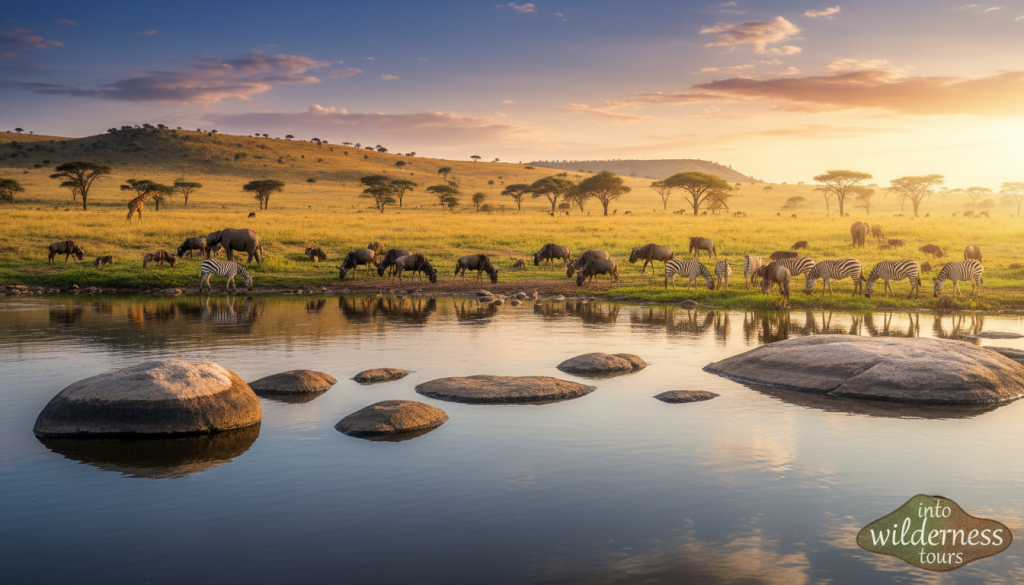
As we explore the Grumeti region, the rhythm of the seasons orchestrates a symphony of experiences, each with its own unique charm. The region’s diverse wildlife and landscapes are shaped by the changing seasons, making it a year-round destination for safari enthusiasts.
Migration Season (May-July)
The migration season is a highlight of the Grumeti experience, with the Great Migration bringing dramatic river crossings and abundant wildlife viewing opportunities. During this period, the riverbanks are teeming with life, and the air is filled with the sounds of wildebeest and zebras.
Dry Season Benefits (June-October)
The dry season offers its own set of advantages, with clearer skies and more concentrated wildlife around water sources. This makes it an ideal time for spotting a variety of species, as they gather around the Grumeti River.
Green Season Advantages (November-April)
The green season brings a lush landscape to the Grumeti region, with newborn animals and a plethora of birdlife. It’s a time of renewal and rebirth, offering a fresh perspective on the African wilderness.
| Season | Months | Highlights |
|---|---|---|
| Migration Season | May-July | Great Migration, river crossings, abundant wildlife |
| Dry Season | June-October | Clear skies, concentrated wildlife around water sources |
| Green Season | November-April | Lush landscapes, newborn animals, abundant birdlife |
Conservation Efforts in the Grumeti Reserve
At the heart of the Grumeti Reserve lies a robust conservation framework, designed to safeguard the region’s biodiversity for generations to come. This comprehensive approach encompasses various initiatives aimed at protecting the delicate balance of the ecosystem.
Anti-Poaching Initiatives
The Grumeti Reserve has made significant strides in anti-poaching efforts, employing advanced technologies and collaborative strategies to combat wildlife crime. Dedicated teams work tirelessly to monitor and protect the reserve, ensuring the safety of its inhabitants. As one conservationist notes,
“The protection of our wildlife is a collective responsibility, requiring the commitment of both local communities and international partners.”
Habitat Restoration Projects
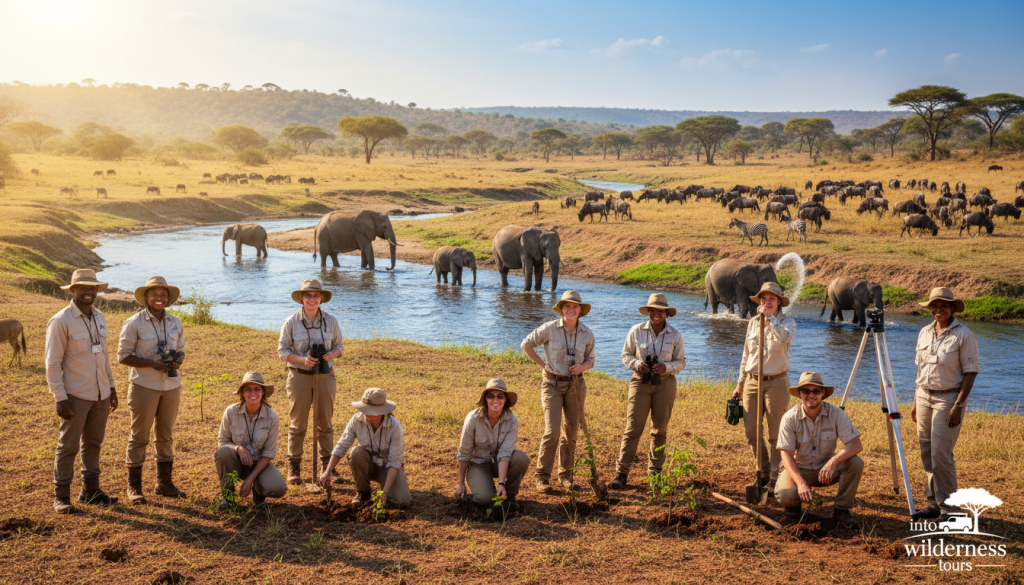
Habitat restoration is a critical component of the conservation strategy in Grumeti. Efforts to restore and maintain habitats not only enhance biodiversity but also contribute to the overall health of the ecosystem. Reforestation programs and wetland conservation are among the initiatives that have shown promising results, helping to maintain the natural beauty and ecological integrity of the reserve.
Community Conservation Partnerships
The success of conservation efforts in Grumeti is largely attributed to the strong partnerships forged with local communities. By engaging with and supporting these communities, the conservation initiatives promote a harmonious coexistence between humans and wildlife. Community-led conservation projects have become a cornerstone of the Grumeti Reserve’s strategy, fostering a culture of mutual respect and benefit.
Through these multifaceted conservation efforts, the Grumeti Reserve continues to thrive as a sanctuary for Tanzania’s rich wildlife, embodying the spirit of responsible tourism and community stewardship.
Cultural Encounters: Local Communities Near Grumeti
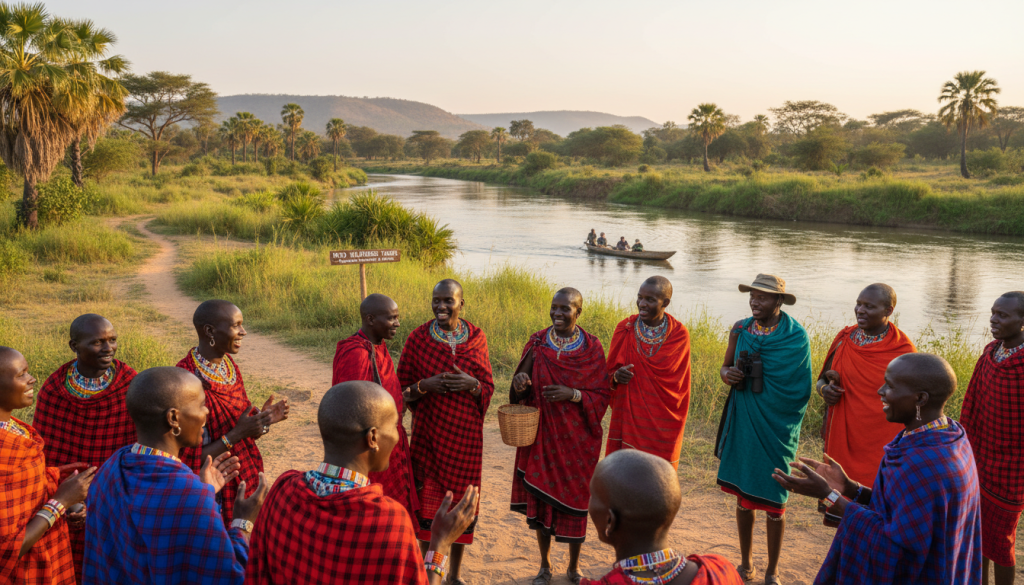
As we venture beyond the Grumeti River’s majestic waters, we discover the rich cultural tapestry of the local communities that call this Tanzanian wilderness home. The region is inhabited by various indigenous groups, each with their unique customs and traditions.
Maasai Cultural Experiences
The Maasai people are one of the most prominent indigenous communities in the Grumeti region. Visitors can engage in meaningful cultural exchanges, such as:
- Traditional Maasai dance performances
- Craft workshops, including beadwork and jewelry making
- Visits to Maasai homesteads to learn about their traditional way of life
Other Indigenous Communities
Besides the Maasai, other indigenous communities in the area include the Kuria and the Zanaki. Each community offers a distinct cultural perspective, enriching the overall cultural landscape of the Grumeti region.
| Community | Traditional Practices | Cultural Experiences |
|---|---|---|
| Maasai | Cattle herding, traditional medicine | Dance performances, craft workshops |
| Kuria | Agriculture, ironworking | Visits to traditional farms, cultural storytelling |
| Zanaki | Hunting and gathering, traditional crafts | Nature walks, traditional craft demonstrations |
Responsible Cultural Tourism
Engaging in cultural tourism in the Grumeti region not only enriches visitors but also supports local economies. It’s essential to practice responsible cultural tourism by respecting local customs, supporting community-led initiatives, and being mindful of cultural sensitivities.
By embracing responsible cultural tourism, we can help preserve the rich cultural heritage of the Grumeti region while fostering a deeper appreciation for the local communities among visitors.
Photography Tips for Capturing Grumeti’s Magic
For photographers, the Grumeti River offers a canvas of endless possibilities, where the dance of light and shadow brings the African savannah to life. Capturing the essence of this Tanzanian wilderness requires a combination of the right equipment, strategic vantage points, and an understanding of lighting and timing.
Equipment Recommendations
To make the most of your photographic journey, consider bringing a telephoto lens (at least 200mm) to capture wildlife without disturbing them. A wide-angle lens is also essential for landscape shots, allowing you to encapsulate the vastness of the Grumeti landscape. Don’t forget a sturdy tripod to stabilize your camera, especially during early morning or late evening shots when light is low.
| Equipment | Purpose |
|---|---|
| Telephoto Lens (200mm+) | Wildlife photography without disturbance |
| Wide-Angle Lens | Landscape and scenery shots |
| Tripod | Stabilization for low-light conditions |
Best Vantage Points
Positioning is key to capturing the perfect shot. Look for elevated areas or natural viewpoints that offer unobstructed views of the river and surrounding landscape. The riverbanks during the Great Migration are particularly rewarding, as they provide opportunities to capture dramatic wildlife crossings.
Lighting and Timing Considerations
The golden hours—early morning and late afternoon—offer soft, warm light that enhances the natural colors of the landscape and wildlife. Be prepared to adapt to changing light conditions, and consider the direction of the sun to avoid harsh shadows or overexposure.
As David Sheldrick, a renowned wildlife conservationist, once said,
“The best camera is the one you have with you, and the best shot is the one you take.”
At Grumeti, the magic is always unfolding; it’s up to us to capture it.
Planning Your Trip: Practical Information
As we prepare to embark on our Tanzanian adventure, understanding the practical aspects of visiting Grumeti Reserve is essential. With its breathtaking landscapes and diverse wildlife, Grumeti is a destination that requires careful planning to fully appreciate its natural beauty.
Getting to Grumeti Reserve
Reaching Grumeti Reserve involves a combination of international and local travel arrangements. Most visitors fly into Kilimanjaro International Airport (JRO) or Dar es Salaam International Airport (DAR), from where they take a domestic flight to either Seronera or Grumeti airstrips. Alternatively, some opt for a scenic drive from Arusha or other nearby locations, though this can be time-consuming. We recommend booking with reputable airlines and considering the time of year and potential weather conditions when planning your journey.
| Destination | Airport Code | Typical Next Step |
|---|---|---|
| Kilimanjaro | JRO | Domestic flight to Seronera or Grumeti |
| Dar es Salaam | DAR | Domestic flight to Seronera or Grumeti |
| Seronera/Grumeti | – | Road transfer to lodge/camp |
Visa Requirements and Health Precautions
Before traveling to Tanzania, it’s crucial to check the current visa requirements for your nationality. Many countries are eligible for a visa on arrival, but requirements can change, so it’s wise to verify this information with the Tanzanian embassy or consulate in your home country. Additionally, certain vaccinations, such as yellow fever, may be required, and it’s recommended to consult with a healthcare professional about any necessary medications or precautions, such as malaria prophylaxis.
Packing Essentials for Safari
Packing for a safari in Grumeti Reserve requires a thoughtful approach. Essentials include lightweight, neutral-colored clothing, a good quality camera with telephoto lens, binoculars, sunscreen, a hat, and sturdy walking shoes. Don’t forget to pack layers for cooler mornings and evenings, as well as rain gear during the wet season. A well-prepared traveler is better equipped to enjoy the wonders of Grumeti.
By carefully planning our trip, attending to logistical details, and packing appropriately, we set ourselves up for a memorable and enriching experience in Grumeti Reserve. As we immerse ourselves in the natural beauty and wildlife of this Tanzanian treasure, we’re reminded of the importance of responsible and sustainable tourism practices.
Beyond Grumeti: Nearby Attractions
As we venture beyond the Grumeti River, we discover a tapestry of natural wonders and cultural experiences that enrich our Tanzanian adventure. The region surrounding this iconic river is replete with attractions that cater to diverse interests and travel styles.
Western Serengeti Highlights
The western Serengeti is a realm of untamed beauty, characterized by its lush landscapes, diverse wildlife, and the dramatic rock outcrops known as kopjes. Visitors can witness the Great Migration from various vantage points, enjoying panoramic views of the savannah as the wildebeest herds traverse the plains.
Lake Victoria Excursions
A visit to Lake Victoria offers a unique contrast to the savannah landscapes, with the opportunity to engage in water-based activities such as fishing and boat cruises. The lake’s shoreline is dotted with local villages, providing insight into the traditional ways of life among the lakeside communities.
Other Wildlife Reserves in Proximity
Beyond the Serengeti, other wildlife reserves beckon, including the Maswa Game Reserve and Ikorongo Game Reserve. These areas offer additional opportunities for game viewing and contribute to the rich tapestry of Tanzanian conservation efforts.
By exploring these nearby attractions, travelers can deepen their understanding of Tanzania’s natural and cultural heritage, creating a more comprehensive and enriching travel experience.
Responsible Tourism at Grumeti River
As guardians of this precious ecosystem, we recognize that responsible tourism is crucial to the Grumeti River’s continued splendor. Our approach to visiting this magnificent region is built on three core principles that ensure our presence benefits both the environment and the local communities.
Minimizing Environmental Impact
We strive to minimize our footprint by choosing eco-friendly accommodations and transportation. By reducing waste and conserving resources, we help preserve the natural beauty of Grumeti River for generations to come. As Nelson Mandela once said,
“The earth has enough for everyone’s need, but not enough for everyone’s greed.”
This philosophy guides our actions as we explore Tanzania’s enchanting wilderness.
Supporting Local Economies
Our tourism practices are designed to support local economies by partnering with community-based businesses. By doing so, we contribute to the well-being of the communities surrounding Grumeti River, ensuring that the benefits of tourism are shared equitably. This approach fosters a positive relationship between tourism and local livelihoods.
Ethical Wildlife Viewing Practices
We adhere to strict guidelines for wildlife viewing, maintaining a safe distance from animals and respecting their natural habitats. This not only ensures our safety but also protects the well-being of the wildlife. By choosing responsible tour operators who share our commitment to ethical practices, we can enjoy the wonders of Grumeti River while safeguarding its future.
By embracing responsible tourism, we can continue to marvel at the Grumeti River’s majesty while contributing to its preservation. Our collective efforts make a significant difference in protecting this Tanzanian treasure.
Conclusion: The Timeless Allure of Tanzania’s Grumeti Wilderness
As we reflect on the Grumeti River and its surrounding wilderness, we are reminded of the timeless allure that beckons to those seeking a deeper connection with nature. Tanzania’s natural beauty is on full display in this enchanting landscape, where the rhythms of the wild unfold with unbridled majesty.
The Grumeti wilderness offers a transformative experience, one that bridges the modern world with the ancient heartbeat of the African savannah. As guardians of this precious ecosystem, we invite you to join us on a journey to discover the soul of Tanzania through our carefully crafted safaris.
As you immerse yourself in the majesty of the Grumeti, you become part of a timeless narrative, one that weaves together the threads of conservation, cultural depth, and experiential luxury. We look forward to sharing the wonders of this extraordinary landscape with you, and to exploring the depths of Tanzania’s natural beauty together.
FAQ
What is the best time to visit the Grumeti River for the Great Migration?
The best time to witness the Great Migration at the Grumeti River is typically between May and July, when the wildebeest make their way across the river.
What wildlife can I expect to see at the Grumeti River?
The Grumeti River is home to a diverse range of wildlife, including resident mammal species, a variety of birdlife, and reptiles such as Nile crocodiles.
What safari experiences are available along the Grumeti River?
Visitors can enjoy game drives, walking safaris with armed rangers, and balloon safaris for aerial perspectives, offering unique insights into the wildlife and landscape.
What accommodation options are available near the Grumeti River?
There is a range of accommodations, from exclusive lodges and tented camps to mid-range and budget-friendly options, catering to different preferences and budgets.
How can I contribute to conservation efforts in the Grumeti Reserve?
By supporting responsible tourism practices, such as minimizing environmental impact and supporting local economies, you can contribute to the conservation of the Grumeti Reserve.
What cultural experiences are available near the Grumeti River?
Visitors can engage in Maasai cultural experiences and interact with other indigenous communities, promoting cross-cultural understanding and supporting local economies.
What are the visa requirements for visiting Tanzania?
Visa requirements vary depending on your nationality; it’s essential to check with the Tanzanian embassy or consulate in your home country for specific requirements.
What health precautions should I take when traveling to Tanzania?
Consult your healthcare provider about recommended vaccinations and medications, such as malaria prophylaxis, to ensure a safe and healthy trip.
How can I get to the Grumeti Reserve?
The Grumeti Reserve is accessible by air, with nearby airstrips, or by road, with guided transfers available from major towns like Arusha or Mwanza.
What are the best photography tips for capturing the Grumeti’s magic?
Use appropriate equipment, such as telephoto lenses, and consider the best vantage points and lighting conditions to capture the essence of the Grumeti River and its wildlife.
What are the benefits of visiting during the dry season?
Visiting during the dry season (June-October) offers benefits such as easier wildlife spotting and more comfortable safari conditions.
What are the advantages of the green season?
The green season (November-April) brings advantages like lush landscapes, newborn wildlife, and fewer tourists, making for a more intimate safari experience.